How to Plant Flowers? Step by Step
Planting flowers is actually quite simple, so anyone interested can achieve very good results by following the guidelines and steps we will see in this article.
How to start growing?
As with most plants, the cultivation of flowers can almost always be started in at least two ways: by sowing seeds or by planting the flower purchased from a nursery.
From seeds
It’s a fairly lengthy process, requiring more care and certain knowledge and skills, but it’s much more economical. Seed packets for most species and varieties of flowering plants usually cost less than an ice cream.
This long method, besides being more economical—if you don’t have to hire a gardener—has the added advantage that you can obtain a large number of plants to decorate a large space.
In terms of complexity, the most delicate part is the first stages: sowing in seedbeds or directly in the ground and caring for the plants while they are small.
As we just mentioned, sowing can be done in seed trays or directly in the ground, depending on the area to be covered, the type of plant, the time of year, and the local climate. For small quantities, it is much more practical to start seeds in seed trays and then transplant the seedlings to their final location.
Through staff
It’s the quickest way. You buy the plant, usually already in bloom, and transplant it to the desired location, whether it’s a pot, planter, rock garden, roadside border, etc.
Obviously, it is considerably more expensive than the first method, but if you don’t have much experience or enough time, and you want a striking result almost instantly, this is the right choice.
Since all the complexity of planting and initial care has been avoided, the most important thing here is to choose a plant that can adapt well to the conditions of the place; otherwise, you will have to buy another one or modify the environment.
What time of year?
The specific dates will depend on each species, and also on the local climate, unless the plant is to be grown in a protected environment, such as inside a house, greenhouse, etc.
Outdoors
This is very important, especially in climates with distinct seasons: some warmer and others colder.
Most outdoor flowers should be planted throughout the spring and some in summer or at the end of winter, but this varies with each species.
The correct way to proceed is as follows:
➊ Choose the flowers to be planted.
➋ Look for information about its planting or transplanting time, or if that cannot be found, its soil and climate requirements, that is, the conditions it needs to develop properly.
If the plant’s needs do not match the local climate, return to point ➊ to choose a different one.
The seed packets sold in each region usually show both the sowing and transplanting dates, the latter being the ones to consider for planting.
Indoors
For indoor flowers, the planting time is less important, although spring is still the best time.
On the other hand, for outdoor plants that are going to be grown indoors, even if only temporarily, it is advisable to plant them as if they were outside or at most a little earlier, so that they are in sync with the changing seasons and not out of step with them.
A fantastic reference: If you are going to buy the plant in a commercial establishment, they are usually not available until the time when you can start planting them.
Choosing the species and varieties
This point is more important than it might initially seem. It’s not just about choosing the type of flower you like best, but also about finding out if the climate is suitable for it.
Knowing the common or scientific name of the plant and searching online or in books and guides specializing in flower cultivation, it will be easy to find its requirements, both in terms of climate, soil, and the care it will demand.
Knowing the requirements of the flowers you want to plant is crucial to checking if they can adapt to the local environment.
Some plants cannot tolerate high temperatures; most tolerate low ones; some require acidic or neutral soils, and others alkaline soils. The same applies to light, salinity, soil texture and structure, moisture levels, etc.
It’s disappointing to plant a flower and watch it quickly wither because the growing conditions aren’t right. That’s why it’s so important to know what you want to plant and the specific needs of each plant beforehand.
Planting flowers in pots
This is the preferred option when the space to be decorated does not have an open floor, and therefore, the flowers cannot be planted directly in the ground.
Also, when the weather is very harsh at certain times, it becomes necessary to move the plants from the outside to a protected place.
Windows, balconies, porches, sidewalks, and terraces are usually the places that will necessarily have to be decorated with potted flowers.
Choose the container
It’s extremely important that the pot is suitable for each plant, both in terms of its size and shape. Some flowers need deep pots, while shallower pots are fine for others.
The volume of the pot can be roughly calculated knowing the size the plant will reach—it has to be proportional—but for most flowers, between 5 and 10 liters is usually more than enough, provided the substrate is good.⇲ Related
Making flower pots from plastic bottles✔ Reuse waste to give life to your plants and take care of the environment at the same time…
Choosing the substrate
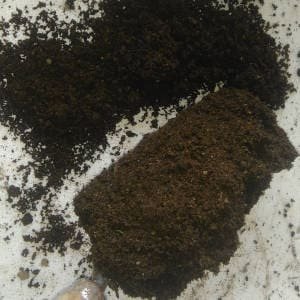
After the pot, the second most important aspect in this case is the substrate. It must hold all the water and nutrients the plant needs to grow and bloom.
Although tempting, it’s not worth the risk to use garden soil. The flower might survive, but not with the vigor and beauty it would have in a special flower potting mix, and if you plant a flower, it’s to be beautiful, isn’t it?⇲ Related
How to fertilize potted plants✔ We explain what it means for a plant to grow in a pot, its limitations, and how to provide the necessary nutrients…
The transplant
As for the procedure, the truth is that it is practically the same for most flowers, so below we leave some step-by-step examples.
Plant flowers in the ground
This option is undoubtedly the best when you have a piece of land in the garden or around the house.
Flowers planted in the ground require less care, especially regarding watering and fertilizing.
But they demand more attention in controlling weeds, which are the main enemy of the gardener and the flowers.
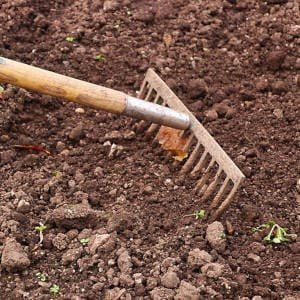
Unlike planting in pots, when flowers are planted in the ground, the soil needs to be prepared beforehand, ideally well in advance. For example, in autumn for spring planting.
Digging the soil, removing stones, or fertilizing it are some of the tasks that need to be done before planting flowers, but we discuss all of this in the article indicated below.
How to prepare the soil for planting✔ Why and how to prepare the ground, when to do it, etc…
Procedure
If everything above has been done correctly, there is little to explain.
Planting the flowers in the ground is as simple as making a small hole large enough for the roots to fit comfortably, placing them in it, and covering it again. Finish by watering thoroughly to settle and moisten the soil.
Consideration must be given to the spacing between plants and the distance from other garden elements, such as walls, curbs, fences, etc., to give the flowers enough space.