How to Bring a Dead Orchid Back to Life?
Bring a seemingly dead orchid back to life with these simple, expert-approved steps. This guide covers how to diagnose the problem, treat root rot, repot correctly, and provide the right care for a full recovery. #OrchidCare #PlantParent #RevivePlants #HouseplantTips #GardeningHacks
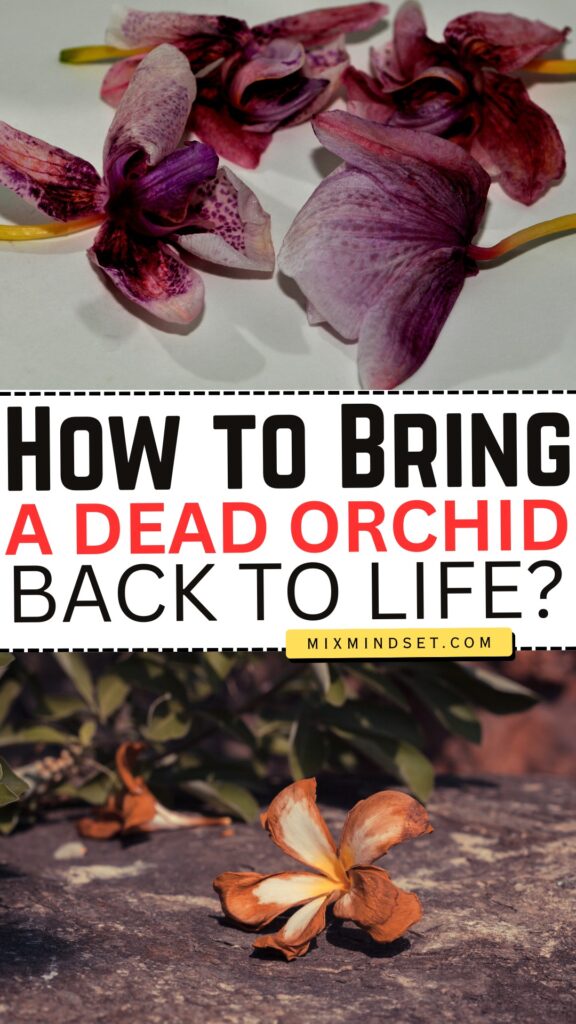
I will never forget the day I was about to throw my first orchid in the trash. The flowers had all fallen off, the leaves were wrinkled and sad, and I was convinced I had killed it.
I felt like a failure. But a friend told me to wait, to look at the roots. She said, “Orchids are tougher than they look.”
She was right. I trimmed the dead roots, gave it fresh bark, and put it in a sunnier spot. It took months, but one day, I saw a tiny new root poking out.
Now that same orchid blooms for me every year. If you have an orchid that looks dead, do not give up on it yet. Here is exactly how to bring it back.
First, Is Your Orchid Actually Dead?
Before you start any revival process, you need to check if your orchid can be saved. This is the most important first step.
Signs your orchid is still alive and can be saved:
- There are some firm, green or silver roots. Even if most roots are dead, a few healthy ones mean there is hope.
- The crown (the central growing point where leaves emerge) is firm and green. If it is still solid, the plant can grow new leaves.
- There are some green leaves left. Even one or two sad-looking leaves can photosynthesize and help the plant recover.
Signs your orchid has passed the point of no return:
- The crown is mushy, brown, and rotting. This is crown rot, and it is almost always fatal.
- There are absolutely no roots left at all. If every single root has completely dried out or rotted away, the plant cannot take up water or nutrients.
- The stem is completely dried out and hollow. There is no living tissue left.
My personal experience: I once had an orchid that lost all its leaves but still had a few green roots. I almost threw it away, but I decided to try. I put it in a humid environment and watered it sparingly. It took six months, but it grew a new leaf. It can be done.
Common Reasons Orchids Die (So You Can Avoid Them Next Time)
Before you revive your orchid, it helps to know what went wrong. Overwatering is the number one killer of orchids.
The 7-Step Guide to Reviving Your Orchid
If your orchid is still alive, here is the step-by-step process I use to bring them back.
Step 1: Remove the Orchid from Its Pot
Gently take the orchid out of its pot. Carefully remove all the old potting mix from the roots. Rinse the roots under lukewarm water to get a clear view of what is healthy and what is not.
Step 2: Trim the Dead and Rotten Roots
This is the most important step. Use sterilized scissors or pruning shears (wipe them with rubbing alcohol first). Cut away any roots that are:
- Mushy, brown, or black (these are rotten)
- Hollow, dry, and papery (these are dead)
- Squishy to the touch
Keep the roots that are:
- Firm and green (these are healthy and active)
- Firm and silver or white (these are healthy but dehydrated)
Do not be afraid to cut a lot. It is better to remove all the dead tissue so the plant can focus its energy on growing new, healthy roots.
Step 3: Treat Root Rot (If Present)
If you saw any mushy, rotten roots, you need to treat the remaining healthy ones to stop the rot from spreading.
Two options:
- Hydrogen peroxide: Spray the remaining roots and the base of the plant with 3% hydrogen peroxide. You will see it fizz—that means it is killing bacteria and fungus.
- Cinnamon: After cutting away rot, pack the cut areas with ground cinnamon. Cinnamon has natural antibacterial and antifungal properties and helps dry out the wound.
Step 4: Repot in Fresh Orchid Bark
Do not use regular potting soil—orchids are air plants and their roots will suffocate. Use a specialist orchid potting mix made of coarse bark, perlite, and charcoal.
How to repot:
- Choose a pot with good drainage. It should be just large enough to hold the roots comfortably. Do not use a pot that is too big.
- Place the orchid in the pot and gently spread the roots.
- Fill in around the roots with fresh orchid bark.
- Do not pack it down tightly. The roots need air circulation.
Step 5: Create a Humid Environment
Orchids need humidity to grow new roots, especially when they are weak.
The bag method (great for leafless orchids):
- Get a clear plastic bag.
- Put a handful of damp sphagnum moss in the bottom of the bag.
- Place the potted orchid inside the bag and seal it.
- Open the bag every 2-3 days for a couple of hours to let air circulate.
The pebble tray method:
- Fill a tray with pebbles.
- Add water until it just covers the pebbles.
- Place the orchid pot on top of the pebbles (not in the water).
- As the water evaporates, it creates humidity around the plant.
Step 6: Provide the Right Light
Place your orchid in a spot with bright, indirect light. An east-facing window is ideal.
- Do not put it in direct sunlight. This will scorch the leaves.
- If you do not have enough natural light, use a grow light.
- Aim for 6 to 8 hours of light per day.
Step 7: Water Correctly (This Is Critical)
Do not water on a schedule. This is the fastest way to kill an orchid.
The simple rule: Water only when the potting mix and roots are almost completely dry.
How to water:
- Soak the orchid in water for 10-15 minutes, then let it drain completely.
- Never let the orchid sit in standing water.
- Make sure water does not get into the crown (the center where the leaves meet).
- If your orchid has very few roots, water even less frequently.
Remember: It is much better to underwater an orchid than to overwater it. Treat it almost like a succulent.
A Special Note: Reviving a Leafless Orchid
If your orchid has lost all its leaves but still has healthy roots, there is still hope.
- Follow all the steps above (trim roots, repot, provide humidity).
- Cut off any old flower spikes. They drain the plant’s energy, and it needs every ounce of energy to grow new leaves.
- Do not fertilize until you see new root or leaf growth. Fertilizer can stress a recovering plant.
- Be patient. It can take months for a leafless orchid to grow a new leaf.
- Keep the humidity high using the bag method.
Quick Reference Table: Reviving an Orchid
| Step | What to Do | Why |
|---|---|---|
| Remove from pot | Gently take out and rinse roots | To see what is healthy and dead |
| Trim roots | Cut mushy, brown, papery roots | Removes dead tissue, stops rot |
| Treat rot | Spray with hydrogen peroxide or use cinnamon | Kills bacteria and fungus |
| Repot | Use fresh orchid bark, not soil | Orchid roots need air |
| Provide humidity | Use bag method or pebble tray | Encourages new root growth |
| Provide light | Bright, indirect light (east window) | Gives energy for recovery |
| Water correctly | Only when roots and mix are dry | Prevents rot |
My Personal Orchid Revival Routine
Here is what I actually do when I find an orchid that looks dead.
Step 1: I take it out of the pot and rinse the roots.
Step 2: I cut away anything that is mushy, brown, or dried out. I keep only the firm, green or silver roots.
Step 3: I spray the remaining roots with hydrogen peroxide.
Step 4: I repot it in fresh orchid bark in a clean pot.
Step 5: I put it in a bright spot out of direct sun and water only when the roots look silver and dry.
Step 6: I wait. And wait. And wait. It usually takes 3 to 6 months to see new growth.
The Bottom Line
A “dead” orchid is often just an orchid that needs help. Most orchids can be saved if they still have some healthy roots and a firm crown. The key is to trim the dead roots, repot in fresh bark, and give the plant the right light and humidity. Overwatering is the most common mistake. Water only when the roots are dry.
I almost threw away my first orchid. Now it blooms for me every year, and it reminds me that plants are resilient. Your orchid can be saved too. It just needs a little patience and the right care.