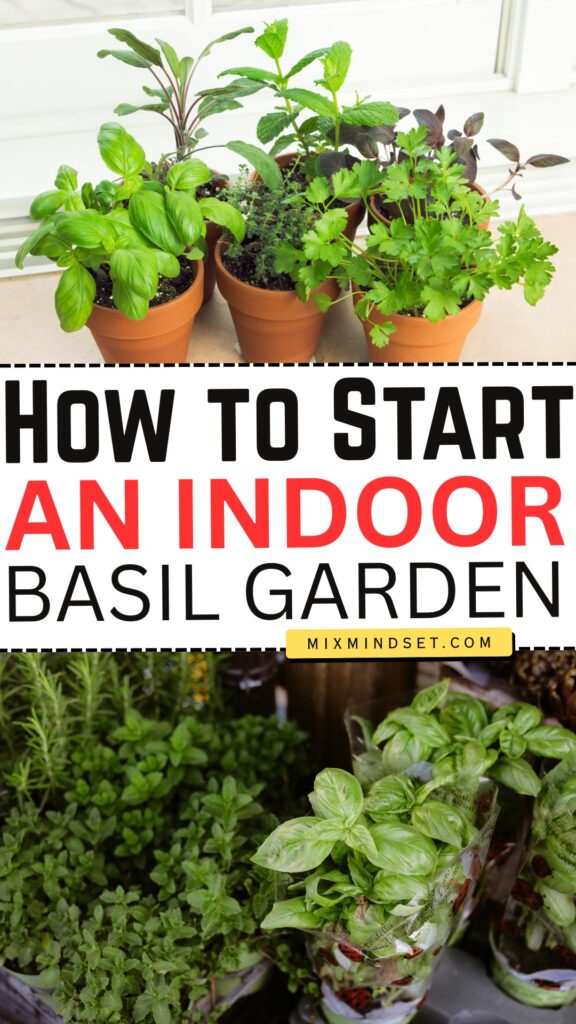
How to Start an Indoor Basil Garden
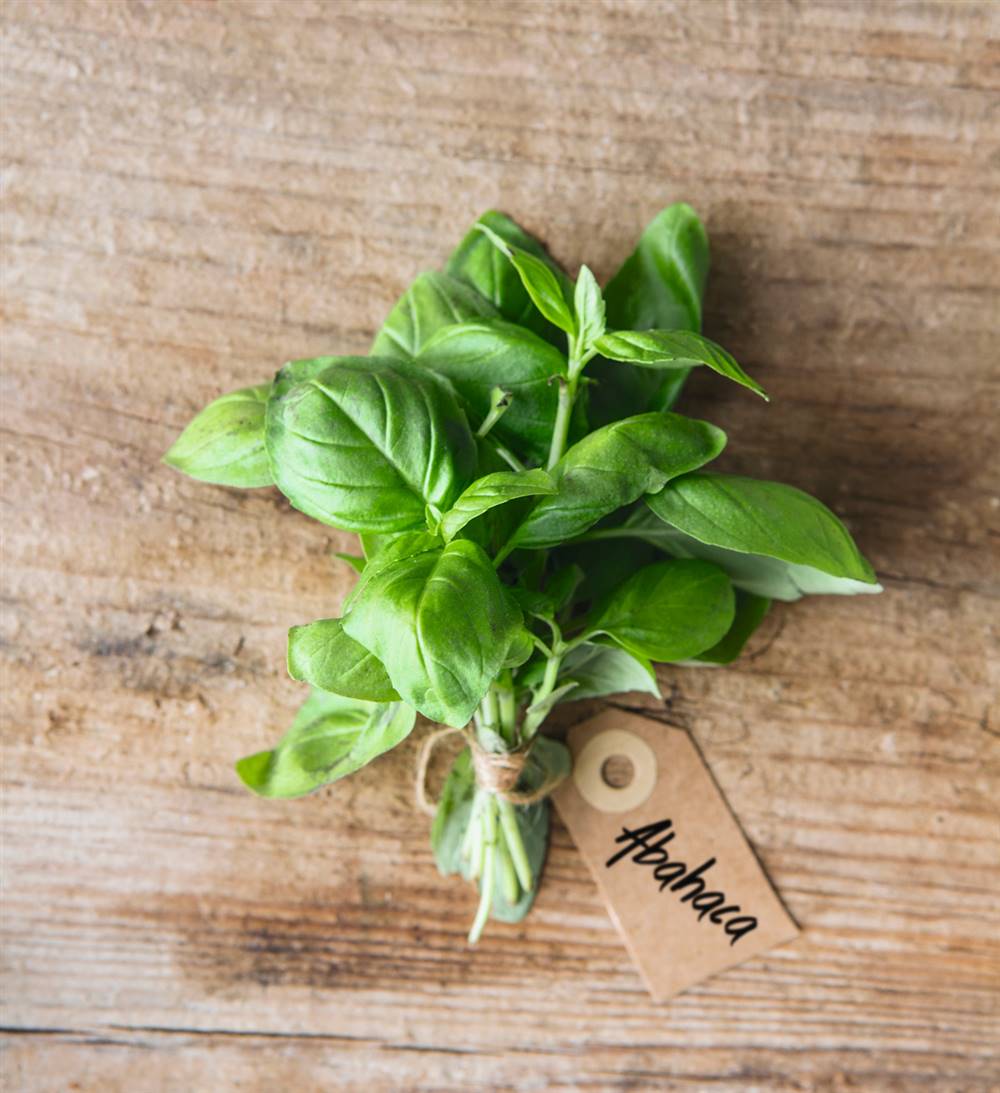
Grow fresh, flavorful basil right on your kitchen windowsill with this easy, beginner-friendly guide. From sowing seeds to harvesting bushels of leaves, this covers everything you need to enjoy homegrown basil all year long. #GrowBasil #IndoorHerbGarden #KitchenGarden #GrowYourOwnFood #UrbanHomesteading
The first time I tried growing basil indoors, I bought a small plant from the grocery store, put it on my windowsill, and hoped for the best. Within a week, it was leggy, sad, and covered in tiny white flowers.
I had no idea what I was doing wrong. It turns out, basil is a sun-loving Mediterranean plant that needs more care than just a spot by the window.
Once I learned a few simple tricks, my basil started thriving. Now I have fresh basil whenever I need it—for pesto, pasta, salads, and even cocktails. Here is everything I learned.
Why Grow Basil Indoors?
Basil is a warm-weather herb that does not survive frost. But indoors, you can grow it year-round, even in the dead of winter. It is low-maintenance once you understand its needs, and having it within arm’s reach of your kitchen makes cooking effortless. Plus, it smells amazing and adds life to any windowsill.
Getting Started: What You Will Need
Starting from Seeds vs. Cuttings vs. Starter Plants
You have three options for getting started.
Option 1: Starting from Seeds (Cheapest)
Growing from seed is budget-friendly and gives you access to many varieties.
Step-by-step:
- Fill small pots or a seed tray with moist seed-starting mix.
- Plant seeds about ¼ inch deep—3 to 4 seeds per pot.
- Cover with soil and water gently.
- Cover pots with plastic wrap or a dome to create a humid environment.
- Place in a warm spot (around 70°F/20°C). Seeds germinate in 5 to 10 days.
- Once seedlings have a few sets of true leaves, thin them to one strong seedling per pot.
Option 2: Propagating from Cuttings (Free)
If you already have a basil plant, you can make more for free.
Step-by-step:
- Cut a 4 to 6-inch piece from a healthy stem, just below a leaf node.
- Remove the lower leaves, keeping a few at the top.
- Place the cutting in a jar of water in bright, indirect light.
- Change the water every few days.
- When roots are 1 to 2 inches long, transplant into soil.
Option 3: Buying a Starter Plant (Fastest)
If you want basil right away, buy a small plant from a nursery or garden center. Choose a healthy plant with green leaves and no signs of pests.
Choosing the Right Container
Basil needs room to grow, but it does not need a huge pot.
Container size:
- Minimum: 4 to 6 inches deep
- Ideal: 6 to 8 inches deep, 12 to 16 inches wide for larger varieties
- Drainage: Drainage holes are non-negotiable. Without them, water pools and causes root rot.
Material options:
- Clay/terracotta: Porous, prevents overwatering, but dries out faster
- Plastic/ceramic: Retains moisture longer, lightweight
- Repurposed containers: Tin cans, mason jars (with drainage), or biodegradable pots work too
My personal experience: I once grew basil in a mason jar without drainage holes. It grew fine for a few weeks, then suddenly wilted and died. Root rot. Now I always use pots with holes, and I have not lost a plant since.
The Right Soil
Basil prefers rich, well-draining soil that holds moisture without staying soggy.
What to use:
- A high-quality potting mix designed for herbs or vegetables
- Mix in perlite or coarse sand to improve drainage
- Add a handful of compost for extra nutrients
What to avoid:
Soil pH: Basil grows best in slightly acidic to neutral soil, around pH 6.0 to 7.0.
Light: The Most Important Factor
Basil is a sun lover. It needs 6 to 8 hours of direct sunlight daily. Without enough light, it becomes leggy, weak, and flavorless.
Natural light:
- A south-facing window is ideal.
- East or west-facing windows work but may provide less light.
- Rotate your pots weekly to ensure even growth.
Grow lights:
- If you do not have enough natural light, use a full-spectrum grow light.
- Position lights 2 to 4 inches above the plant for LEDs, or 6 inches above for fluorescents.
- Run grow lights for 12 to 16 hours a day.
My personal experience: My first basil plant sat on a north-facing windowsill. It grew, but it was always leggy and never produced many leaves. I moved it to a south-facing window and added a small grow light for the darker months. The difference was night and day. Now I get bushy, flavorful basil all year.
Watering: Keep It Evenly Moist
Basil likes consistent moisture, but it does not like to sit in water.
The simple rule:
- Water when the top inch of soil feels dry.
- Water deeply until it drains out the bottom.
- Do not let the soil dry out completely or become waterlogged.
How to water:
- Water the soil, not the leaves, to prevent fungal diseases.
- Bottom watering works well: place the pot in a tray of water for 10 minutes, then drain excess.
- In winter, when growth slows, water less frequently.
Fertilizing: Feed for Flavor
Basil grown in containers needs regular feeding because nutrients wash out with watering.
Feeding schedule:
- Start with nutrient-rich potting soil that feeds for about 6 weeks.
- After that, feed with a diluted liquid fertilizer every 2 to 4 weeks.
- Use a balanced fertilizer (like 5-5-5 or 10-10-10).
- Avoid over-fertilizing, which can create lush leaves with less flavor.
Pruning and Harvesting: The Key to Bushy Growth
This is where most beginners go wrong. If you do not prune basil, it grows tall and leggy, with fewer leaves. Regular pruning encourages side shoots and a bushier plant.
When to start: Start pruning when the plant reaches 6 to 8 inches tall with at least 4 sets of leaves.
How to prune:
- Cut just above a leaf node (where two leaves meet the stem).
- Always cut from the top down to encourage bushier growth.
- Never remove more than one-third of the plant at once.
How to harvest:
- Harvest in the morning when oils are most concentrated for the best flavor.
- Pinch off individual leaves as needed, or cut whole stems just above a node.
- Remove flower buds immediately—once basil flowers, it stops producing tender leaves.
My personal experience: I used to just pick leaves from the bottom of my basil plant. It grew tall and scraggly. Then I learned to prune from the top. Within weeks, my plant had doubled in width and was producing more leaves than I could use.
Common Problems and How to Fix Them
My Personal Basil Routine
Here is what I actually do. You can copy this.
Every day:
- I check the soil. If the top inch is dry, I water.
- I rotate my pot so all sides get even light.
Every week:
- I prune any tall stems to encourage bushier growth.
- I check for pests on the undersides of leaves.
Every 2-4 weeks:
- I feed with a diluted liquid fertilizer.
- I harvest leaves for cooking.
As needed:
- If a plant looks leggy, I move it closer to the light source.
- If I see flower buds, I pinch them off immediately.
Since I started this routine, my basil has been thriving. I have fresh leaves whenever I need them.
The Bottom Line
Growing basil indoors is easier than you might think. Give it plenty of light (6-8 hours daily), keep the soil evenly moist, prune regularly from the top, and feed it every few weeks. Start with seeds, cuttings, or a starter plant, and choose a pot with good drainage.
I used to think basil was too fussy to grow indoors. Now I know it just needs the right care. Your windowsill can produce fresh basil all year too. Try it and enjoy the satisfaction of harvesting something you grew yourself.