ZZ Plant Turning Yellow? Stop It Before You Lose the Whole Plant
Is your ZZ plant suddenly turning yellow? Before you panic and toss it, learn the most common causes of yellowing leaves and exactly how to bring your plant back to life. #ZZPlant #YellowLeaves #HouseplantHelp #PlantParent #IndoorGardening
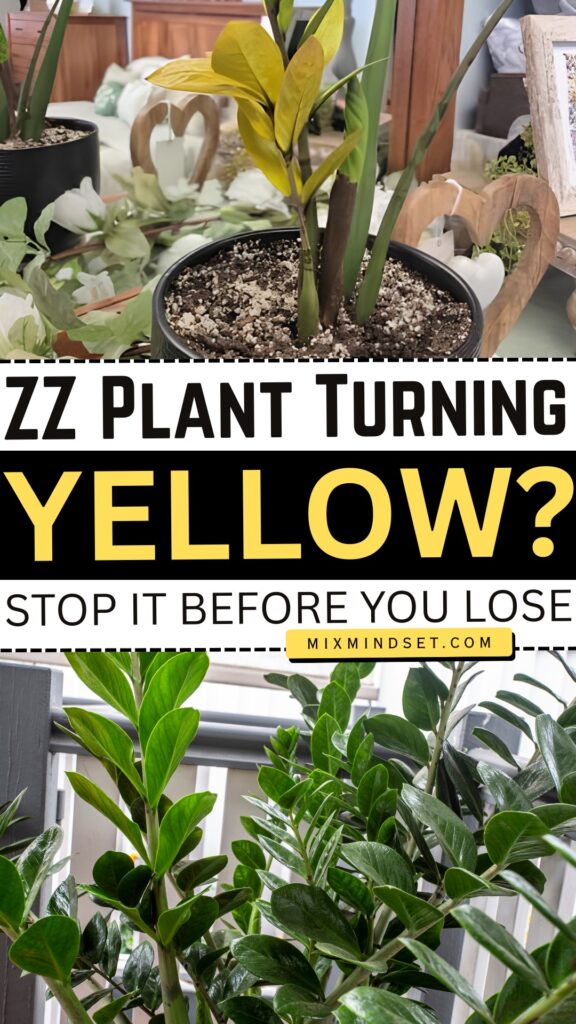
I will never forget the day I noticed my ZZ plant’s beautiful dark green leaves turning yellow. I had heard these plants were nearly indestructible.
I thought I had done something terribly wrong. I almost gave up on it. But after a little research and some careful detective work, I discovered the problem was simple to fix.
Now my ZZ plant is thriving again, and I want to share what I learned so you can save yours too.
First, Take a Breath
Before you do anything, stop and look at your plant. Yellow leaves on a ZZ plant are common. They are your plant’s way of telling you something is wrong.
Here is the good news: Most yellow ZZ plants can be saved if you catch the problem early. The key is figuring out the cause. Do not rush to cut off every yellow leaf like a panicked surgeon. Some yellowing is natural.
Quick Diagnosis: Match the Symptom to the Cause
Use this table to quickly figure out what might be wrong with your ZZ plant.
The 6 Most Common Causes (And Exactly How to Fix Them)
1. Overwatering (The #1 Killer)
Overwatering is the most common reason for yellow leaves on a ZZ plant. These plants store water in their thick roots (called rhizomes) and stems, making them sensitive to too much moisture. When the soil stays wet for too long, the roots cannot breathe. They start to rot. A rotting root cannot take in nutrients, and the leaves turn yellow as a distress signal.
How to spot it:
- The yellow leaves are often mushy or drooping.
- The soil feels wet or soggy.
- The pot may have a damp, musty smell.
- The stems may feel soft or mushy at the base.
How to fix it:
- Stop watering immediately. Let the soil dry out completely.
- Check the soil: Stick your finger about 1 to 2 inches into the soil. If it feels wet, do not water.
- If it is mild: Just let the soil dry out and wait longer between waterings.
- If it is severe (many yellow leaves): You need to repot. Gently take the plant out of its pot and look at the roots. Healthy roots are firm and tan. Rotten roots are brown, mushy, and may smell bad.
- Trim the rot: Use clean, sharp scissors to cut away all the mushy, rotten roots. Only leave the healthy ones.
- Repot: Put the plant in fresh, dry, well-draining soil in a clean pot that has drainage holes. Do not water for a week or so after repotting.
My golden rule: ZZ plants thrive on neglect. It is much better to underwater than overwater. When in doubt, wait another week.
2. Underwatering (The Opposite Problem)
While ZZ plants are drought-tolerant, they cannot go completely without water forever. Consistent underwatering can also cause yellowing.
How to spot it:
- The leaves turn yellow, dry, and crispy, often starting from the tips.
- The soil is bone dry and pulling away from the edges of the pot.
- The stems may look wrinkly.
- The plant may look droopy.
How to fix it: This is an easy fix. Give your plant a thorough, deep watering. Water it until you see water flowing out of the drainage holes at the bottom. Make sure the soil soaks up moisture evenly. Then, establish a regular watering routine so the soil does not dry out completely for too long.
3. Light Problems: Too Little or Too Much
ZZ plants are adaptable and can survive in low light. But they do best in bright, indirect light. Too much direct sun or too little light can both cause problems.
Too little light: If your ZZ plant is in a very dark corner, it cannot photosynthesize enough food. The leaves will turn a pale, sickly yellow, and growth may slow down.
Too much light: Direct, hot sunlight can scorch the leaves. This looks like yellow or brown patches, almost like a sunburn.
How to fix it: Move your plant to a spot with bright, indirect light. A north or east-facing window is perfect. If you only have a south-facing window, place the plant a few feet away or use a sheer curtain to filter the harsh afternoon sun.
4. Nutrient Deficiency (A Hungry Plant)
ZZ plants are not heavy feeders, but they still need nutrients to stay healthy. A lack of key nutrients like nitrogen can cause older leaves to turn yellow.
How to spot it:
- Yellowing leaves, especially on older, lower foliage.
- Stunted growth.
- You have not fertilized in over a year.
How to fix it: Feed your plant! During the spring and summer growing season, use a balanced liquid fertilizer (like 10-10-10) once a month. Do not fertilize in the fall and winter when growth slows down.
Important: Do not over-fertilize. Too much fertilizer can cause nutrient burn, which also leads to yellow leaves. Always follow the instructions on the fertilizer package.
5. Pests
ZZ plants have very few pest problems, but they can occasionally get spider mites, mealybugs, or scale. These pests suck the sap from the leaves, causing them to turn yellow.
How to spot it:
- Yellow speckles or spots on the leaves.
- Tiny webs on the plant (spider mites).
- Small, cottony masses (mealybugs).
- Sticky residue on the leaves.
How to fix it:
- Isolate the plant immediately so the bugs do not spread to your other plants.
- Wipe the leaves down with a damp cloth or spray with insecticidal soap.
- For spider mites, look for webbing and tiny red, yellow, or green dots on the foliage.
- For severe infestations, use neem oil according to the package directions.
6. Natural Aging
Sometimes, a yellow leaf is nothing to worry about. ZZ plants naturally shed their oldest leaves as they grow new ones. If you see one or two yellow leaves near the bottom of the plant, and the rest look healthy and green, it is likely just old age.
How to spot it: Only the oldest, lowest leaves are turning yellow. The rest of the plant looks healthy and vibrant.
How to fix it: You do not need to fix anything. This is a normal part of the plant’s life cycle. You can simply snip off the yellow leaves with clean scissors.
Quick Reference Table: Diagnosis and Treatment
What to Do With the Yellow Leaves
Once a leaf has turned mostly yellow, it will not turn green again. Those yellow leaves are just taking energy from the rest of the plant. My advice is to cut them off.
Use clean, sharp scissors or pruning shears. Cut the yellow leaf’s stem as close to the main plant’s base as you can. This will make your plant look much better and let it focus its energy on growing new, healthy leaves.
My Final Golden Rules for a Happy, Green ZZ Plant
After saving my ZZ plant and keeping it healthy for years, here are the rules I live by now.
- Forget the watering schedule. ZZ plants thrive on neglect. Check the soil with your finger before you water. When the top 1-2 inches are dry, it is time to water. In winter, reduce watering to once a month or even less.
- Use well-draining soil. Regular potting soil is too heavy. Use a mix designed for succulents or add perlite to improve drainage.
- Give it bright, indirect light. A few feet away from a sunny window is its happy place.
- Do not over-fertilize. Feed only during spring and summer, and always follow the instructions.
- Do not panic. A few yellow leaves are a sign to pay attention, not to give up. Every plant parent goes through this. Learn from it, and your plant will be even stronger.
The Bottom Line
ZZ plant leaves turning yellow is not the end of the world. It is your plant’s way of telling you something is wrong. The key is to look at the leaves, check the soil, and figure out the cause. Overwatering is the most common culprit, but underwatering, light problems, nutrient deficiencies, and pests can also be the issue.
With a little observation and these simple fixes, you will have those beautiful, glossy green leaves back in no time. Your ZZ plant is tough. It wants to live. You just need to listen to what it is telling you.