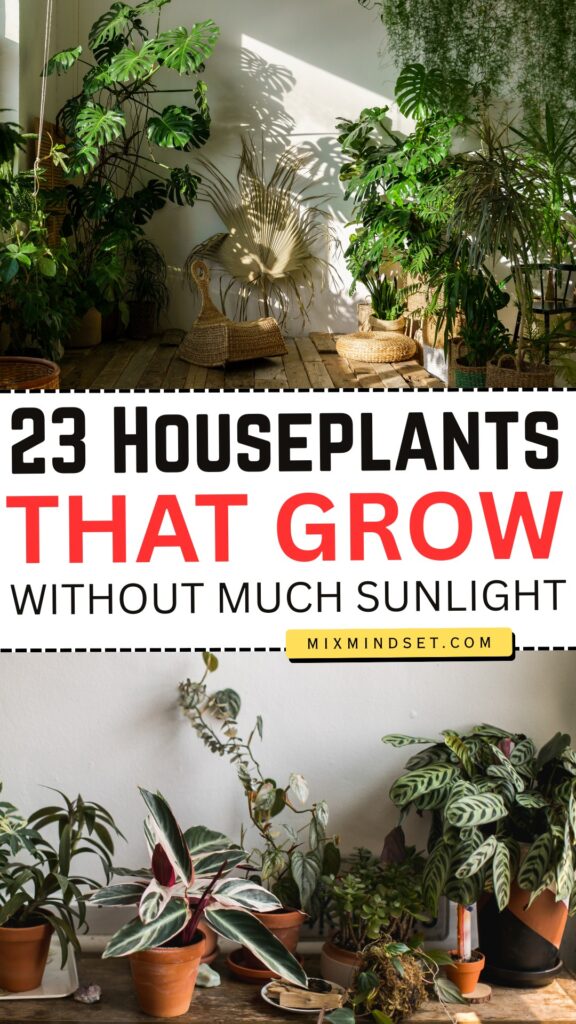
23 Houseplants That Grow Without Much Sunlight
Fill your dimmest rooms with greenery using these 23 houseplants that thrive without much sunlight. No bright windowsills needed—just beautiful, low-light plants that actually survive. #LowLightPlants #Houseplants #IndoorGardening #ShadePlants #PlantParent
I used to think I could not have houseplants because my apartment faced north and barely got any sun. Every plant I brought home turned yellow and sad within weeks. I felt like a plant killer.
Then I discovered low-light plants, and everything changed. They grew happily in my dim corners, on my office desk, and even in rooms with only artificial light.
Now I want to share the 23 best ones with you. These are the plants that actually survive and look beautiful with very little sunlight.
What “Low Light” Really Means
Before we get to the list, let me clear something up. Low light does not mean no light. Every plant needs some light to live. Low light means a room that does not get any direct sun—a north-facing window, a dark corner, or a hallway with no windows at all.
In these spots, plants grow more slowly and need less water than they would in bright light. That is actually good news. It means less work for you.
23 Houseplants That Thrive in Low Light
1. Snake Plant (Sansevieria trifasciata)
The snake plant is the legend of the low-light world. It can survive in rooms with almost zero natural light. Its stiff, sword-like leaves stand tall and proud no matter what. It also cleans the air and only needs water every two to three weeks.
Care: Water sparingly, only when the soil is completely dry. Avoid overwatering. Tolerates low to bright indirect light. Mildly toxic to pets.
2. ZZ Plant (Zamioculcas zamiifolia)
The ZZ plant has glossy, deep green leaves that almost look fake. It stores water in its thick roots, so it handles drought and low light like a pro. Offices love these plants because they survive on fluorescent light alone.
Care: Water every 2-3 weeks, allowing soil to dry completely. Low to bright indirect light. Toxic to pets.
3. Pothos (Epipremnum aureum)
Pothos might be the most forgiving plant on the planet. Its heart-shaped leaves trail beautifully from shelves or hanging baskets. It keeps growing even in rooms with almost no natural light. Many plant lovers call it unkillable.
Care: Water when the top inch of soil feels dry. Adapts to low, medium, or bright indirect light. Toxic to pets.
4. Peace Lily (Spathiphyllum)
Peace lilies bring elegant white flowers to even the darkest corners. Unlike most flowering plants, they do not need direct sunlight to bloom. They also filter toxins from the air. When they need water, the leaves droop as a little signal.
Care: Keep soil lightly moist. Low to bright indirect light. Toxic to pets.
5. Cast Iron Plant (Aspidistra elatior)
True to its name, the cast iron plant is nearly indestructible. Victorian gardeners loved it because it survived gas-lit rooms with almost no light. Cold drafts, low humidity, and dim conditions are no problem.
Care: Water when the top soil dries out. Tolerates very low light. Non-toxic to pets.
6. Chinese Evergreen (Aglaonema)
Chinese evergreens come in a wild range of colors, from deep green to pink, red, and silver. They adapt easily to different lighting conditions. Their bold leaf patterns make them one of the most visually exciting low-light plants.
Care: Water moderately. Keep away from cold drafts. Low to medium light. Toxic to pets.
7. Spider Plant (Chlorophytum comosum)
Spider plants are classic, cheerful houseplants with arching leaves. They adapt well to lower light levels and produce baby plants that you can share with friends.
Care: Light watering. Low to bright indirect light. Non-toxic to pets.
8. Heartleaf Philodendron (Philodendron hederaceum)
This plant has soft, heart-shaped leaves that trail beautifully. It tolerates low light and grows steadily even in shade. It is a great starter plant for lower-light spaces.
Care: Water when soil is slightly dry. Low to medium light. Toxic to pets.
9. Dracaena (Dracaena marginata)
Dracaena has a dramatic, sculptural look with long, narrow leaves edged in red or purple. It handles shady corners without losing its striking color. It grows slowly, so you will enjoy the same plant for years.
Care: Water lightly every week or two. Avoid overwatering. Low to bright indirect light. Toxic to pets.
10. Parlor Palm (Chamaedorea elegans)
The parlor palm adds a soft, tropical feel to indoor spaces. It grows slowly and tolerates low light. It was a favorite in Victorian parlors for good reason.
Care: Keep soil slightly moist. Place away from harsh sunlight. Low to medium light. Non-toxic to pets.
11. Lucky Bamboo (Dracaena sanderiana)
Lucky bamboo grows well in low-light rooms. You can keep it in water or soil. It is often sold in decorative arrangements and is believed to bring good luck.
Care: Change water regularly. Keep away from direct sun. Low light. Non-toxic to pets.
12. Calathea
Calathea plants have decorative leaves that move slightly with light changes. They tolerate low light well and come in many stunning patterns.
Care: Keep soil moist. Avoid cold drafts. Low to medium light. Non-toxic to pets.
13. Boston Fern (Nephrolepis exaltata)
Boston ferns add soft texture to indoor spaces. They prefer indirect light and have been known to survive in north-facing rooms with no direct sun.
Care: Water consistently. Mist for humidity. Prune occasionally. Low to medium light. Non-toxic to pets.
14. Maidenhair Fern (Adiantum)
Maidenhair ferns have delicate, fan-shaped leaves and thrive in low light when humidity is stable.
Care: Water gently. Do not let soil dry completely. Low to medium light. Non-toxic to pets.
15. Dieffenbachia (Dieffenbachia)
Dieffenbachia has large, patterned leaves and adapts well to low light. It adds bold, tropical foliage to any room.
Care: Water when soil dries slightly. Rotate occasionally for even growth. Low to medium light. Toxic to pets.
16. Rubber Plant (Ficus elastica)
Rubber plants have large, glossy leaves and handle low light very well. They grow slowly in dimmer spots but stay healthy.
Care: Water when soil feels dry. Low to medium light. Toxic to pets.
17. Arrowhead Vine (Syngonium podophyllum)
Arrowhead vine has arrow-shaped leaves and adapts well to low-light conditions. It can trail or climb, making it versatile.
Care: Water when soil is slightly dry. Low to medium light. Toxic to pets.
18. Peperomia
Peperomias are slow-growing plants with thick, fleshy leaves. They do well in low light but will grow even slower.
Care: Water less in low light. Low to medium light. Non-toxic to pets.
19. Rabbit’s Foot Fern (Davallia)
Rabbit’s foot fern has feathery green leaves and fuzzy rhizomes that look like little rabbit feet. It does well in low light but needs consistent moisture.
Care: Water about once a week. Low to medium light. Non-toxic to pets.
20. Blue Star Fern (Phlebodium aureum)
Blue star fern has expansive, T-shaped blue-green leaves. It is low-light friendly but needs humidity.
Care: Keep moist and humid. Low to medium light. Non-toxic to pets.
21. Stromanthe Tricolor
Stromanthe has large, variegated leaves in shades of white, pink, and green. It is a colorful low-light plant.
Care: Water when soil feels dry. Low to medium light. Non-toxic to pets.
22. Maranta Red Prayer Plant (Maranta leuconeura)
Prayer plants have beautiful patterned leaves that fold up at night like praying hands. They do well in low light.
Care: Water every one to two weeks. Low to medium light. Non-toxic to pets.
23. Philodendron Prince of Orange
This philodendron has leaves that change color from bright orange to deep green as they age. It thrives in indirect light or north-facing windowsills.
Care: Water every seven to ten days. Low to medium light. Toxic to pets.
Quick Reference Table
| Plant | Light | Water | Pet Safe? |
|---|---|---|---|
| Snake Plant | Low to bright | When soil is dry | Toxic |
| ZZ Plant | Low to bright | Every 2-3 weeks | Toxic |
| Pothos | Low to bright | When top inch dry | Toxic |
| Peace Lily | Low to bright | Keep moist | Toxic |
| Cast Iron Plant | Very low | When top soil dry | Safe |
| Chinese Evergreen | Low to medium | Moderate | Toxic |
| Spider Plant | Low to bright | Light watering | Safe |
| Heartleaf Philodendron | Low to medium | When slightly dry | Toxic |
| Dracaena | Low to bright | Light weekly | Toxic |
| Parlor Palm | Low to medium | Keep moist | Safe |
| Lucky Bamboo | Low | Change water regularly | Safe |
| Calathea | Low to medium | Keep moist | Safe |
| Boston Fern | Low to medium | Consistent, mist | Safe |
| Maidenhair Fern | Low to medium | Keep moist | Safe |
| Dieffenbachia | Low to medium | When slightly dry | Toxic |
| Rubber Plant | Low to medium | When soil dry | Toxic |
| Arrowhead Vine | Low to medium | When slightly dry | Toxic |
| Peperomia | Low to medium | Water less | Safe |
| Rabbit’s Foot Fern | Low to medium | Weekly | Safe |
| Blue Star Fern | Low to medium | Keep moist | Safe |
| Stromanthe Tricolor | Low to medium | When soil dry | Safe |
| Maranta Prayer Plant | Low to medium | Every 1-2 weeks | Safe |
| Philodendron Prince of Orange | Low to medium | Every 7-10 days | Toxic |
Care Tips for Low-Light Plants
Water Less
Plants in low light grow slower and use less water. Always check the soil before watering. Stick your finger in the soil—if it feels dry, water. If it is still wet, wait. Overwatering is the most common mistake.
Wipe the Leaves
Dust blocks light and clogs the pores on leaves. Once a month, wipe the leaves gently with a damp cloth. This helps the plant breathe and look its best.
Do Not Over-Fertilize
Low-light plants need very little fertilizer. Feed them only during spring and summer, and use half the recommended strength.
Remember: Low Light ≠ No Light
Every plant needs some light to live. If your room is completely dark, consider using an LED grow light to help your plants survive.
My Personal Low-Light Journey
I started my low-light collection with a single snake plant in my dark hallway. It survived when everything else died. That gave me confidence. I added a ZZ plant on my desk at work. Then a pothos in my bathroom. Now I have plants in every room, even the ones with tiny north-facing windows.
The best part? They barely need me. I water them when I remember, and they keep growing. If I can do it, you can too.
The Bottom Line
You do not need a sun-drenched windowsill to enjoy houseplants. Snake plants, ZZ plants, pothos, and peace lilies are just a few of the many options that thrive in low light. They grow slowly, need less water, and add life to even the dimmest corners.
Pick one from this list. Give it a spot with some light, water it only when the soil is dry, and watch it grow. Your dark room is not a problem—it is the perfect home for these plants.