Homemade Body Butter Recipe
There’s something undeniably satisfying about creating your own skincare. When you make a homemade body butter, you’re not just mixing ingredients; you’re crafting a personalized remedy that is free from hidden chemicals, synthetic fragrances, and unnecessary preservatives.
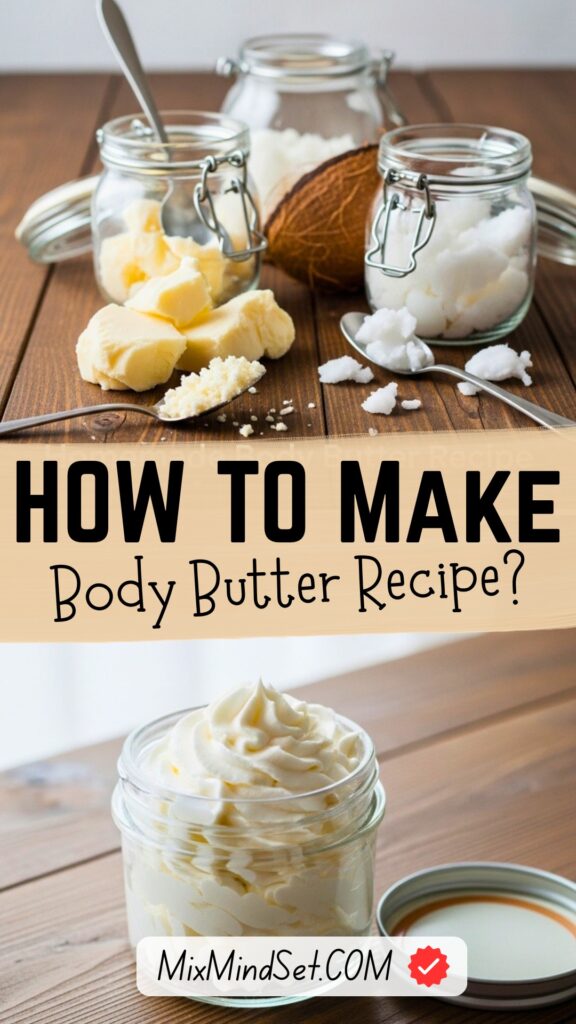
Unlike commercial lotions that often rely on water and alcohol (which can actually dry out your skin), a true body butter is a concentrated blend of rich butters and nourishing oils designed to seal in moisture and protect your skin barrier.
Whether you are battling winter dryness, looking for a natural gift idea, or simply want to know exactly what you are putting on your body, this recipe is for you. We will walk through a simple, foolproof whipped body butter recipe that yields a light, fluffy texture that absorbs quickly—leaving your skin soft, not greasy.
Table of Contents
Why Choose Homemade Over Store-Bought?
The skincare aisle is overwhelming. Most products promise hydration but deliver a cocktail of water, alcohol, and emulsifiers. Here is why switching to a DIY approach is a game-changer for your skin.
Total Control Over Ingredients
When you make body butter at home, you become the formulator. You can avoid common irritants like parabens, phthalates, and synthetic fragrances. If you have sensitive skin or conditions like eczema, you can select only the most soothing, hypoallergenic ingredients.
Superior Hydration
Commercial lotions typically contain a high percentage of water. While water provides immediate moisture, it evaporates quickly (a process called “trans-epidermal water loss”). Body butters are anhydrous (water-free). They act as an occlusive barrier, locking hydration into the skin for hours longer than standard lotions.
Cost-Effective Luxury
High-end natural body butters can cost upwards of $30 to $50 for a small jar. By purchasing raw ingredients like shea butter and coconut oil in bulk, you can make several months’ worth of product for a fraction of the price.
The Essential Ingredients: A Breakdown
To achieve the perfect texture and maximum skin benefits, you need to understand the role of each ingredient. This recipe balances hard butters for structure with liquid oils for spreadability.
| Ingredient | Quantity | Role in the Recipe | Skin Benefit |
|---|---|---|---|
| Shea Butter | ½ cup | Base / Hard butter | Deep moisturizing; high in vitamins A & E; anti-inflammatory. |
| Coconut Oil | ¼ cup | Emollient | Adds slip; provides antimicrobial properties. (Use virgin, unrefined for scent). |
| Sweet Almond Oil | ¼ cup | Carrier oil | High in fatty acids; absorbs quickly without clogging pores. |
| Beeswax (optional) | 1 tbsp | Thickener | Adds a protective layer; helps the butter last longer. Omit for a softer texture. |
| Essential Oil | 20–30 drops | Fragrance / Therapy | Custom scent; choose lavender for calming or peppermint for invigoration. |
| Vitamin E Oil | 1 tsp | Preservative | Extends shelf life; antioxidant; aids in skin repair. |
The Recipe: Whipped Vanilla & Citrus Body Butter
This recipe yields a fluffy, whipped consistency that feels like a cloud. The combination of vanilla and sweet orange essential oil creates a warm, uplifting scent that is not overpowering.
Equipment Needed
- Double boiler (or a glass bowl and a saucepan)
- Hand mixer or stand mixer (a whisk attachment works best)
- Spatula
- Sterilized glass jars (8 oz or 4 oz sizes work well)
Step-by-Step Instructions
1. Melt the Butters: Using a double boiler, combine the shea butter, coconut oil, and beeswax (if using). Heat on low-medium. You want to melt them gently; overheating can degrade the nutrients in the shea butter. Stir occasionally until fully liquid.
2. Add Liquid Oils: Remove the mixture from the heat immediately. Stir in the sweet almond oil and vitamin E oil. The heat from the melted butters is enough to warm these oils without damaging their properties. Allow the mixture to cool slightly (about 10 minutes) before adding essential oils. Adding essential oils when the mixture is too hot will cause them to evaporate.
3. Cool and Set: Place the bowl in the refrigerator for about 20 to 30 minutes. You want the mixture to solidify partially. It should look like a soft, opaque paste (similar to the consistency of chilled coconut oil). Pro tip: Do not let it get rock hard; you want it to be firm but pliable.
4. Whip to Perfection: Remove the bowl from the fridge. Using a hand mixer, begin whipping the butter. Start on low to avoid splashing, then increase to high. Whip for 5 to 7 minutes. You will see the mixture transform from a dense paste into a light, fluffy, whipped texture. If it looks like whipped cream or frosting, you are done.
5. Add Scent: Add 20 to 30 drops of your chosen essential oils. For this recipe, we recommend 15 drops of Sweet Orange and 10 drops of Vanilla (oleoresin). Whip for an additional 30 seconds to combine thoroughly.
6. Jar and Cure: Scoop the whipped body butter into your sterilized glass jars. Let it sit at room temperature for a few hours to “cure.” It will firm up slightly but maintain its whipped consistency.
Video Guide 🎥
Nutritional & Chemical Facts (Per Application)
While this is a topical product, the “nutritional” profile refers to the potent fatty acids and vitamins your skin absorbs. Here is what each application delivers to your dermis.
| Component | Amount (per 1 tsp) | Function |
|---|---|---|
| Vitamin A | 50–100 IU | Promotes cell turnover and fights premature aging. |
| Vitamin E | 20–30 mg | Neutralizes free radicals; acts as a natural preservative. |
| Oleic Acid | High content | Deeply penetrates the skin barrier to restore elasticity. |
| Lauric Acid | Present | Provides antimicrobial protection (from coconut oil). |
| Fatty Acids | 85% concentration | Replenishes the lipid barrier to prevent trans-epidermal water loss. |
4 Common Mistakes to Avoid
Even with a simple recipe, small errors can lead to grainy textures or spoilage. Here is how to ensure success.
1. Overheating the Butters
Shea butter is temperamental. If you heat it too quickly or at too high a temperature, it can crystallize upon cooling, resulting in a gritty, sandy texture. Always melt using a double boiler on low heat.
2. Not Whipping Long Enough
The magic of the “whipped” texture comes from incorporating air. If you only whip for a minute or two, you will end up with a dense, hard paste that is difficult to spread on skin. Patience is key—whip until the volume doubles and it looks like frosting.
3. Adding Water or Aloe
This is a water-free recipe. If water or aloe vera gel is introduced (even from a dirty spatula), it can create a breeding ground for bacteria and mold since there are no chemical preservatives. Ensure all utensils and jars are completely dry.
4. Using Low-Quality Ingredients
The final product is only as good as the ingredients you put in it. Look for raw, unrefined shea butter (it should have a nutty, earthy scent) and cold-pressed oils. Refined versions often lose their beneficial vitamins during processing.
Frequently Asked Questions
How long does homemade body butter last?
Because this recipe contains no water and includes vitamin E (a natural antioxidant), it typically lasts 6 to 12 months. Store it in a cool, dark place. If you notice a rancid smell (like old crayons) or visible mold, discard it immediately.
Can I use this on my face?
While the ingredients are natural, body butters are often too heavy for the delicate facial skin. They can clog pores, especially for those prone to acne. This recipe is specifically formulated for dry hands, elbows, knees, and the body.
Why is my body butter grainy?
Graininess usually occurs from temperature fluctuations. If your shea butter melted and cooled too quickly, it forms crystals. The fix: Simply re-melt the entire batch and re-whip it, allowing it to cool slowly at room temperature (not in the fridge) before the final whip.
Can I substitute the coconut oil?
Yes. If you are allergic to coconut oil or find it comedogenic, you can substitute it with jojoba oil or fractionated coconut oil (which is liquid and non-comedogenic). Keep in mind that virgin coconut oil solidifies at room temperature, which helps the body butter hold its shape; swapping it for a liquid oil will result in a softer final product.
Conclusion
Making your own homemade body butter is more than just a DIY project; it is an act of self-care. By taking ten minutes to whip together these few simple ingredients, you are choosing transparency, purity, and deep hydration for your skin. This recipe is forgiving and versatile—feel free to experiment with different essential oil blends or switch out the almond oil for avocado oil if you prefer.
Once you experience the difference between a water-filled lotion and this rich, whipped butter, you will likely never go back to the drugstore aisle.
Store it in a beautiful jar on your nightstand, and make applying it a ritual. Your skin will feel softer, look healthier, and thank you for the nourishment.