Cabbage Rolls Recipe
There’s something deeply satisfying about a pan of homemade cabbage rolls—tender cabbage leaves wrapped around a savory filling of meat and rice, all simmered in a rich tomato sauce.
This classic comfort food appears in many cuisines (Polish golabki, Lebanese malfouf, Hungarian töltött káposzta), and for good reason. It’s hearty, budget-friendly, and even better the next day.
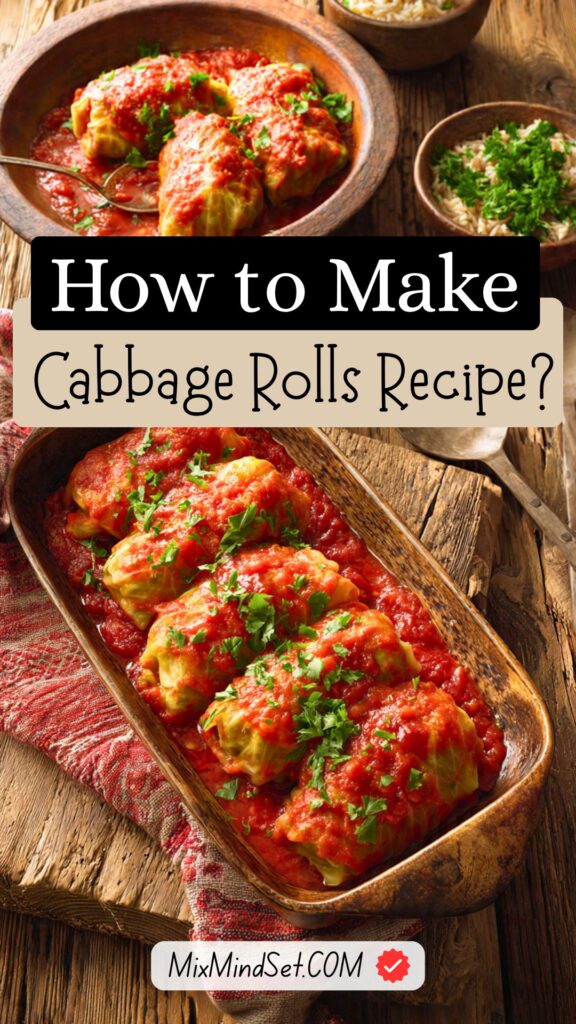
Many home cooks shy away from cabbage rolls because they seem time-consuming. But with a few smart techniques—like freezing the cabbage head or microwaving the leaves—the process becomes surprisingly simple.
I’ll walk you through every step so you get perfectly soft leaves, a juicy filling, and a sauce that ties everything together.
Let’s roll.
How to Make Cabbage Rolls Recipe?
The beauty of cabbage rolls is that you likely have most ingredients in your kitchen right now. Below is the exact shopping list for about 8–10 large rolls (serves 4–5 people).
Ingredients Table
| Ingredient | Amount | Notes |
|---|---|---|
| Green cabbage | 1 large head | Savoy or Napa also work; avoid red cabbage |
| Ground beef (80/20) | 1 lb | Or half beef, half pork for more flavor |
| Cooked white rice | 1 cup | Use day-old rice for best texture |
| Onion, finely chopped | 1 medium | About ½ cup |
| Garlic, minced | 3 cloves | Fresh is best |
| Canned crushed tomatoes | 15 oz | Or tomato sauce + 2 tbsp tomato paste |
| Beef or vegetable broth | 1 cup | Low-sodium preferred |
| Egg | 1 large | Binds the filling |
| Fresh parsley or dill | ¼ cup chopped | Optional but brightens flavor |
| Salt & black pepper | To taste | |
| Paprika (sweet or smoked) | 1 tsp | Adds warmth |
Nutritional Facts (per 2 large cabbage rolls)
| Nutrient | Amount |
|---|---|
| Calories | 410 kcal |
| Protein | 24g |
| Carbohydrates | 32g |
| Fiber | 6g |
| Fat | 22g |
| Saturated Fat | 8g |
| Sodium | 580mg |
| Iron | 15% DV |
Step-by-Step: How to Make Perfect Cabbage Rolls
This recipe is broken into three manageable parts: prepping the cabbage leaves, making the filling, and assembling with sauce. Don’t skip the cabbage prep—it’s the secret to leaves that roll without tearing.
1. Prepare the Cabbage Leaves (Two Easy Methods)
Method A (Freezer trick – my favorite): Place the whole head of cabbage in the freezer overnight. Thaw it completely on the counter for a few hours. The freezing and thawing softens the leaves naturally, making them peel off easily without boiling. No mess, no hot water.
Method B (Traditional blanching): Bring a large pot of salted water to a boil. Core the cabbage by cutting a cone shape around the stem. Submerge the whole head in the boiling water for 2–3 minutes. As outer leaves soften, peel them off with tongs. Repeat until you have 8–10 large leaves.
Once leaves are soft, cut out the thick center vein from each leaf (a V-shaped notch works well). This allows easier rolling.
2. Make the Filling & Sauce
Filling: In a large bowl, combine the ground meat, cooked rice, chopped onion, minced garlic, egg, parsley, 1 teaspoon salt, ½ teaspoon pepper, and paprika. Mix gently with your hands until just combined—overmixing makes the filling dense.
Sauce: In a separate bowl, whisk together the crushed tomatoes and broth. If you like a slightly sweet sauce, add 1 tablespoon of brown sugar or a grated carrot.
3. Roll & Assemble
- Lay a cabbage leaf flat with the stem end closest to you.
- Place about ¼ cup of filling near the stem edge.
- Fold the stem side over the filling, then fold in the left and right sides.
- Roll upward tightly to form a neat package, like a burrito.
- Spread ½ cup of sauce on the bottom of a large Dutch oven or baking dish.
- Place the rolls seam-side down in a single layer (you may need two layers).
- Pour the remaining sauce over the rolls, ensuring they’re mostly covered.
4. Cook Low & Slow
Cover the pot and cook in a 325°F oven for 1½ hours, or simmer gently on the stovetop over low heat for 1 hour. The low temperature is key—high heat makes cabbage tough and filling dry.
Serve hot with a dollop of sour cream, fresh dill, and crusty bread to soak up the sauce.
Video Guide 📺
Common Mistakes & How to Avoid Them
Even a simple cabbage roll recipe can go wrong. Here’s what to watch for.
| Mistake | Why It Happens | Quick Fix |
|---|---|---|
| Leaves tear while rolling | Not softened enough or thick vein not removed | Freeze or blanch longer; always cut out the hard stem part of the vein. |
| Filling is dry and crumbly | Too little fat in meat or overbaked | Use 80/20 ground beef, or add 2 tbsp of cooked bacon or olive oil. |
| Sauce is watery | No tomato paste or too much broth | Simmer uncovered for the last 20 minutes to reduce. |
| Cabbage tastes bitter | Overcooked or old cabbage | Add a pinch of sugar or a splash of vinegar to the sauce to balance. |
| Rolls fall apart during cooking | Not rolled tightly enough | Place seam-side down and pack them snugly in the pot. |
Pro Tips for the Best Cabbage Rolls
- Use leftover rice – Freshly cooked rice can become mushy. Day-old, refrigerated rice holds its shape better in the filling.
- Make them ahead – Cabbage rolls taste even better the next day as flavors meld. Assemble a day in advance, refrigerate, then bake when ready.
- Double the batch – These freeze beautifully. Cool completely, then freeze in the sauce in a baking dish for up to 3 months. Reheat covered at 350°F for 45 minutes.
- Add a smoky touch – Replace half the beef with ground pork and use smoked paprika or a strip of bacon in the sauce.
- No oven? – Use a slow cooker. Cook on low for 6–8 hours or high for 4 hours.
Frequently Asked Questions
Can I make cabbage rolls without rice?
Yes. Substitute the rice with quinoa, cooked barley, or even grated cauliflower for a low-carb version. If using cauliflower, squeeze out excess moisture first. The filling will be slightly less firm but still delicious.
How do I prevent cabbage rolls from tasting bland?
Season aggressively. The cabbage itself is mild, so the filling needs plenty of salt, pepper, and aromatics. Also, don’t skimp on the sauce—add a splash of Worcestershire sauce or a spoonful of Dijon mustard for depth.
Can I use frozen cabbage leaves?
Absolutely. Many stores sell frozen whole cabbage leaves (often labeled for stuffed cabbage). Thaw them in the refrigerator overnight, then pat dry. They’re already softened and ready to roll.
Are cabbage rolls healthy?
Yes, they’re quite balanced. You get lean protein, fiber-rich cabbage, and complex carbs from rice. To make them healthier: use lean ground turkey or plant-based crumbles, swap white rice for brown or wild rice, and reduce salt by using low-sodium broth. Each roll typically has 200–250 calories.
Why are my cabbage rolls tough?
Two reasons: undercooking (the cabbage needs at least 1 hour of simmering to become tender) or overcooking at too high a temperature (boiling instead of gentle simmering). Keep the heat low and the time long.
Can I make this vegetarian?
Yes. Replace the meat with 1½ cups of cooked lentils (brown or green) mixed with 8 oz of crumbled firm tofu or cooked mushrooms. Add an extra egg to bind, or use a flax egg. The sauce remains the same.
Conclusion
Cabbage rolls are one of those dishes that feels like a warm hug on a plate. Yes, they require a little patience, but the reward is a comforting, make-ahead meal that feeds a crowd without breaking the bank.
Once you master the simple techniques—softening leaves properly, rolling snugly, and cooking low and slow—you’ll wonder why you didn’t try them sooner.
Make a batch this weekend. Freeze half for a busy night. Serve with a smile and maybe some mashed potatoes on the side. Your family will call it a new favorite.