Easy Slime Recipe
Slime is one of those activities that brings out the kid in everyone. It’s satisfying to stretch, squish, and mold—and surprisingly simple to make at home with just a few common ingredients.
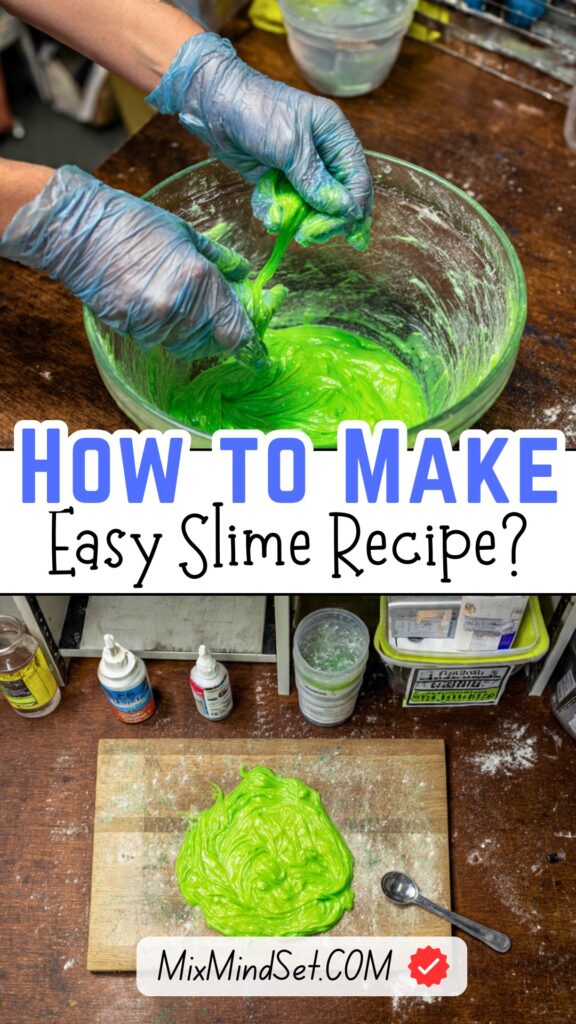
Whether you’re entertaining children on a rainy afternoon or looking for a sensory stress-reliever, a reliable slime recipe is a game-changer.
But not all slime recipes are created equal. Some turn out sticky, others too stiff, and many rely on hard-to-find ingredients.
I’m Fatima, and I’ve tested the most popular methods to bring you a foolproof easy slime recipe that comes together in minutes—plus a borax-free version for those who prefer to avoid it. Let’s get started.
What You Need to Make Easy Slime?
The beauty of basic slime is that it requires only a few key ingredients. Below is a breakdown for the two most common approaches: glue-based slime with contact lens solution and borax-free slime.
| Ingredient | Basic Slime (with activator) | Borax-Free Slime |
|---|---|---|
| White school glue (PVA) | ½ cup (4 oz bottle) | ½ cup |
| Water | ¼ cup | ¼ cup |
| Baking soda | ½ teaspoon | ½ teaspoon |
| Contact lens solution (must contain boric acid and sodium borate) | 1 tablespoon | — |
| Liquid laundry starch | — | 1–2 tablespoons |
| Optional add-ins | Food coloring, glitter, foam beads | Food coloring, glitter |
Key note: The activator is what turns liquid glue into slime. For the basic version, contact lens solution with boric acid works perfectly. For borax-free, liquid laundry starch (like Sta-Flo) is the alternative.
Basic Easy Slime Recipe (Activator Method)
This is the most reliable method for a classic, stretchy slime. It takes less than 5 minutes and uses ingredients you likely already have.
Step-by-Step Instructions
- Pour the glue into a mixing bowl. Use a standard 4 oz bottle of white school glue. For a larger batch, double the recipe.
- Add water and baking soda. Stir until the mixture is smooth and the baking soda is fully dissolved. The baking soda helps control the slime’s consistency and prevents stickiness.
- Add color and glitter. Mix in a few drops of food coloring and a sprinkle of glitter if desired. Stir until evenly distributed.
- Add the activator. Pour in 1 tablespoon of contact lens solution. Stir immediately. You’ll see the mixture begin to pull away from the sides of the bowl.
- Knead the slime. Once the mixture forms a cohesive mass, remove it from the bowl and knead with your hands for 1–2 minutes. It will start out sticky but quickly become smooth and stretchy.
- Adjust if needed. If the slime is still too sticky, add a few more drops of contact lens solution and knead again. If it’s too stiff, add a tiny bit of water.
Borax-Free Slime Recipe (Using Liquid Starch)
For those who prefer to avoid contact lens solution or want an even simpler approach, liquid laundry starch is a great alternative.
Step-by-Step Instructions
- Combine glue and water in a mixing bowl. Stir well.
- Add baking soda and any color you like. Mix until uniform.
- Pour in liquid starch slowly—start with 1 tablespoon—while stirring continuously.
- Stir until slime forms. The mixture will suddenly clump together. Once it pulls away from the bowl, knead by hand for 2–3 minutes until smooth and elastic.
- Troubleshoot stickiness. If it remains sticky, add another teaspoon of starch and knead. If it becomes too firm, add a drop of water.
Common Slime Mistakes and How to Fix Them
Even with simple recipes, things can go wrong. Here’s how to troubleshoot the most common issues.
| Problem | Likely Cause | Fix |
|---|---|---|
| Slime is too sticky | Not enough activator | Add more contact lens solution or starch a few drops at a time |
| Slime is too stiff / rubbery | Too much activator | Knead in a drop of water or lotion |
| Slime is stringy / doesn’t stretch | Over-activated or insufficient kneading | Knead longer; add a tiny amount of water or lotion |
| Slime is watery / not forming | Wrong type of glue (non-PVA) or too much water | Use only white school glue; add more activator gradually |
| Slime melts after a few hours | Too much water or not enough activator | Store in airtight container; reactivate with a drop of solution |
Slime Safety and Storage Tips
Slime is safe when made with standard household ingredients, but a few precautions ensure a worry-free experience.
- Use non-toxic, washable ingredients. White school glue, baking soda, and contact lens solution are generally safe for children, but always supervise young kids.
- Avoid ingestion. While the ingredients aren’t highly toxic, slime is not food. Keep it away from mouths.
- Wash hands before and after. Oils from skin can break down slime over time. Clean hands help the slime last longer.
- Store in an airtight container. A sealed container or zip-top bag keeps slime from drying out. At room temperature, it stays fresh for 1–2 weeks. If it becomes dry, add a drop of water and knead.
- Don’t store near heat or sunlight. Heat can melt slime, causing it to become sticky again.
Fun Variations to Try
Once you’ve mastered the basic recipe, experiment with these easy twists:
- Fluffy Slime: Add ½ cup of shaving cream to the glue mixture before adding activator. This creates a light, airy texture.
- Glitter Slime: Mix in 2–3 tablespoons of fine or chunky glitter. Cosmetic-grade glitter is safest for hands.
- Butter Slime: Add 2 tablespoons of clay (like model magic) to the base slime. Knead until you get a smooth, moldable consistency.
- Scented Slime: Add a few drops of essential oil (like lavender or peppermint) or unsweetened drink mix for scent and color.
- Magnetic Slime: Mix in iron oxide powder and use a strong neodymium magnet to make the slime move.
Frequently Asked Questions
Can I make slime without glue?
Yes, but it won’t have the same stretchy properties. Alternative recipes use cornstarch and dish soap, or chia seeds for a sensory dough, but they behave differently than traditional slime.
Why won’t my slime activate?
The most common reason is using the wrong type of activator. Contact lens solution must contain boric acid and sodium borate—check the label. Also, some glues (like clear glue) may require slightly more activator than white glue.
Is borax safe for slime?
Borax powder is effective but can cause skin irritation for sensitive individuals. The recipes above use safer alternatives: contact lens solution and liquid starch contain small amounts of boron compounds but are generally milder.
How do I fix slime that’s too hard?
Knead in a few drops of warm water or a small amount of hand lotion. Work it in slowly until the slime softens. Avoid adding too much liquid at once.
Can I make slime with clear glue instead of white?
Absolutely. Clear glue produces a translucent slime that’s great for showing off glitter and color. The recipe is identical—just use clear school glue.
Conclusion
Making slime at home doesn’t have to be complicated or messy. With just three main ingredients—glue, baking soda, and a safe activator—you can create a stretchy, satisfying slime in minutes. Whether you’re crafting with kids or simply want a stress-relieving activity, this easy slime recipe delivers consistent results every time.
Remember to store it properly, troubleshoot with patience, and don’t be afraid to customize with colors and textures. Once you get the hang of the basic method, you’ll find yourself whipping up batches for parties, gifts, or just because.