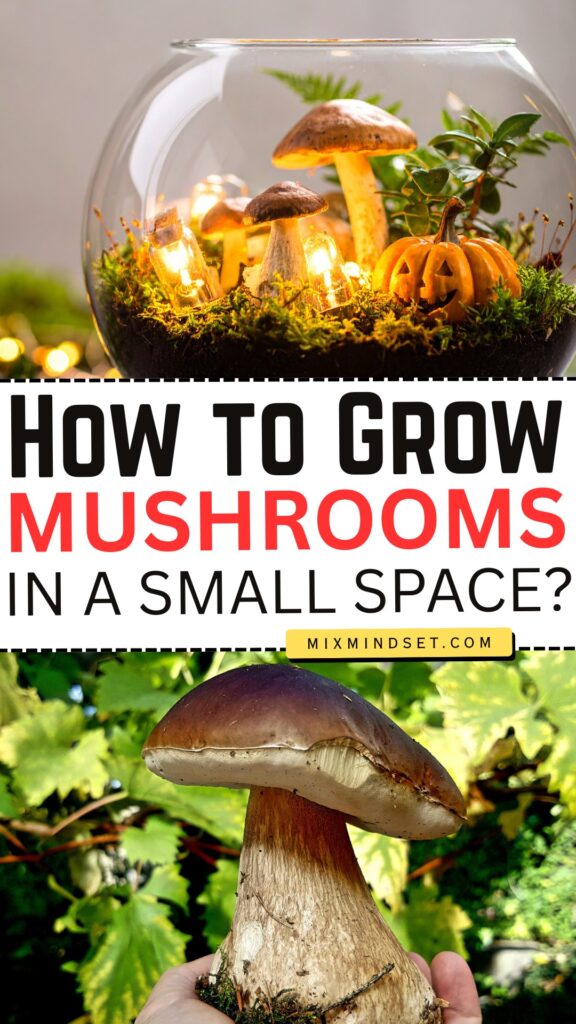
How to Grow Mushrooms in a Small Space?
Grow fresh, delicious mushrooms right on your kitchen counter. This guide covers the easiest methods for tiny spaces—from grow kits to the bucket method—with simple steps for beginners. #GrowMushrooms #SmallSpaceGardening #UrbanHomestead #DIYFood #IndoorMushrooms
I remember the first time I tried to grow mushrooms. I thought I needed a big garden or a fancy setup. I was wrong. I started with a small kit on my kitchen counter, and within two weeks, I had fresh oyster mushrooms. I was hooked. Now I grow them in my tiny apartment all year round. You can too.
Why Mushrooms Are Perfect for Small Spaces
Mushrooms are different from regular plants. They do not need soil or sunlight. They grow in dark, damp places like a closet, a corner of your kitchen, or even under your sink. This makes them ideal for people with no garden, limited space, or a dark apartment.
A mushroom growing kit takes up less space than a small houseplant. You can grow them on a shelf, a countertop, or in a cabinet. They are clean, do not create strong odors, and you can harvest them year-round.
🍄 My Personal Experience: My first mushroom kit sat on my kitchen counter next to my coffee maker. It was barely bigger than a loaf of bread. I misted it every day, and within ten days, I had a beautiful cluster of oysters. I could not believe how easy it was.
Best Mushrooms for Small-Space Growing
Not all mushrooms are easy to grow indoors. Some need logs or special conditions. For beginners, stick with these varieties.
Oyster mushrooms are the easiest choice for first-time growers. They adapt well to different temperatures and substrates. You can grow them on straw, coffee grounds, or sawdust. I always recommend starting with oysters.
Three Easy Methods for Small Spaces
You have several options for growing mushrooms in a small space. I will cover the easiest ones.
Method 1: Ready-to-Grow Mushroom Kit (Easiest)
This is how I started. A mushroom growing kit is the simplest way to grow mushrooms at home. Most kits come with a block of growing material (called substrate) already inoculated with mushroom spawn.
What you get:
- A prepared growing block wrapped in plastic
- Step-by-step instructions
- Everything you need to get started
How it works:
- Cut the plastic packaging as instructed
- Soak the growing block in water
- Mist the block with water every day
- Within one to two weeks, you will see small clusters of mushrooms beginning to emerge. This is called “pinning.”
Where to put it: Place your kit in a cool area away from direct sunlight. A spot that gets indirect light and fresh air works best. You do not need a dark room. Mushrooms need indirect light to form properly.
Kits are widely available at garden supply stores and online. They are designed for home use and require minimal space and time.
🍄 My Personal Experience: My first kit cost about $20 and produced over a pound of mushrooms. I harvested my first crop in 12 days. The kit even produced a second, smaller harvest after I soaked it again. That is called a “second flush.”
Method 2: The Bucket Method (Cheaper, Reusable)
If you want to grow more mushrooms for less money, the bucket method is a great option. It is also more reliable than some kits.
What you need:
- A 1-gallon plastic bucket with a lid
- A substrate (straw works well and is cheap)
- Mushroom spawn (grain spawn is easy to handle)
- A drill to make holes
Step-by-step:
Step 1: Prepare the bucket. Drill holes in the sides of the bucket. Drill one row of holes near the top and another row about two-thirds of the way down. The holes should be about half an inch wide. Then drill some smaller holes across the bottom for drainage.
Step 2: Prepare the substrate. Straw is a good choice. You can find clean, chopped straw at pet stores. The smaller the pieces, the faster the mushroom “roots” (mycelium) will grow. To prevent contamination, pasteurize the straw by soaking it in hot water (160–180°F) for about an hour. Then let it cool and drain.
Step 3: Mix and pack. Mix the mushroom spawn evenly throughout the cooled straw. Pack the mixture into your bucket.
Step 4: Wait. Put the lid on the bucket and place it in a warm, dark spot. In two to three weeks, the white mycelium will spread through the straw.
Step 5: Fruit. Move the bucket to a brighter area with indirect light. Mushrooms will grow out of the holes you drilled. Keep the bucket moist by misting it daily.
🍄 My Personal Experience: I made my first bucket with a free container from a local restaurant. The whole setup cost me less than $15. I got three good harvests from that single bucket. The mushrooms grew right out of the holes I drilled, just like magic.
Method 3: Old Plastic Containers (Zero Waste)
You do not need to buy special equipment. Old plastic containers work perfectly.
What you can use:
These containers are the right size for tabletop growing and keep plastic out of landfills.
How to do it:
- Sanitize your container and let it dry
- If using a yogurt tub, poke pencil-sized holes in the sides
- Pasteurize your substrate (straw, sawdust, or even cardboard works)
- Mix the spawn into the substrate
- Pack it into your container
- Keep it moist and in indirect light
Mushrooms will fruit from the holes or the open top of the container.
What You Need to Know About Light, Temperature, and Humidity
Mushrooms are not like regular plants. They have different needs.
Light: Mushrooms do not need sunlight to grow. They need indirect light to form properly. A north-facing window or a room with a regular lamp works fine. Direct sunlight will dry out the substrate and harm growth.
Temperature: Keep your growing area between 60 and 75°F. If it gets too warm (above 75°F), the mycelium can be harmed. If it gets too cool (below 60°F), growth might stall.
Humidity: Mushrooms need a lot of moisture. Mist the substrate every day. If your home is very dry, you can create a humidity tent with a clear plastic bag over your container.
Airflow: Fresh air is important. If your mushrooms grow long stems and small caps, they need more fresh air. Fan the area briefly two or three times a day.
Common Mistakes and How to Avoid Them
Here are the mistakes I made so you do not have to.
| Mistake | What Happens | How to Fix It |
|---|---|---|
| Not enough moisture | Mushrooms dry out and stop growing | Mist daily. Keep humidity high. |
| Too much direct light | Substrate dries out. Growth slows. | Move to indirect light only. |
| Poor air flow | Long stems, small caps | Fan the area a few times a day. |
| Contamination | Green or black mold grows on the substrate | Keep everything clean. Pasteurize your substrate. |
| Harvesting too late | Mushrooms drop spores and get tough | Harvest when the caps start to flatten out. |
Harvesting and Storing Your Mushrooms
Mushrooms grow fast. They can double in size every day.
When to harvest: Harvest when the caps start to flatten out but before they curl upward. The instructions with your kit or spawn will tell you what to look for.
How to harvest: Twist the mushrooms gently to pull them off the substrate. Do not cut them with a knife. Twisting leaves less stem behind, which reduces the chance of rot.
Storing: Fresh mushrooms last about a week in the refrigerator. Store them in a paper bag, not plastic. Plastic traps moisture and makes them slimy.
Second flush: After you harvest your first crop, you can often get a second one. Let the growing block rest for about a week in a cool, dry place. Then soak it again and start misting. Subsequent harvests will be smaller and take longer.
My Personal Growing Routine
Here is what I actually do in my small apartment.
Week 1:
- I set up my kit or bucket in a corner of my kitchen that gets indirect light.
- I mist the substrate twice a day.
- I check that the temperature stays between 65–70°F.
Week 2:
- I see tiny white bumps (pins) starting to form.
- I keep misting. I fan the area once a day.
- The pins start growing into mushrooms.
Week 3:
- The mushrooms are ready to harvest.
- I twist them off gently.
- I cook them the same day. Nothing beats fresh mushrooms.
The Bottom Line
Growing mushrooms in a small space is easy, cheap, and rewarding. You do not need a garden, soil, or sunlight. You just need a kit or a bucket, some spawn, and a little patience.
Start with a ready-to-grow kit. It is the easiest way to get started. Once you see how simple it is, try the bucket method. It is cheaper and reusable. Before you know it, you will have fresh mushrooms growing on your kitchen counter all year round.
I started with one small kit. Now I have a shelf of buckets and containers, and I never buy mushrooms from the store. You can do this too. Your small space is perfect for growing food.