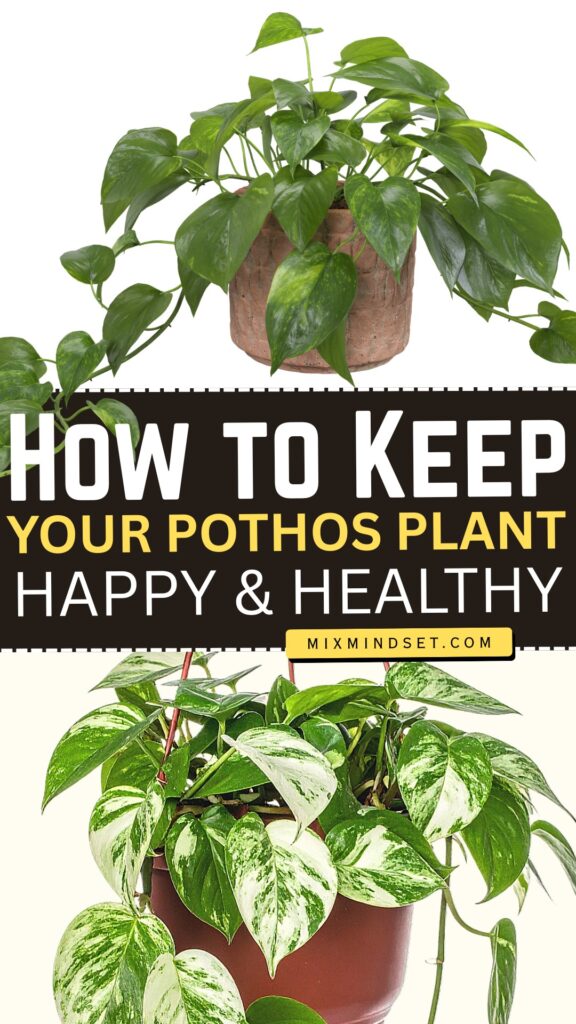
How to Keep Your Pothos Plant Happy & Healthy
Keep your Pothos happy and healthy with the right balance of light, water, and care. This guide covers watering, lighting, soil, fertilizing, propagation, and common problems so your plant thrives for years. #PothosCare #HouseplantTips #IndoorGardening #PlantParent #EasyHouseplants
I remember the day I brought my first Pothos home. I was so excited, but also a little scared. Everyone said they were “impossible to kill,” but I was sure I would find a way. And you know what? I almost did. I overwatered it within the first week.
The leaves started turning yellow, and I panicked. I learned that lesson the hard way. Now my Pothos is thriving, with vines trailing all over my bookshelf. It is one of my favorite plants, and I want to share everything I have learned so you can enjoy a happy, healthy Pothos too.
What Makes Pothos So Special?
Pothos (Epipremnum aureum) is one of the most popular houseplants for a reason. It is forgiving, fast-growing, and beautiful. With its heart-shaped leaves and graceful vines, it looks great in any room. It can trail from a hanging basket, climb a moss pole, or brighten a dark corner.
Pothos is also a natural air purifier. It helps remove toxins like formaldehyde and benzene from indoor air. And best of all, it is incredibly easy to care for once you understand its basic needs.
Light: Finding the Right Spot
Pothos is very adaptable when it comes to light. It can survive in low light, but it truly thrives in bright, indirect light.
The Sweet Spot: Place your Pothos near a window where it gets plenty of light, but not direct sunlight. An east- or west-facing window is ideal. A spot a few feet away from a sunny window also works great.
What Happens in Different Light:
My Tip: Rotate your plant every few weeks so all sides get even light. This encourages balanced, full growth.
Watering: The Golden Rule
Watering is where most people make mistakes. The number one killer of Pothos is overwatering.
The Golden Rule: Do not water on a schedule. Instead, check the soil before you water.
How to Check:
- Stick your finger about 1 to 2 inches deep into the soil.
- If the soil feels dry, it is time to water.
- If it still feels damp, wait and check again in a day or two.
How to Water:
- When you water, give it a thorough soak. Pour water slowly until you see it running out of the drainage holes at the bottom of the pot.
- After about 30 minutes, empty the saucer so the plant is not sitting in water.
Signs You Are Overwatering:
Signs You Are Underwatering:
My Tip: In winter, when the plant is not growing as much, it needs even less water. Always check the soil first.
Soil and Pot: The Right Home
Pothos is not too picky about soil, but good drainage is essential. Soggy soil leads to root rot.
What to Use:
- A well-draining potting mix is a must. Look for a mix that contains ingredients like peat moss, perlite, or bark. These help water flow through and prevent the soil from staying too wet.
- You can also buy a pre-made mix for houseplants or aroid plants.
Pot Choice:
- Always use a pot with drainage holes. This allows excess water to escape.
- Terracotta pots are great because they are porous and help the soil dry out faster.
Repotting:
- Repot your Pothos when you see roots growing out of the drainage holes or when the plant looks overcrowded.
- Most plants benefit from repotting every 1 to 2 years. Fresh soil gives the plant new nutrients.
Temperature and Humidity: Keeping It Cozy
Pothos enjoys the same conditions as people.
Temperature:
- They prefer a warm room between 60°F and 85°F (15°C to 29°C) .
- Keep them away from drafty windows, air conditioning vents, and heating vents. Sudden temperature changes can stress the plant.
Humidity:
- Pothos tolerates normal household humidity (around 40-60%), but it appreciates a little extra moisture.
- If your home is very dry, especially in winter, you can mist the leaves occasionally or place the pot on a pebble tray filled with water. A humidifier also works well.
My Tip: Wipe down the leaves occasionally with a soft, damp cloth. This removes dust and helps the plant breathe better.
Fertilizing: A Little Food Goes a Long Way
Pothos does not need a lot of fertilizer. Too much can actually harm it.
When to Fertilize:
- Feed your Pothos during the growing season (spring and summer) .
- In fall and winter, when growth slows down, you can stop fertilizing.
What to Use:
- Use a balanced, water-soluble houseplant fertilizer.
- Dilute it to half-strength (follow the instructions on the bottle).
- Fertilize about once a month during spring and summer.
Remember: Plants get their energy from sunlight, not fertilizer. Fresh potting soil also has nutrients, so if you repot yearly, you may not need to fertilize as often.
Propagation: Grow More Plants for Free
One of the best things about Pothos is how easy it is to propagate. You can turn one plant into many for free.
The Easiest Way: Water Propagation
- Take a cutting: Use clean, sharp scissors to cut a 4- to 6-inch piece from a healthy vine. Cut just below a leaf node (the little bump on the stem where leaves grow).
- Remove lower leaves: Pluck off any leaves near the bottom of the cutting. Leave at least two leaves at the top.
- Place in water: Put the cutting in a glass or jar of water. Make sure the leaf nodes are submerged.
- Wait for roots: Place the glass in bright, indirect light. Change the water every week or so. Roots usually start to form in about 10 days.
- Pot it up: When the roots are 2 to 3 inches long, you can plant the cutting in soil.
My Tip: You can also propagate directly in soil. The roots that grow in soil are often sturdier. But water propagation is more fun because you can watch the roots grow!
Common Problems and How to Fix Them
Even easy plants can have problems. Here is what to look for and how to fix it.
My Personal Pothos Routine
Here is what I actually do to keep my Pothos happy.
Every week (5 minutes):
- I check the soil with my finger. I only water when the top 1-2 inches feel dry.
- I rotate the pot a little so all sides get light.
Every month (10 minutes):
- I wipe the leaves with a damp cloth to remove dust.
- During spring and summer, I add a little diluted fertilizer to the water.
Every year or two (30 minutes):
- I check if the plant needs a bigger pot. If roots are coming out the bottom, I repot it in fresh soil.
Since I started doing this, my Pothos has been growing like crazy. It is one of the few plants I have not managed to kill!
The Bottom Line
Pothos is a wonderful, forgiving plant that is perfect for beginners and experienced plant parents alike. The key to keeping it happy is simple:
- Give it bright, indirect light.
- Water only when the soil is dry to the touch.
- Use a well-draining pot and soil.
- Feed it a little fertilizer in spring and summer.
- Propagate to grow your collection for free.
- Pay attention to the leaves—they will tell you if something is wrong.
I have learned so much from my Pothos. It has taught me patience, observation, and that sometimes less is more. Try these tips, and your Pothos will be thriving in no time.