How to Grow More Epiphyllum Plants for Free?
Grow beautiful Epiphyllum plants for free using just one healthy stem. This guide covers simple cutting, division, and seed methods so you can multiply your collection without spending a penny. #EpiphyllumPropagation #FreePlants #OrchidCactus #GardeningHacks #PlantParent
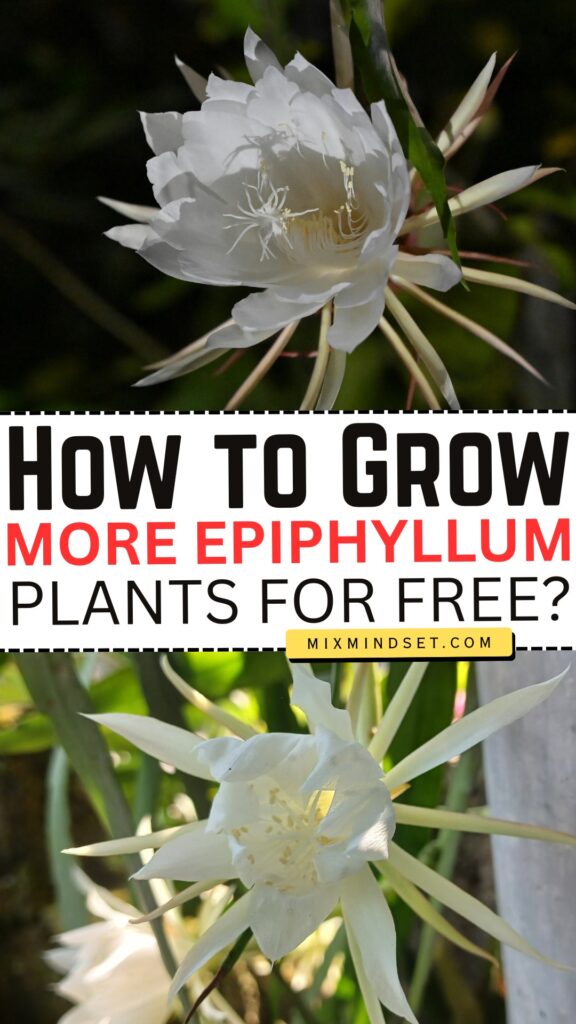
I remember the first time I saw an Epiphyllum bloom. The flower was huge, fragrant, and absolutely stunning. I wanted more, but buying new plants was expensive.
Then a friend told me, “Just take a cutting. It’s that easy.” I was skeptical. But I tried it, and it worked. Now I have a whole collection of Epiphyllums, and I have not bought a single one. You can do this too.
Here is how to grow more Epiphyllum plants for free.
What Is an Epiphyllum?
Epiphyllums are also called orchid cacti or leaf cacti. They are different from regular desert cacti. They grow in tropical forests, often on trees. They have flat, leaf‑like stems and produce large, showy flowers. They are easy to propagate, which makes them perfect for sharing and multiplying.
Three Ways to Propagate Epiphyllum for Free
You have three main options for growing new Epiphyllum plants.
| Method | Best For | Time to Root | Difficulty |
|---|---|---|---|
| Stem cuttings | Most common, fastest | 2‑4 weeks | Easy |
| Division | Mature, clumping plants | Immediate | Easy |
| Seeds | Experimenting, new varieties | Several months | Moderate |
Stem cuttings are the easiest and most reliable. That is what I will focus on.
Method 1: Stem Cuttings (The Easiest Way)
This is how I started my entire collection. You take a piece of a healthy stem and turn it into a whole new plant.
What You Will Need
| Item | Purpose |
|---|---|
| Sharp, clean knife or pruning shears | For making a clean cut. Disinfect with rubbing alcohol. |
| Healthy Epiphyllum stem | Choose a plump, vigorous, disease‑free stem. |
| Well‑draining potting mix | Use cactus mix, or mix regular potting soil with perlite. |
| Small pot | With drainage holes. |
| Rooting hormone (optional) | Speeds up rooting but is not required. |
Step‑by‑Step Instructions
Step 1: Choose and cut a healthy stem.
Look for a plump, healthy stem that is free of pests or disease. Using a disinfected, sharp blade, make a clean cut below a leaf node. Aim for a cutting that is about 4‑6 inches (10‑15 cm) long. You can also cut a longer stem into multiple 4‑inch sections.
Step 2: Let the cutting callus over.
This is the most important step. Leave the cutting in a warm, dry place out of direct sunlight for several days. A callus is a dry, hard “scab” that forms over the cut end. It prevents rot when you plant it. Do not skip this step.
Step 3: Plant the cutting.
Fill a small pot with well‑draining soil. An African violet mix with extra perlite works well. Plant the cutting about 1 inch deep. Make sure at least one leaf node is below the soil surface. If you are not sure which end is up, make a mark before you cut.
Step 4: Do not water right away.
Wait several days before watering. This gives the cut end time to heal and prevents rot. After that, water lightly. Keep the soil moist but not wet.
Step 5: Wait for roots.
Place the pot in a warm spot with bright, indirect light. Roots usually form in 2‑4 weeks. You will know it is rooting when you see new growth.
🌱 My Personal Experience: The first cutting I took, I planted it right away without letting it dry. It rotted within a week. Now I always leave my cuttings out for at least 3‑4 days. Patience pays off.
Method 2: Division (For Mature Plants)
If your Epiphyllum has grown into a large, clumping plant, you can divide it. This is the fastest way to get a new, established plant.
What to do:
- Gently remove the plant from its pot.
- Look for natural sections where the plant has branched.
- Carefully separate the sections, making sure each one has roots attached.
- Plant each section in its own pot with fresh, well‑draining soil.
- Water lightly and care for them as usual.
Method 3: Seeds (For the Patient Gardener)
Growing Epiphyllum from seeds takes longer, but it is a fun way to get new varieties.
What to do:
- Sow seeds in spring at about 21°C (70°F).
- Use a well‑draining seed‑starting mix.
- Keep the soil moist and cover with plastic to hold humidity.
- Germination can take several weeks to months.
- Transplant seedlings when they are large enough to handle.
Aftercare: Helping Your New Plant Thrive
Once your cutting has rooted, treat it like a mature Epiphyllum.
| Care Factor | What to Do |
|---|---|
| Light | Bright, filtered, or indirect light. No harsh direct sun. |
| Water | Water when the top inch of soil feels dry. Do not overwater. |
| Soil | Well‑draining, porous mix. Epiphytic cactus compost works well. |
| Fertilizer | Use a balanced or low‑nitrogen fertilizer in early spring. |
| Temperature | Warm and humid. Protect from cold. |
🌱 My Personal Experience: I kept my first rooted cutting in a spot with too much direct sun. The stems turned yellow and looked sad. I moved it to a spot with filtered light, and it perked right up. Now I know they like bright but gentle light.
Troubleshooting: Common Problems and Fixes
| Problem | Likely Cause | How to Fix |
|---|---|---|
| Cutting rots | Planted too soon or overwatered | Let cuttings callus longer. Water less. |
| No roots after 4 weeks | Too cold or too dry | Move to a warmer spot. Keep soil lightly moist. |
| Yellowing stems | Too much direct sun | Move to a spot with filtered light. |
| Slow growth | Not enough warmth or humidity | Increase warmth and mist occasionally. |
The Bottom Line
Growing more Epiphyllum plants is easy and free. Stem cuttings are the best way to start. Take a healthy cutting, let it dry for a few days, plant it in well‑draining soil, and wait. In a few weeks, you will have a new plant. Division works well for mature plants, and seeds are for the patient gardener.
I started with one cutting from a friend. Now I have Epiphyllums all over my house. I have given away dozens of cuttings to other people. It is a gift that keeps on giving. Try it yourself. You will be amazed at how simple it is.