Calathea Plant Care — Simple Tips for Beginners
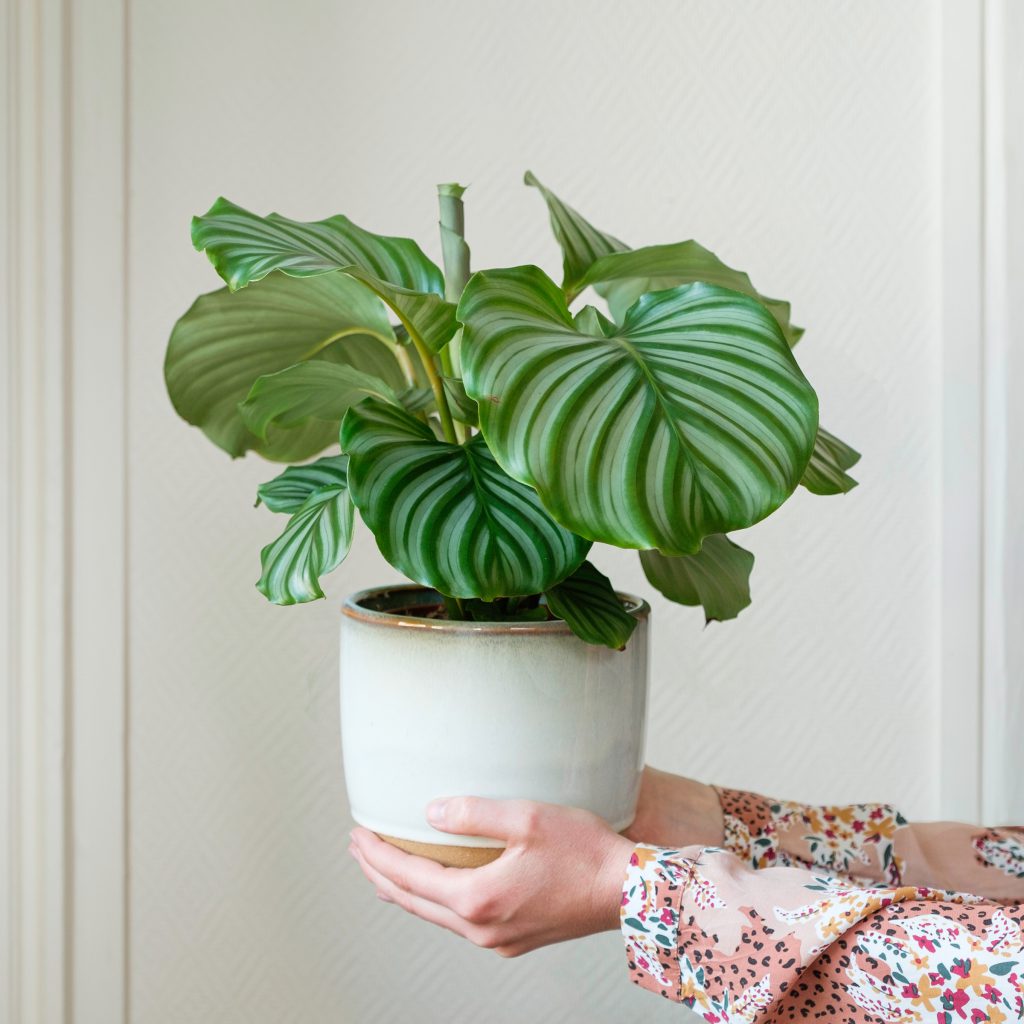
The calathea is one of the most spectacular decorative plants, boasting over 25 different species. Its striking, enormous, dark green leaves, with extraordinary and varied patterns, are one of the most appealing characteristics of these plants, opening up a world of possibilities for lovers of natural decor.
Calatheas will transform any room with their lush foliage, captivating everyone’s attention. At Interflora, we’ll tell you about the basic care for your calathea and give you some expert tips and tricks to keep your plants looking beautiful.
Calathea: peculiarities of a very versatile plant
Calatheas are tropical plants native to Central America and Brazil, distinguished by their beautiful green leaves with geometric patterns, highly prized in floral arrangements. The numerous varieties of this species come in different sizes, shapes, and striking shades of green.
Calatheas are also known as “praying plants” because their leaves fold upwards at night, like praying hands, and unfold harmoniously again with the daylight. This movement of the leaves creates a soft sound, like a whisper or a prayer, hence their nickname. They can reach up to a meter in height, with a profusion of stems that end in large, rounded or lanceolate leaves.
6 quick questions about the calathea
To help you continue discovering this houseplant, we’re going to answer five questions that might help you decide whether to adopt or give a calathea as a gift. Take note:
Who is calathea suitable for?
For people with little experience in plant care. If you’re a beginner, the calathea is a fabulous option to start with, as basic calathea care isn’t very complicated.
Can I keep a calathea outdoors?
Due to their origin and characteristics, calatheas are best kept as houseplants, as their beautiful leaves do not tolerate low temperatures well. If you live in temperate zones, calatheas can decorate your garden, provided they are not exposed to frost in winter.
Do calatheas have flowers?
Calathea may bloom occasionally, but its flowers are not pretty, except for Calathea Crocata, which produces beautiful orange flowers.
Where can I find calatheas?
You can place your calathea both at home and at work. Despite its origins, calatheas don’t tolerate direct sunlight, making them ideal for offices. Furthermore, thanks to their diverse geometric patterns, these plants adapt to both sophisticated and more informal settings.
What are the most common species of Calathea orbifolia?
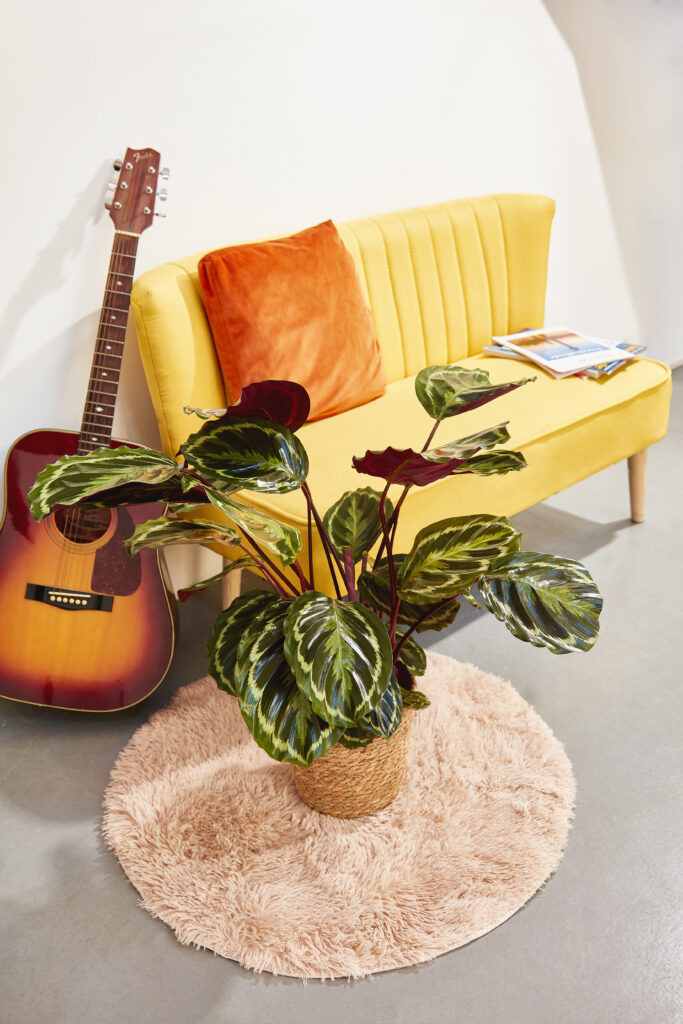
Among the most common calathea species are Calathea makoyana, or Peacock Plant; Calathea zebrina, or Zebra Calathea; Calathea Ornata, whose leaves have a purple underside; and Calathea orbifolia.
Why do the leaves of the Calathea curl up?
If your Calathea’s leaves start to curl, something is wrong. It could be a sign of dehydration, lack of humidity, or excessive heat. It can also be caused by root rot, over-fertilization, or disease. Observe your plant to find the source of the problem. Once you address it, your plant will quickly recover, becoming beautiful and healthy once again.
Calathea: basic care and foolproof tricks
The calathea is a hardy plant that requires little specific care. If you want to know how to care for a calathea plant, be sure to read these tips:
Light: a shade plant
Its natural habitat is rather dark, as the calathea grows in the rainforest, without receiving much direct sunlight. You must ensure it doesn’t receive direct light; otherwise, the sun will burn its leaves. Choose a shady spot with indirect light, as much as its location allows.
Temperature: away from the cold
Its tropical origin speaks volumes about its needs. It loves warm environments. It’s best to keep its space between 18 and 25 degrees Celsius and avoid exposing it to frost or excessively low temperatures.
Humidity: a vital necessity
Calatheas need high humidity. Otherwise, the edges of their leaves will turn brown. If the air in your home is dry, mist the leaves with filtered water. You can also increase humidity by placing a saucer filled with pebbles or gravel and a little water under the pot. This will raise the humidity around the plant without direct contact with the water.
Irrigation: a sensitive point
Watering is an important aspect of calathea care. How do you water a calathea? Your plant should always have slightly moist soil, so it needs more water in summer. In winter, it’s best to observe it. Depending on the temperatures, you may need to water less or even stop watering altogether for a while and see how it reacts. If the soil in the pot is dry, it’s time to water it. If your calathea is actively growing, you should water it thoroughly, but without overwatering.
Fertilizer: important even in winter
The calathea is an indoor plant that requires a fair amount of fertilizer to thrive. Even during the colder months, it needs a monthly dose of fertilizer. During its growing season, you’ll need to increase the frequency of fertilization, applying it every 15 days.
Cleaning: Clean its leaves to keep them beautiful
Since the calathea’s leaves are its most attractive feature, make sure they are always dust-free and shiny. To do this, wipe them with a damp cloth regularly. This will keep the leaves clean, healthy, and fresh.
Ideal substrate: peat
It’s recommended to include one-third peat moss as a base for the calathea’s substrate. This helps retain moisture around the roots for longer. The calathea will thrive in a tropical environment—beautiful, lush, and vibrant!
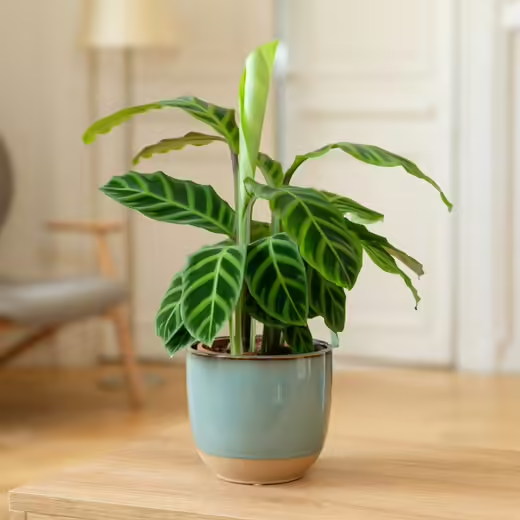
Giving a calathea with Interflora as a gift is a guaranteed success!
At Interflora, we like to share information about the benefits of having certain plants at home. In the case of the calathea, besides delighting us with its beautiful leaves, it’s perfect for homes with pets. And that’s not all. This plant is also ideal for relieving stress.
Furthermore, calatheas have the ability to purify the air and neutralize certain toxic substances in enclosed spaces, such as benzene and formaldehyde, creating a healthy microclimate wherever you place them.
Calatheas also possess natural humidifying properties. They are ideal for very dry environments, especially when the cold weather forces us to use more heating. That’s why giving a calathea as a gift is always a good idea: for the spectacular beauty of its leaves, its easy care, and all the benefits this plant brings to your home. Ask about them at our Interflora flower shops and make someone special happy.
Simply send a calathea to their home as a surprise to brighten the day of your favorite person. Don’t you think? With Interflora, say it with flowers or plants for any occasion.