How Do You Propagate Lavender?
Lavender is a very popular aromatic plant, both indoors and in gardens and allotments. This plant, with its numerous culinary and medicinal uses, also attracts beneficial pollinating insects, such as bees and ladybugs, making lavender a great addition to any home.
Furthermore, its characteristic violet flowers are beautiful, and its pleasant fragrance will enhance any space. As if all this weren’t enough, it’s a highly adaptable plant, thriving in a wide range of conditions, so anyone can enjoy growing it.
In this MixMindSet article, we teach you when and how to reproduce lavender, and although it is possible to plant it from seeds, its reproduction by cuttings is much more practical and faster.
Note: The propagation method is almost the same for English, French, and Spanish Lavender.
When to Plant Lavender?
Since we’re going to propagate lavender from cuttings, we should try to do so during a period of mild weather, which is what this plant is best adapted to. Therefore, it’s best to choose a time when temperatures are neither too high nor too low.
In most climates, this occurs at the beginning of autumn and spring. However, if you live in an area with a very consistent tropical climate, you can do it practically year-round.
We suggest you check out this other post from EcologíaVerde to learn about the different types of lavender available and see which one best suits your home.
Why is it worth propagating lavender yourself?
Buying lavender is easy, but propagating it yourself has several advantages. For one, you save money, since you can obtain dozens of new plants from a single mother plant without much effort.
Secondly, by growing your own lavender, you ensure the preservation of your favorite variety: you can propagate a particularly fragrant or hardy plant with minimal effort.

Furthermore, lavender is rejuvenated with regular pruning. Older lavender bushes become woody over time and bloom less profusely.
This is something you can counteract with proper pruning. Woody plants can be used as mother plants to obtain young, fresh, and well-flowering plants.
How to Propagate Lavender – Step by Step
By propagating lavender from cuttings, we achieve very rapid plant reproduction, as in just a few weeks we will have a healthy, mature specimen.
It is also a fairly safe method for species that allow it, such as lavender, and will result in a plant that is an exact copy of the parent plant. Follow these steps to propagate lavender from cuttings :
- Disinfect the scissors or knife you’ll use to cut the lavender. This is a crucial step whenever working with pruning or cuttings, as carelessness can transmit diseases to the plant and spread them to others later.
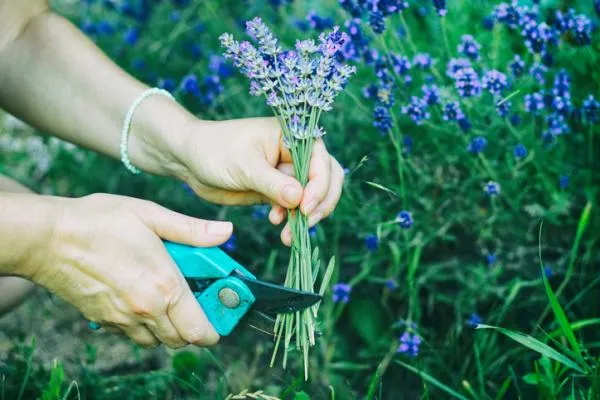
- Take the cuttings. Make clean cuts, choosing woody branches with plenty of side branches. Then, cut the side branches close to where they grow, just a few centimeters from the main branch, being careful not to damage it. These cuts, once buried, will help the cutting root more easily. If the cutting has very small, still-green side branches, simply remove them by hand.
- Soak the lavender cuttings in rooting hormone. You can use a rooting hormone like the one sold in garden centers, or prepare your own at home using one of the many available methods. Soak the cuttings in the prepared rooting hormone for about an hour.
- Prepare the pot or container. Ideally, use clay pots, although plastic ones can also work. In any case, it’s very important that the container has drainage holes.
- Regarding the substrate for the cuttings, it’s best to prepare your own special mix. Use one part coconut fiber, one part peat moss, and one part sand. This substrate will be very light and suitable for the plants in this delicate stage. Do not use peat moss or soil you have previously grown in, as it could contain pests or diseases.
- Plant the lavender cuttings. Make a hole in the substrate with a pen or your finger and bury the lavender cuttings.
- Water the cuttings thoroughly but avoid overwatering. To help the cuttings grow in a more stable environment, you can cover the pot with a cut-off plastic bottle or something similar, which will act as a mini-greenhouse.
In about 4 to 6 weeks, your lavender cuttings will have rooted and will be ready to be transplanted to their permanent location.
Lavender Care – A Simple Guide
After learning how to propagate lavender, it’s time to learn how to care for your plants. You’ll find that lavender isn’t very demanding. Keeping these points in mind will be enough to ensure it thrives and stays healthy.
- Light: This is one of the few essential things the plant needs. Always place it in a well-lit area or room where it receives six or more hours of direct sunlight per day. Only if you live in an area with exceptionally intense sun should you protect it from the sun.
- Climate: Lavender is native to temperate climates and thrives in them, although it can adapt to cold and warm climates.
- Location: Do not plant the different lavender seedlings too close together, as they will do better with space.
- Watering: Once a week during the warmer months is usually sufficient. However, if you notice the soil is very dry, water it more often. Avoid wetting the leaves, stems, and flowers when watering.
- Pruning: A light pruning once a year will help your lavender grow stronger and healthier.