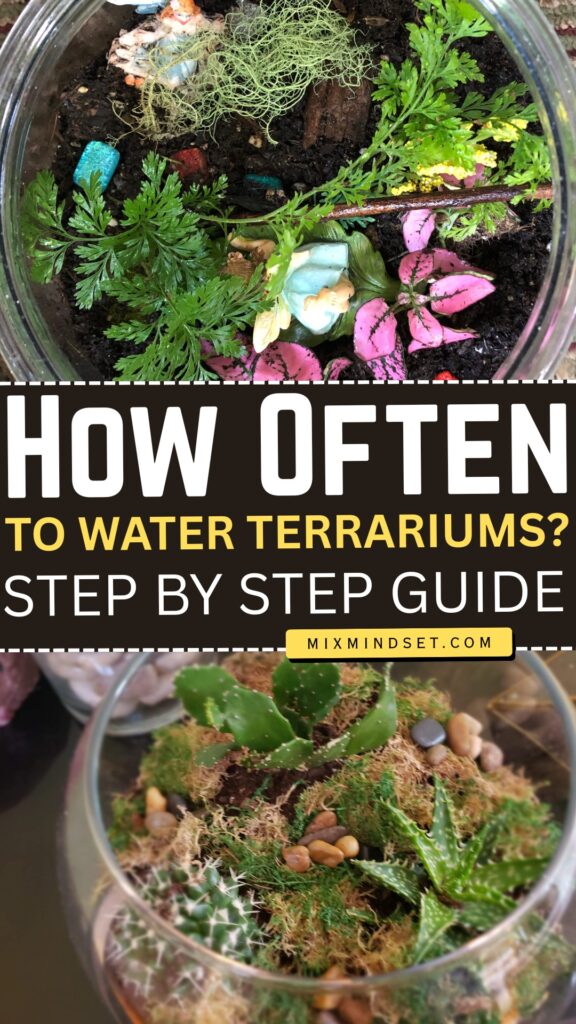
How Often to Water Terrariums?
Water your terrarium only when it tells you it is thirsty. This guide covers exactly how to check for signs—from condensation to soil moisture—with simple tips for closed and open terrariums so you never overwater again. #TerrariumCare #WateringTips #IndoorGardening #PlantParent #DIYPlants
The first time I got a terrarium, I thought I needed to water it every week like my other houseplants. I was so wrong. Within a month, the moss turned brown, the soil smelled musty, and I had killed my tiny ecosystem.
I learned the hard way that terrariums are different. They don’t follow regular plant rules. Once I understood the water cycle inside the glass, my terrariums started thriving. Now I know exactly when to water—and more importantly, when to leave them alone.
The Short Answer
There is no single answer to how often you should water a terrarium. It depends on three main things:
- Closed or open? Closed terrariums hold moisture much longer.
- What plants are inside? Succulents need less water than ferns.
- Where is it sitting? Warmer, brighter spots dry out faster.
| Terrarium Type | How Often to Water |
|---|---|
| Closed terrarium | Every 1 to 6 months, or even less |
| Open terrarium | Every 3 to 6 weeks |
But here is the most important thing: do not follow these numbers blindly. They are just starting points. The real answer is to look at your terrarium and let it guide you.
Closed vs. Open Terrariums: The Big Difference
Closed Terrariums
Closed terrariums are like tiny worlds inside glass. Water evaporates from the soil, condenses on the glass, and then drips back down like rain. This cycle keeps the moisture inside. That is why they need so little water.
How to water a closed terrarium:
- You should be able to see condensation up to one-third of the way up the jar. If you can, do not water at all.
- If the condensation line is higher than one-third of the jar, you have too much water. Open the lid and wipe the inside with a paper towel.
- If there is very little or no condensation, add about one tablespoon of water.
My personal experience: I once went four months without watering my closed terrarium. I kept checking the glass, and there was always a light mist. The plants looked healthy and green. I was amazed at how self-sustaining it was. Now I rarely water it at all.
Open Terrariums
Open terrariums do not have a lid. They lose moisture to the air. They need more water than closed ones, but still less than regular potted plants.
How to water an open terrarium:
- For succulents and cacti: water weekly in spring and summer (March to October). In winter, water only every six weeks.
- For ferns and tropical plants: water every 1 to 2 weeks.
- Always let the soil dry out between waterings.
4 Signs Your Terrarium Needs Water (Not a Calendar)
Forget the calendar. Here are the four things I check before I even think about watering.
If you see any of these signs, it is time to water. If not, wait. Overwatering is the number one killer of terrariums.
How to Check Soil Moisture
The best way to know if your terrarium needs water is to check the soil.
The touch test:
- Gently stick your finger into the soil.
- If it feels dry a couple of inches down, it is time to water.
- If it still feels damp, wait and check again in a few days.
The lift test:
- If you can lift your terrarium, check the bottom layers.
- If the bottom is waterlogged, you have overwatered.
How to Water Your Terrarium Correctly
What You Need
| Tool | Why It Helps |
|---|---|
| Spray bottle or misting bottle | For gentle, even watering |
| Long-spout watering can | For reaching tight spots |
| Filtered or distilled water | Prevents mineral buildup on glass |
Step-by-Step
Step 1: Use the right water.
Tap water can have chlorine and minerals that harm your plants or leave white spots on the glass. I use filtered water or let tap water sit out for 24 hours so the chlorine evaporates.
Step 2: Water gently.
Do not pour water directly into the terrarium. Use a spray bottle, syringe, or small dropper. Water the soil, not the leaves. Wet leaves can lead to mold.
Step 3: Water lightly.
Terrariums do not have drainage holes. Excess water has nowhere to go. For closed terrariums, a few tablespoons is usually enough. For open terrariums, water until the soil is moist but not soggy.
Step 4: Watch and wait.
After you water, observe your terrarium for a few days. If you see standing water at the bottom, you have overwatered. Leave the lid off for a day to let excess moisture evaporate.
Factors That Change How Often You Water
Even the same terrarium will need different amounts of water at different times.
Common Mistakes and How to Fix Them
My Personal Terrarium Routine
Here is what I actually do in my own home.
Every week (2 minutes):
- I look at my closed terrariums. I check the glass for condensation.
- I look at my open terrariums. I check if the soil looks dry.
Every month (5 minutes):
- If my closed terrarium has no condensation, I add one tablespoon of water.
- If my open terrarium soil is dry, I mist it lightly.
Every season (10 minutes):
- I wipe the glass inside and out with a soft cloth.
- I remove any dead leaves or mold.
I have been doing this for two years, and my terrariums are thriving. I almost never water them. They take care of themselves.
The Bottom Line
You do not need a watering schedule for your terrarium. You need to look, touch, and observe. Check the condensation. Feel the soil. Look at the plants. They will tell you exactly what they need.
Closed terrariums are almost self-sufficient. I water mine once every few months, sometimes less. Open terrariums need a little more attention, but still much less than regular houseplants.
The golden rule: when in doubt, do not water. It is always easier to fix a dry plant than a rotten one.
I learned this after killing my first terrarium. Now my plants are happy, and I do not worry about them. You can do this too. Just listen to your terrarium.