How to Clean a Tea Kettle Easily?
Remove limescale and buildup from your tea kettle with simple kitchen ingredients. This guide covers easy methods using white vinegar, lemon, and baking soda for a sparkling, clean kettle. #KitchenCleaning #TeaKettle #LimescaleRemoval #DIYCleaning #HomeHacks
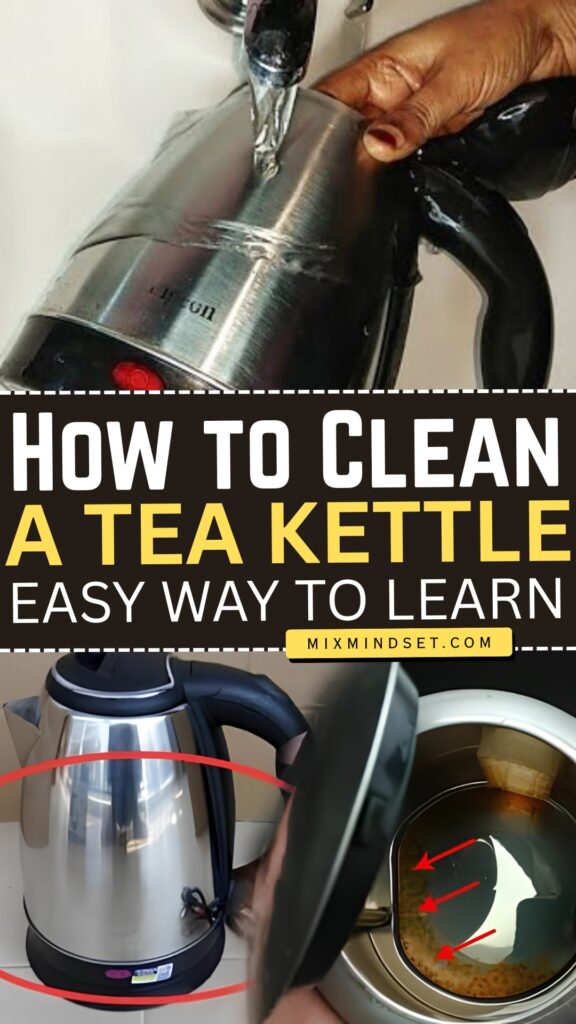
For months, I ignored the white, chalky film building up inside my tea kettle. I figured it was just hard water and not a big deal.
Then one day, I noticed my tea tasted a little off, and the kettle was taking forever to boil. I knew I had to do something.
I tried scrubbing, but nothing worked. Then I discovered the magic of white vinegar. It dissolved the limescale in minutes with zero scrubbing. Now I clean my kettle regularly, and it looks and works like new.
Why Kettles Get Dirty
The white chalky buildup in your kettle is called limescale. It is caused by hard water, which contains minerals like calcium and magnesium.
When you boil water, these minerals separate from the water and stick to the inside of the kettle. Over time, this buildup thickens and can affect the taste of your water and make your kettle boil more slowly.
The good news is that limescale dissolves easily with acid. Vinegar, lemon juice, and citric acid all work well.
What You Will Need
Gather these simple supplies. You probably have most of them already.
| Item | Purpose |
|---|---|
| White vinegar | Dissolves limescale and mineral deposits |
| Lemon juice or citric acid | Natural acid that breaks down scale |
| Baking soda | Gentle abrasive for stubborn spots |
| Water | For boiling and rinsing |
| Soft cloth or sponge | For wiping |
| Microfiber cloth | For drying |
Method 1: White Vinegar and Water (Most Effective)
This is the method I use most often. It is cheap, effective, and takes almost no effort.
What you need:
- 1 part white vinegar
- 2 parts water
Step-by-step:
- Fill the kettle halfway with equal parts white vinegar and water.
- Bring the mixture to a boil.
- Once it boils, turn off the heat and let it sit for 15 to 30 minutes. The vinegar will dissolve the limescale.
- Pour out the vinegar mixture and rinse the kettle thoroughly with clean water.
- Fill the kettle with fresh water, boil it, and pour it out. This removes any lingering vinegar taste.
- Wipe the inside with a soft cloth to remove any remaining residue.
For heavy buildup: Use a higher ratio of vinegar to water (e.g., 2 parts vinegar to 1 part water) and let it sit for up to 1 hour.
My personal experience: The first time I did this, I was shocked. The vinegar mixture came out looking like cloudy milk. The limescale had completely dissolved. My kettle looked brand new inside.
Method 2: Lemon Juice or Citric Acid (Natural Alternative)
If you do not have vinegar, lemon juice or citric acid works just as well.
With lemon juice:
- Fill the kettle halfway with water.
- Squeeze the juice of 1 to 2 lemons into the water.
- Bring to a boil and let it sit for 15 to 30 minutes.
- Rinse thoroughly and boil fresh water to remove any lemon taste.
With citric acid:
- Fill the kettle with water.
- Add 1 to 2 tablespoons of citric acid powder.
- Bring to a boil and let it sit for 10 to 15 minutes.
- Rinse thoroughly.
Method 3: Baking Soda (For Stubborn Spots)
For any spots that do not come off with the vinegar soak, baking soda works as a gentle scrub.
What you need:
- Baking soda
- Water
Step-by-step:
- Make a paste with baking soda and a little water.
- Apply the paste to any remaining spots.
- Let it sit for 5-10 minutes.
- Scrub gently with a soft cloth or sponge.
- Rinse thoroughly.
How to Clean the Outside of Your Kettle
The outside of your kettle can also get dirty and greasy.
What to do:
- Mix a few drops of dish soap with warm water.
- Wipe the outside with a soft cloth.
- For a shiny finish, mix equal parts vinegar and water and wipe the outside.
- Dry with a microfiber cloth to prevent water spots.
Quick Reference Table
| Method | Best For | Wait Time |
|---|---|---|
| Vinegar soak | Heavy limescale buildup | 15-30 minutes |
| Lemon juice soak | Light to moderate scale | 15-30 minutes |
| Citric acid | Quick descaling | 10-15 minutes |
| Baking soda paste | Stubborn spots | 5-10 minutes |
Important Safety Tips
- Do not use vinegar in a kettle with plastic parts. Over time, vinegar can damage some plastics. Check your kettle’s manual first.
- Rinse thoroughly. Leftover vinegar or lemon can affect the taste of your tea or coffee.
- Do not submerge electric kettles. Only clean the inside and outside with a damp cloth.
- Do not use harsh scrubbers. They can scratch the surface.
How Often to Clean Your Kettle
| Water Hardness | How Often to Clean |
|---|---|
| Hard water | Every 2-4 weeks |
| Medium water | Every 1-2 months |
| Soft water | Every 3-6 months |
I have hard water, so I clean my kettle once a month. It takes 15 minutes and keeps my water tasting fresh.
How to Prevent Limescale Buildup
Once your kettle is clean, here is how I keep it that way.
- Use filtered water for boiling. Filtered water has fewer minerals.
- Empty the kettle after each use. Do not leave water sitting in it.
- Rinse the kettle daily. A quick rinse after each use prevents scale from building up.
- Clean regularly. Do not wait until the scale is thick.
My Personal Kettle Cleaning Routine
Here is what I actually do in my own kitchen. You can copy this.
Once a month:
- I fill my kettle halfway with white vinegar and water.
- I bring it to a boil and let it sit for 30 minutes.
- I pour it out, rinse thoroughly, and boil fresh water twice.
- I wipe the outside with a damp cloth.
Between deep cleans:
- I empty the kettle after each use.
- I rinse it with fresh water.
- I use filtered water when possible.
Since I started this routine, my kettle has stayed clean and my tea tastes much better.
The Bottom Line
Cleaning a tea kettle is easy and does not require harsh chemicals. White vinegar and water dissolve limescale with zero scrubbing. Lemon juice works as a natural alternative. Baking soda tackles stubborn spots.
I used to ignore the buildup in my kettle until it affected the taste of my tea. Now I clean it regularly and enjoy fresh-tasting water every time. Try these methods and see the difference for yourself.