How to Remove Hard Water Stains From Toilets?
Remove stubborn hard water stains from your toilet using simple kitchen ingredients. This guide covers vinegar, baking soda, citric acid, and pumice stone methods that actually work. #BathroomCleaning #HardWaterStains #ToiletCleaning #DIYCleaning #HomeHacks
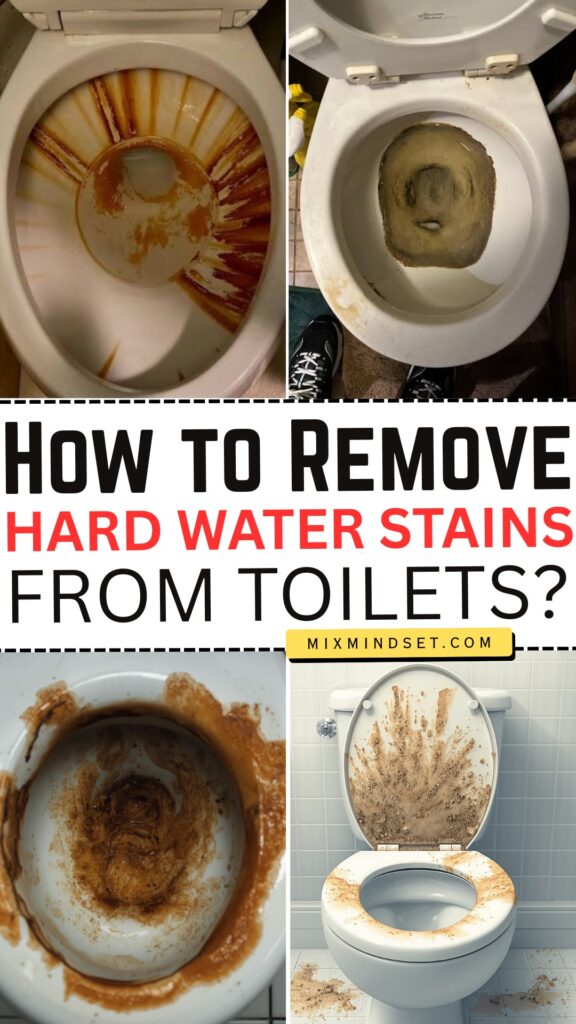
For months, I scrubbed my toilet bowl with bleach, but that ugly brown ring just would not go away. I thought it was permanent.
Then I learned that hard water stains are caused by mineral buildup, and bleach does nothing to dissolve minerals.
Once I switched to vinegar and citric acid, the stains melted away with almost no scrubbing. Now I know exactly what works, and I want to share it with you.
What Causes Hard Water Stains in Toilets?
Hard water contains minerals like calcium and magnesium. When water sits in your toilet bowl, these minerals stick to the porcelain and form a white, yellow, or brown crust. Over time, the buildup gets thicker and harder to remove. Regular bleach or soap will not touch it because minerals are alkaline, and you need an acid to break them down.
The good news is that the best stain removers are already in your kitchen: vinegar, baking soda, citric acid, and lemon juice.
What You Will Need
| Item | Purpose |
|---|---|
| White vinegar | Dissolves mineral buildup |
| Baking soda | Gentle abrasive for scrubbing |
| Citric acid powder | Strong acid for stubborn stains |
| Lemon juice | Natural acid that breaks down deposits |
| Pumice stone | Physically scrapes off thick buildup |
| Toilet brush | For scrubbing |
| Rubber gloves | Protects your hands |
| Paper towels | For soaking stains above the waterline |
Method 1: Vinegar and Baking Soda (The Classic)
This is the method I use most often. It is cheap, natural, and works well for most stains.
What you need:
- 1 to 2 cups of white vinegar
- 1 cup of baking soda
Step-by-step:
Step 1: Pour about 1 cup of white vinegar directly into the toilet bowl. Make sure the vinegar touches every stained spot.
Step 2: Let it sit for about 15 minutes. The vinegar’s acidity starts breaking down the minerals.
Step 3: Add 1 cup of baking soda to the bowl, then pour another cup of vinegar over it. You will see fizzing and bubbling—that is normal. The reaction helps lift the stains.
Step 4: Let the mixture sit for another 10 minutes.
Step 5: Put on gloves and scrub the bowl with a toilet brush. You may need to put some effort into it.
Step 6: If the stains are stubborn, let the solution sit longer or repeat the process.
Step 7: Flush to rinse.
My personal experience: The first time I tried this, I was amazed. The brown ring that had been there for months came off with almost no scrubbing. The vinegar had done all the work. Now I do this once a month, and my toilet stays clean.
Method 2: Citric Acid (For Stubborn Stains)
If vinegar and baking soda are not enough, citric acid is your next weapon. It is a stronger acid that breaks down even the toughest mineral deposits.
What you need:
- Citric acid powder (about $3 for a small container)
- Hot water (not boiling, to avoid cracking the porcelain)
For a quick clean:
- Pour 1 to 3 tablespoons of citric acid into the toilet bowl.
- Swirl it with a toilet brush.
- Let it sit for 15 to 20 minutes.
- Scrub and flush.
For a deep clean (heavy buildup):
- Pour a bucket of hot water into the toilet first.
- Add about 125g (half a box) of citric acid.
- Let it sit for a few hours or overnight.
- Scrub and flush.
Important: Wear gloves when handling citric acid—it can irritate your skin.
Method 3: Pumice Stone (For Extreme Buildup)
For thick, crusty limescale that nothing else will touch, a pumice stone is the answer. It physically scrapes away the buildup without damaging porcelain.
What you need:
Step-by-step:
Step 1: Remove as much water from the toilet bowl as possible. Push it out with a toilet brush or use a cup.
Step 2: Wet the pumice stone. Always use it wet to prevent scratching.
Step 3: Gently scrub the stained areas with the stone. You will see a paste-like foam forming—that means it is working.
Step 4: Rinse or flush to check your progress.
Step 5: Repeat if needed.
⚠️ Important: Only use a pumice stone on porcelain. Never use it on plastic or enamel surfaces. Also, always keep the stone wet to avoid scratching.
Method 4: Borax and Vinegar (Another Natural Option)
Borax is a natural mineral compound that adds extra scrubbing power.
What you need:
- Borax powder
- White vinegar
Step-by-step:
- Shut off the water supply to the toilet (the valve behind the tank).
- Spray or pour white vinegar over the stained areas.
- Sprinkle a mixture of borax and baking soda over the vinegar.
- Let it soak for 15 to 30 minutes.
- Scrub and flush.
Method 5: Lemon Juice (Natural and Fresh-Smelling)
Lemon juice is another acid that breaks down mineral deposits. It also leaves a fresh, clean scent.
What you need:
- Fresh lemon juice or bottled lemon juice
Step-by-step:
- Squeeze lemon juice directly onto the stained areas.
- Let it sit for 30 minutes to an hour.
- Scrub with a toilet brush and flush.
For extra power, sprinkle baking soda over the lemon juice and let it fizz before scrubbing.
Method 6: Denture Tablets (Surprisingly Effective)
Denture cleaner is designed to remove stains from porcelain teeth—and it works just as well on porcelain toilets.
What you need:
- 1 to 2 denture cleaning tablets
Step-by-step:
- Drop 1 or 2 tablets into the toilet bowl.
- Let them dissolve fully (about 30 minutes).
- Scrub lightly and flush.
Quick Reference Table: Which Method to Use
| Situation | Best Method | Wait Time |
|---|---|---|
| Light to moderate stains | Vinegar and baking soda | 15-30 minutes |
| Stubborn, heavy buildup | Citric acid soak | A few hours to overnight |
| Thick, crusty limescale | Pumice stone | Immediate (with scrubbing) |
| Stains above waterline | Vinegar-soaked paper towels | A few hours |
| Natural, fresh-smelling clean | Lemon juice | 30-60 minutes |
| Quick, gentle clean | Denture tablets | 30 minutes |
How to Remove Stains Above the Waterline
Hard water stains can also form above the waterline. These are harder to treat because you cannot soak them.
What to do:
- Soak paper towels (not toilet paper) in white vinegar.
- Press the vinegar-soaked towels against the stained areas above the waterline.
- Leave them for a few hours or overnight.
- Remove the towels and scrub with a toilet brush.
How to Prevent Hard Water Stains
Once your toilet is clean, here is how I keep it that way.
- Deep clean with vinegar and baking soda at least once a month.
- Add 2 cups of white vinegar to the toilet tank once a month. Every time you flush, vinegar is released and helps break down minerals before they can build up.
- Consider a water softener if you have very hard water. Water softeners remove the minerals that cause stains.
My Personal Toilet Cleaning Routine
Here is what I actually do in my own bathroom. You can copy this.
Once a month (10 minutes):
- I pour vinegar into the toilet bowl and let it sit.
- I add baking soda, let it fizz, and scrub.
- I flush and my toilet stays clean.
If I see buildup starting:
- I use citric acid for a deeper clean.
For really bad stains (once or twice a year):
- I use a pumice stone to scrape off the thick buildup.
Since I started this routine, I have not had a hard water stain problem in years. It takes almost no effort and costs pennies.
The Bottom Line
Hard water stains do not have to be permanent. White vinegar and baking soda work for most stains. Citric acid tackles heavy buildup. A pumice stone handles extreme crusty limescale. Lemon juice and denture tablets are also effective options.
The key is to use an acid that dissolves minerals, not just bleach that covers them up. Treat your toilet regularly, and those ugly rings will stay away for good.
I used to think my toilet stains were permanent. Now I know they are not. Try these methods and see the difference for yourself.