How to Get Rid of Termites in the House?
Few things are as stressful as discovering termites in your home. These small but destructive insects can damage beams, door frames, furniture, and even the foundations of your house without you even noticing. They work silently, and by the time they become visible, the damage is already extensive.
The good news? There are effective ways to eliminate termites permanently, provided you act promptly and correctly. And if you want peace of mind knowing you’re prepared for any eventuality, having good home insurance can help you resolve the problem quickly.
The Most Effective Termite Treatment
If you’re looking for a truly effective termite treatment, it’s good to keep in mind that home remedies can be helpful as a preventative measure, but complete eradication usually requires professional intervention. We’ll outline the most effective treatment and some complementary options.
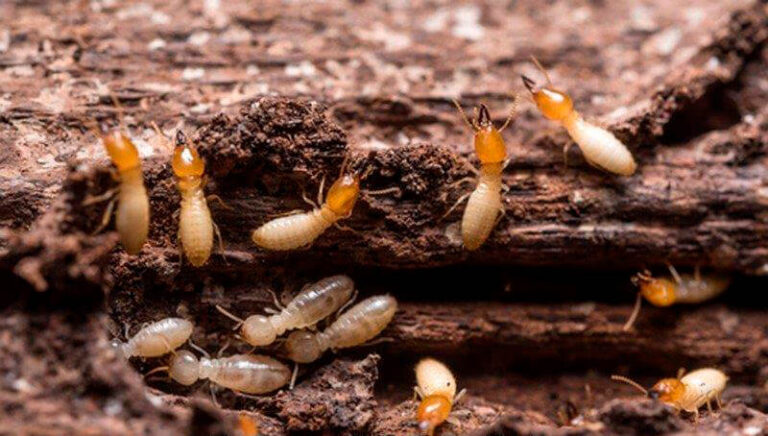
- Baits with growth regulators. This system is the most effective. The termites carry it into the colony and distribute it, preventing them from developing or reproducing.
- Perimeter chemical barriers . These are applied to the soil around the house to prevent termites from reaching the structure.
- Injections into the affected wood . When there is already activity, biocides are applied directly to the infested area.
These treatments eliminate the active colony and help prevent future infestations if proper follow-up is carried out.
In addition, it’s a good idea to protect your home against other pests that can appear for the same reasons, such as humidity or the accumulation of organic waste.
For example, if you also need To combat ants in your home, a comprehensive treatment can help you keep your house insect-free all year round.
How to get rid of termites without dying in the attempt?
Once an infestation is well established, eliminating termites can seem like an impossible task. But don’t despair; with a little strategy, patience, and professional support, it’s possible to regain control.
Here are some things you should (and shouldn’t) do :
- Do not attempt to move the affected wood, as this could disperse the colony and worsen the problem.
- Avoid using household insecticides, as this may cause termites to hide further.
- Look closely: elements such as small wings near windows, mud tunnels in the walls, or wood that sounds hollow when struck are clear signs.
- Act quickly: the longer you wait, the more damage accumulates.
- Call a pest control company, which will be able to identify the exact type of termite and the best treatment for your case.
Although it may sound exaggerated, the sooner you take action, the less likely you are to have to make major renovations.
Types of Wood Termites:
Knowing what type of termite you have in your home makes it easier to choose the right treatment.
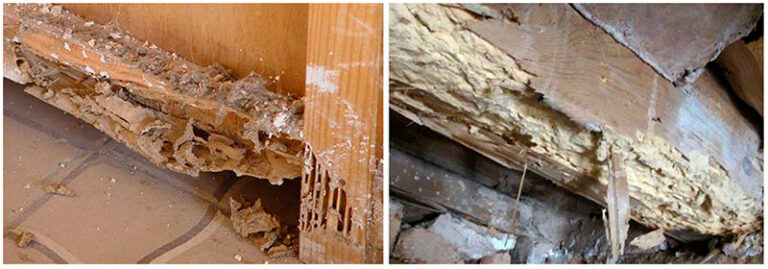
- Subterranean termites are the most destructive. They live underground and connect to the house through tunnels. They attack foundations, structures, and furniture.
- Drywood termites. They don’t need to be in contact with the ground. They live inside wooden furniture, beams, or floors. They are difficult to detect because they don’t leave obvious external signs.
- Dampwood termites . Less common, but equally dangerous if there are water leaks or poor ventilation.
Each species requires a different treatment. Therefore, simply applying a generic product is not enough: the type of termite must be correctly identified before taking action.
Difference Between Woodworm and Termites
It’s easy to confuse termites and woodworm. However, there are important differences between them.
Woodworm is the larva of certain wood-boring beetles and leaves visible holes in the wood and a fine, sawdust-like powder. Termites, on the other hand, consume wood from the inside and usually leave it hollow, without any obvious external signs.
Actually, one of the main differences between woodworm and termites is that termites work in groups and are faster and more destructive . Furthermore, they can compromise the structural stability of a house in less time.
If you’re unsure what’s damaging your furniture or structures, it’s best to request a professional inspection. They’ll be able to identify the problem and provide the appropriate solution.
Conventional Treatments to Eliminate Termites
In addition to the advanced methods we have mentioned, there are professional and very effective treatments that eliminate termites if applied in time:
- Gassing or fumigation . The building is completely isolated and a gas lethal to termites is introduced. It is very effective, but requires evacuation.
- Heat treatment . Controlled heat is applied to the affected wood until the termites are eliminated. It leaves no chemical residue.
- Electroshock or microwaves . More modern technologies that destroy termites with electric shocks or waves, without the need for toxic products.
Although more expensive, these methods are quick and effective. They are recommended in cases of advanced infestation or when baits cannot be applied due to the layout of the dwelling.
Home Remedies for Termites in the House
When the infestation is mild, or while you wait for a specialist, you can apply some home remedies for termites. They are not a substitute for professional treatment, but they can help reduce activity and protect certain areas.

In addition, several of these tricks are also used to eradicate moths, since many pests share habits and weaknesses.
Boric acid
One of the best-known methods involves mixing boric acid with sugar and water to form a paste. Apply it to areas where you suspect termite activity. The sugar will attract the termites, and the boric acid will act as a slow-acting poison.
Orange oil
Orange essential oil contains d-limonene, a substance toxic to many insects, including termites. You can apply it directly with a syringe into holes in the wood or spray it on damp areas.
Cardboard traps
Place sheets of damp cardboard near suspected infestations. Termites will be attracted to them because of their cellulose content. Once the cardboard is full, carefully remove it and burn it in a safe place.
Does insurance cover termite extermination?
A very common question is whether the Home insurance covers pests? like termites. In some cases, damage caused by termites, woodworm, or other wood-boring insects is not included in basic policies, as it is considered a consequence of poor maintenance. However, some policies offer more advanced coverage or additional services that may include:
- Annual pest inspection and control.
- Preventive treatments in wooden structures.
- Assistance in case of active infestation (only if it has been detected in time).
We recommend reviewing your policy terms or consulting with your insurer to find out if you are protected against these types of risks. Being prepared is the best way to avoid bigger problems.