Signs of Bed Bugs: 10 Warning Signs to Know
In this article, we teach you how to identify evidence of bed bugs and give you the keys to know if you have an infestation at home.
One thing needs to be clear from the start: a single bite is not enough to determine if you have a bed bug infestation. Furthermore, even a doctor may not be able to accurately identify the source of a bite simply by looking at it.
To identify a bed bug infestation, you have to consider all possible evidence: shed skins and eggs are just two of the signs that could point to a problem.
This article aims to reassure those who think they have a bed bug problem simply because they woke up one night with bites on their body.
How to check for bed bugs?
There are several common signs you should look for to confirm the presence of bed bugs in your bedroom. This process applies whether you’re inspecting your own bedroom or a hotel room.
Can you see them?
Although they are very small (usually between 4-5 mm), bed bugs can be seen with the naked eye. You might even see nymphs and eggs if you are well trained. People often mistake them for dust mites.
Bed bugs can squeeze through gaps as wide as a credit card
Bed bugs have very thin bodies, allowing them to squeeze through very narrow cracks and crevices. The best way I’ve found to help you visualize what we’re talking about is to think of a credit card. Any slot where you can insert a card is a place where a bed bug can hide.
Where do bed bugs hide?
- Throughout the entire structure of the bed, especially on the headboard
- Mattress seams
- In carpets and curtain seams
- On the baseboards
- Inside the holes where a screw is inserted
- Between the parquet or wooden planks
- Inside electrical sockets and electronic devices
- On cracked or broken plaster
- Behind the wallpaper
- Inside of wardrobes, especially drawers
- Nightstands
10 Signs of a bed bug infestation
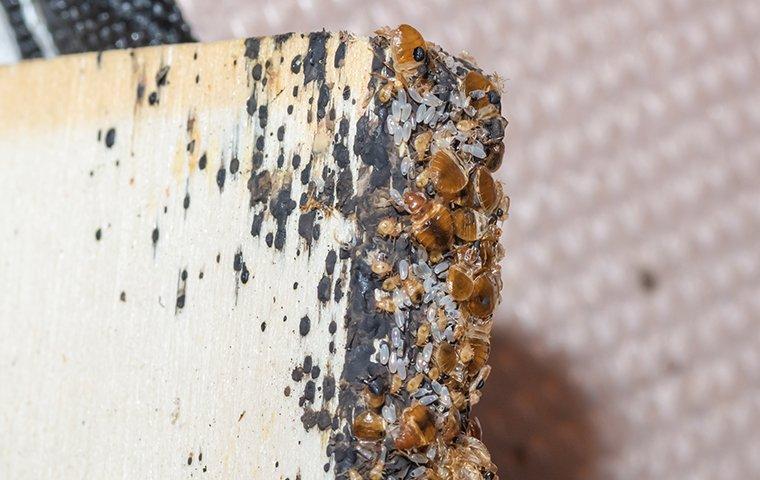
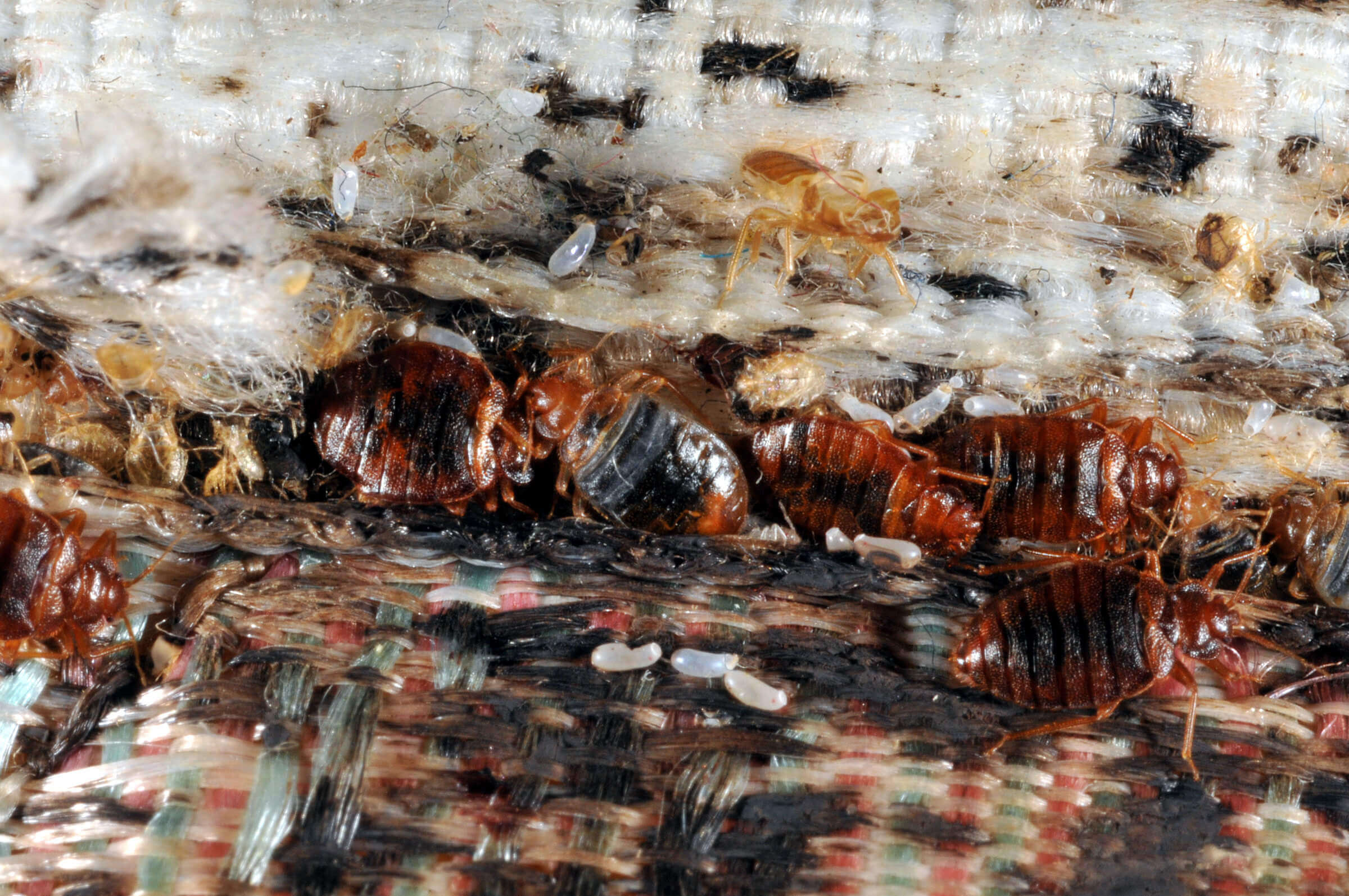
- Bed bug eggs: These are small, oval-shaped, and whitish. Where do they appear? They are usually found in clusters inside cracks and crevices or attached to furniture or accessories. Mattress seams are another common infestation site.
- Bed bug droppings: These can be identified as small black specks. They are often found in mattresses. Their droppings are composed of dried blood. Bed bugs usually defecate shortly after each feeding. Although individually these droppings are very small (less than 1 mm), over time, their accumulation can produce a very noticeable dark stain.
- Molted skins: Bed bugs must shed their skin in order to move to the next stage of their life cycle. They undergo five molts before becoming adults. In case of an infestation, shed skins can be found behind headboards, along baseboards, and in mattress seams.
- Unpleasant odors: In very severe infestations, a very characteristic and unpleasant odor can be produced.
- Live bed bugs: Adult bed bugs are small, flat, oval-shaped insects with a reddish-brown color. They are usually found hiding in mattress seams, bed frames, headboards, cracks, and other dark areas close to where people sleep.
- Bed bug bites: Bed bug bites often appear as small, red, itchy bumps on the skin. They may occur in groups or in a line, especially on areas of the body that are exposed while sleeping.
- Blood stains: Small blood stains may appear on sheets, pillowcases, or mattresses. These stains can happen when a bed bug is crushed after feeding or when a bite continues to bleed after the bug has moved away.
- Rust-colored stains: Small reddish-brown or rust-colored marks can appear on mattresses, bedding, walls, or furniture. These stains may be caused by crushed bed bugs or their droppings.
- Bed bug hiding spots: Bed bugs commonly hide in dark, narrow places during the day. Check mattress seams, box springs, bed frames, headboards, cracks, baseboards, and furniture joints for signs of an infestation.
- Bed bug infestation around the bed: When an infestation becomes larger, signs may appear in several places around the sleeping area. You may find eggs, droppings, shed skins, live bugs, and stains around the mattress, bed frame, headboard, and nearby furniture.
What to do if you find bed bugs?
Don’t hesitate for a second; call an expert. Home remedies won’t work here; only expert pest control can solve the problem. Consider these three points:
- Bed bugs can spread very easily from one room to another. They will use cracks in walls or ducts to disperse throughout your premises.
- You’ll continue to experience their bites until the problem is completely resolved. While some people have no allergic reaction to the bites, others may experience itching and even a possible rash.
- A female bed bug can lay between 200 and 500 eggs in just two months. An egg can develop into an adult in as little as 45 days (if the environment is favorable). Insecticide does not affect the eggs.