How to Take Care of an Aloe Vera Plant?
Aloe vera has a reputation for being an easy, hardy, and almost indestructible plant. And in part, that’s true. The problem is that this same reputation often leads to it being mistreated.
It’s watered when it’s not needed, placed in a dimly lit corner, left in a pot that retains too much moisture, and when soft leaves, dry tips, or brown spots begin to appear, that’s when doubts arise.
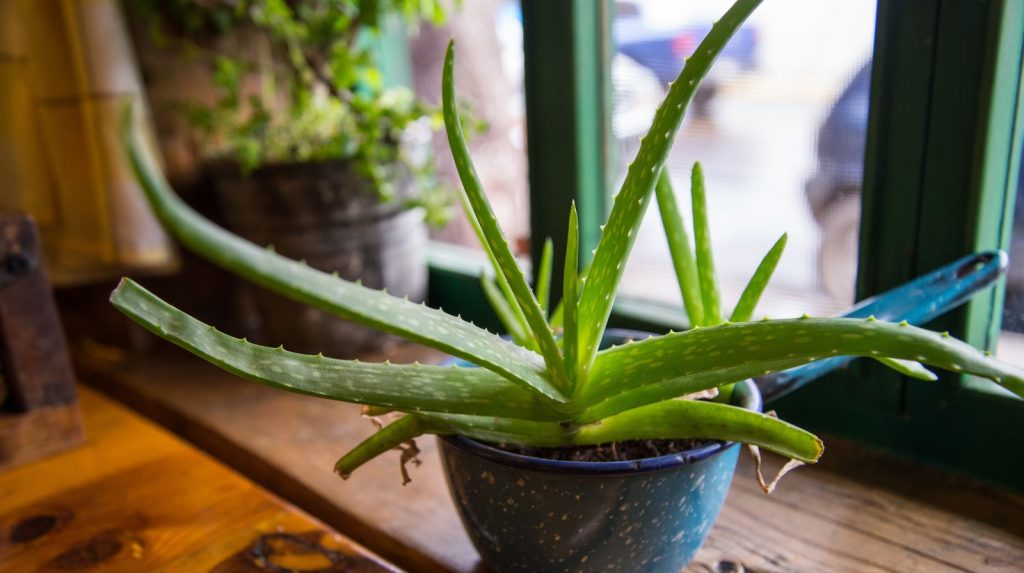
The good news is that caring for an aloe vera plant at home isn’t complicated. The key isn’t doing a lot of things, but understanding what it really needs.
It’s a rewarding plant when it has good light, well-draining soil, and moderate watering. On the other hand, when treated like any other plant, it can easily weaken over time.
If you’ve come here because you want to know how to properly care for aloe vera, how often to water it, where to place it at home, or how to revive a damaged aloe vera plant, here’s a complete, clear, and helpful guide to help you solve these problems without any hassle.
Table of Contents
What happens to your aloe vera when it starts to change?
One of the advantages of aloe vera is that it usually gives a pretty good warning when something isn’t right. It doesn’t change its appearance for no reason. If it looks bad, there’s almost always an underlying cause.
When an aloe vera plant turns brown or reddish, it’s most likely due to excessive direct sunlight, especially in summer or after a sudden change of location. Soft or yellowing leaves are the most common cause of overwatering.
And when dry tips, thinner leaves, or loss of firmness appear, the opposite is often true: the plant has been without water for too long and is drawing on its own reserves.
Learning to read these signs is more important than it seems, because it allows you to correct the problem before it gets worse. In fact, many searches like “why does aloe vera turn brown” or “why do aloe vera leaves become soft” usually have a fairly straightforward answer: location or watering.
Where to place aloe vera at home so that it grows well?
One of the most frequently asked questions is where to place aloe vera at home, and the short answer is simple: where it gets plenty of light.
Aloe vera needs light to thrive. If kept indoors, it’s best placed near a bright window where it receives several hours of natural light each day. It’s not a plant suited to dark corners or rooms with little sunlight.
If it spends too much time in a poorly lit area, its growth will be stunted, the leaves will lose firmness, and the plant will gradually weaken, though this may not be immediately noticeable.
However, there’s a difference between light and strong summer sun. If your skin is exposed to intense direct sunlight during the middle of the day, especially behind glass or on a very exposed terrace, it can suffer sunburn. That’s when those brown or reddish tones that cause so much concern start to appear.
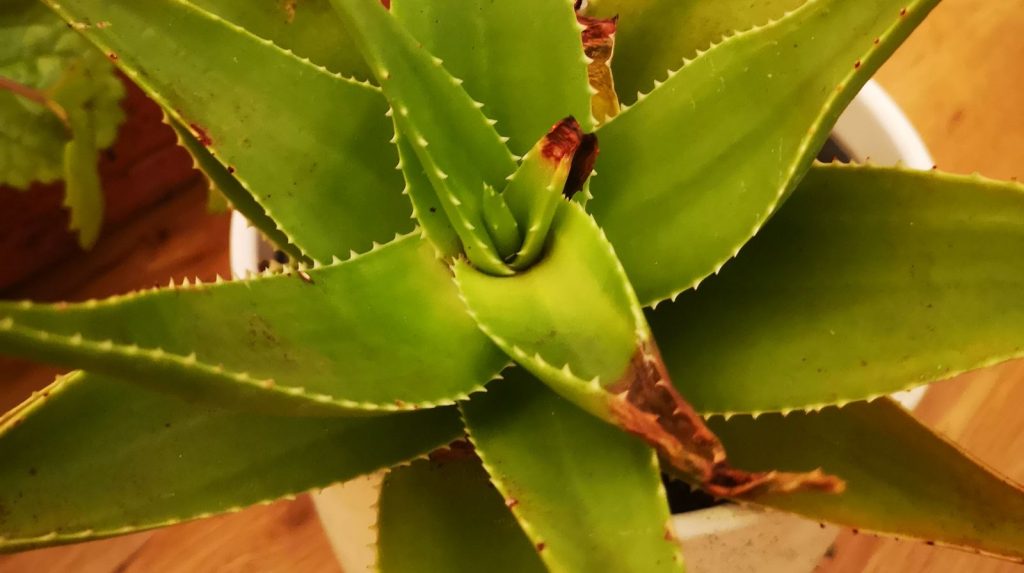
So, if you’re wondering whether aloe vera thrives in sun or shade, the most accurate answer is that it needs plenty of light and tolerates gentle sunlight well, but it’s best to protect it from the harshest sun on the hottest days. Outdoors, it generally does well in bright areas with some shade at midday. Indoors, the closer to natural light, the better.
How to water aloe vera correctly without overdoing it?
If there’s one thing that truly makes a difference, it’s this. Knowing how to water aloe vera correctly prevents most problems.
The most common mistake isn’t underwatering, but overwatering. Aloe vera stores water in its leaves, so it doesn’t need frequent watering. Therefore, when someone asks how often to water aloe vera, the real answer shouldn’t be based solely on days or weeks, but rather on checking the condition of the soil.
An aloe vera plant should only be watered when the soil is completely dry. If it still retains even a little moisture, it’s best to wait. This is what truly prevents the roots from rotting.
In winter, when the plant enters a quieter phase and there is less evaporation, watering once a month may be sufficient.
In spring and summer, depending on the temperature, ventilation, and amount of light, it may need more frequent watering, but always allow the soil to dry out completely between waterings.
If you notice that your aloe vera leaves are soft, yellow, or even somewhat translucent, it’s almost always due to overwatering. Conversely, if you see that the tips are drying out, the leaves are thinning, or they appear sparser, it probably needs more water.
Even then, it’s best to adjust gradually. Aloe responds better to a gradual change than a sudden one.
What kind of soil does aloe vera need and why is drainage so important?
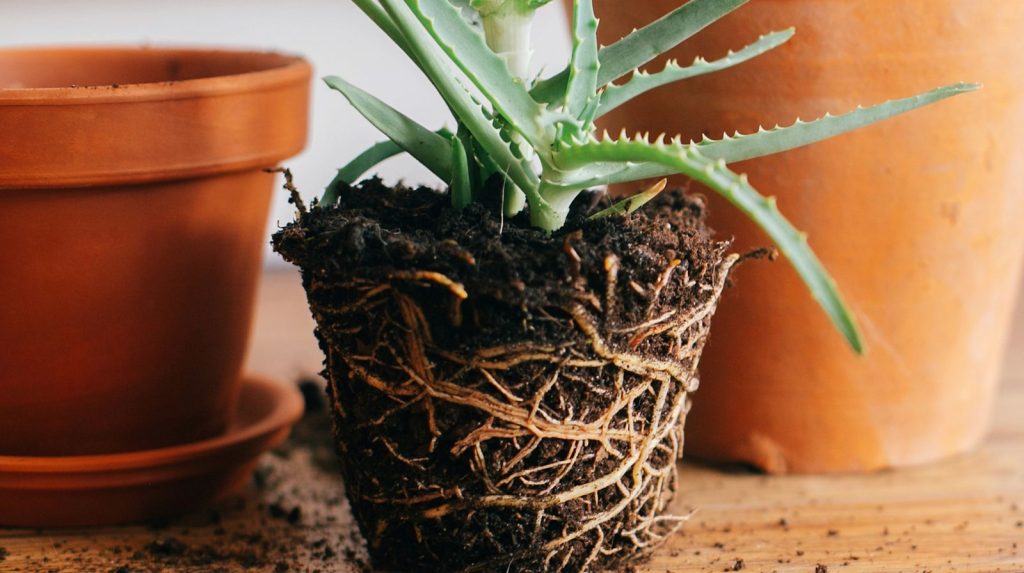
It’s not enough to water sparingly if the soil retains too much water. This is where many people go wrong without realizing it.
The best potting mix for aloe vera is one that drains well and doesn’t compact easily. Cactus or succulent soil usually works very well because it’s specifically designed to prevent excess moisture around the roots.
If the mix is too dense or heavy, the water will take a long time to drain, and the plant will suffer even if it’s not watered excessively.
The pot matters too. A potted aloe vera absolutely needs drainage holes. Without them, water will accumulate at the bottom, and problems will arise sooner or later. Sometimes the plant may appear fine on the surface for a while, but the roots are already suffering underneath.
If you want to avoid problems from the start, the best combination is usually simple: light potting mix, a pot with drainage, and patient watering. There’s no need to complicate things further.
Ideal temperature and care for aloe vera in winter
Aloe vera adapts well to indoor environments, but prefers temperate or warm temperatures. It typically thrives between 17°C and 27°C. It doesn’t require special conditions, but intense cold should be avoided.
When temperatures drop consistently, especially below 10°C, the plant can begin to suffer. Frost is particularly problematic. If you have aloe vera outdoors and your area experiences harsh winters, it’s best to protect it.
Caring for aloe vera in winter is quite simple: less watering, good light, and no unnecessary drafts. At this time of year, it doesn’t need to grow quickly or receive too much attention. In fact, the more you respect its natural rhythm, the better it usually fares during those months.
How to revive a damaged aloe vera plant without making it worse
When a plant is already damaged, it’s easy to get nervous and start doing too many things at once. With aloe vera, that almost never works. The best approach is to identify the root cause and address only that.
If the problem is overwatering, stop watering immediately and let the soil dry out completely. If the pot also has poor drainage or the potting mix is too compacted, it’s worth repotting it in a lighter, fresh mix. In more severe cases, inspecting the roots may be necessary to remove any damaged parts.
If the problem is strong sunlight, the solution isn’t to move it to total shade, but rather to a bright but more sheltered area. Aloe vera needs sunlight even while it’s recovering.
When the problem is a lack of water, recovery should also be done carefully. It’s best not to go from completely dry to waterlogged. The best approach is to return to a balanced and consistent watering schedule, always allowing the soil to dry out before watering again.
If you’re wondering how to revive a soft, yellowed, or otherwise unhealthy aloe vera plant, the answer is usually simple: less improvisation and more stability. It’s a resilient plant, but it needs time to recover.
How to make aloe vera grow stronger?
Once light, watering, and drainage are under control, aloe vera doesn’t need much more. Even so, if you want to encourage healthy growth, there are a few details that can help.
During spring and summer, you can use a mild succulent fertilizer, always sparingly. It’s not a plant that requires much fertilizer, but a little extra during its growing season can be beneficial.
It’s also a good idea to check if the pot has become too small. Over time, especially when it starts to produce offsets, it may need a little more space. You don’t need to repot it into a huge container, but you should consider a slightly larger one if you notice that growth is slowing down or that the base is becoming too crowded.
If you’re interested in how to make aloe vera grow faster, the answer isn’t in watering it more or over-fertilizing it. It’s in providing good conditions and letting it grow at its own pace.
How to separate the children from aloe vera?
A healthy plant will often produce offshoots around its base. This is a good sign. It indicates that the plant is strong and has the energy to reproduce.
Separating aloe vera pups is easy once they’ve reached a reasonable size and developed some roots. Ideally, do this carefully, without forcing them, and plant them in their own pots with suitable potting mix. Then, allow them to establish themselves before resuming normal watering.
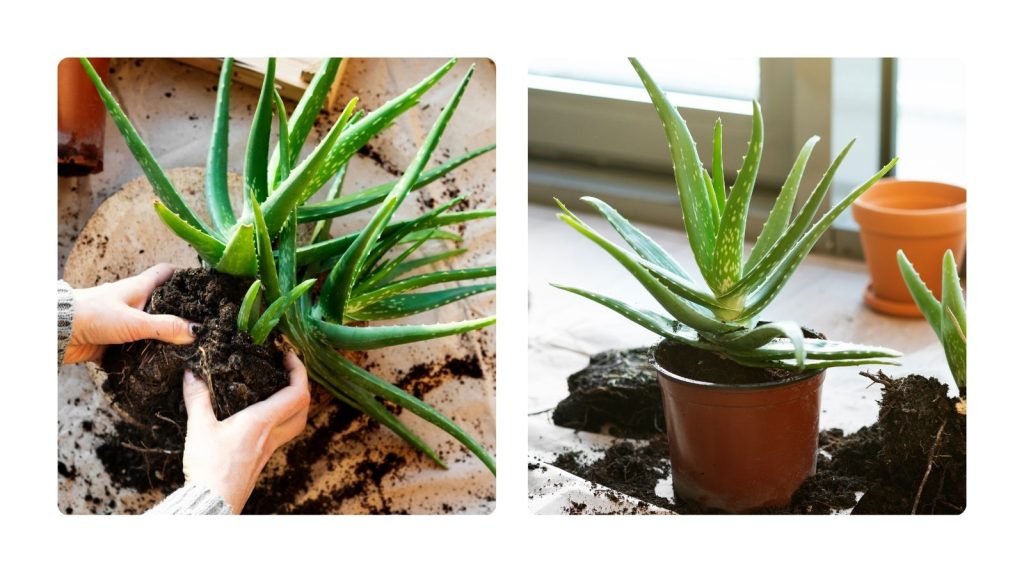
If you don’t want to propagate the plant, you can also remove the plants so the mother plant doesn’t have to divide its energy too much. It’s not always necessary, but in some cases it helps maintain more balanced growth.
Aloe vera and pets: a detail worth keeping in mind
Although aloe vera is well-known for its properties and the use of its gel, the plant is not harmless to everyone. If you have dogs or cats, it’s important to know that it can be toxic to them if ingested.
That doesn’t mean you have to give it up, but you should put it somewhere where they can’t chew on it or play with it. It’s a small detail, but it’s worth keeping in mind.
Why does aloe vera work so well when you understand it?
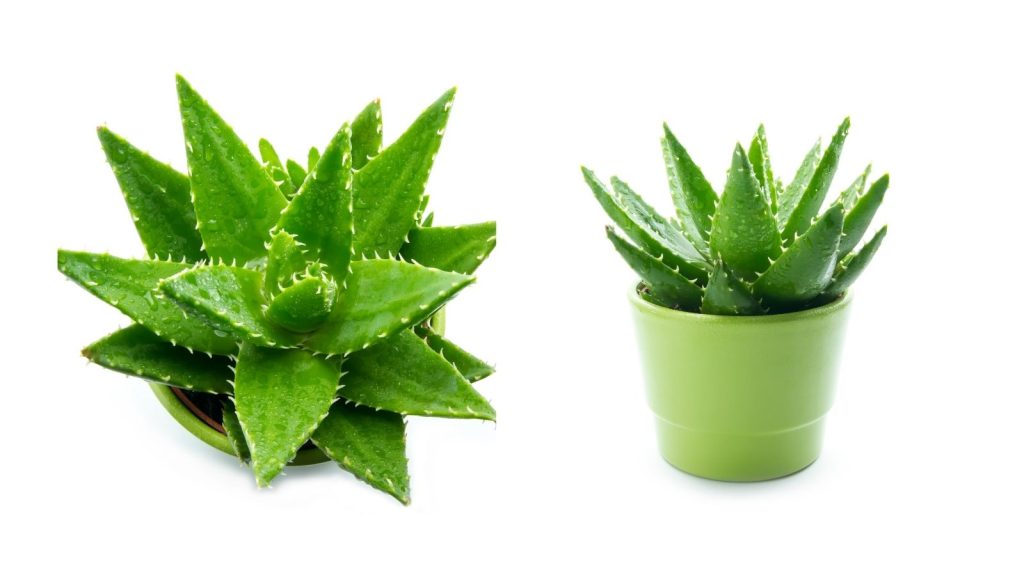
Aloe vera isn’t a difficult plant. The problem is that it’s often cared for based on intuition, and with this species, that can cause difficulties. It’s watered routinely, kept out of direct sunlight for fear of the sun, or planted in a substrate that retains too much water, and in the end, what seemed like an easy plant ends up creating doubts.
Once you understand the basics, everything changes. Aloe vera needs plenty of light, little watering, and good drainage. With that sorted, it usually thrives both indoors and in sheltered outdoor locations.
If you’re looking for a hardy, decorative, and easy-to-care-for houseplant, this is one of the best options. And if you’ve had one that didn’t thrive, it’s often not due to lack of care, but rather because you overdid it.
If you also like plants that are truly practical for everyday life and easy to integrate into your home, aloe vera fits perfectly into that idea of a beautiful, long-lasting plant that is easy to maintain when given what it needs, without excesses or complications.