11 Natural Ways to Keep Stray Cats Out of Your Yard
Keep stray cats out of your yard with these 11 humane, natural methods that actually work. From scent deterrents and prickly textures to motion-activated sprinklers and cat-repelling plants, this guide covers safe, effective ways to protect your garden without harming any animals. #CatRepellent #GardenTips #NaturalPestControl #BackyardCare #PetSafe
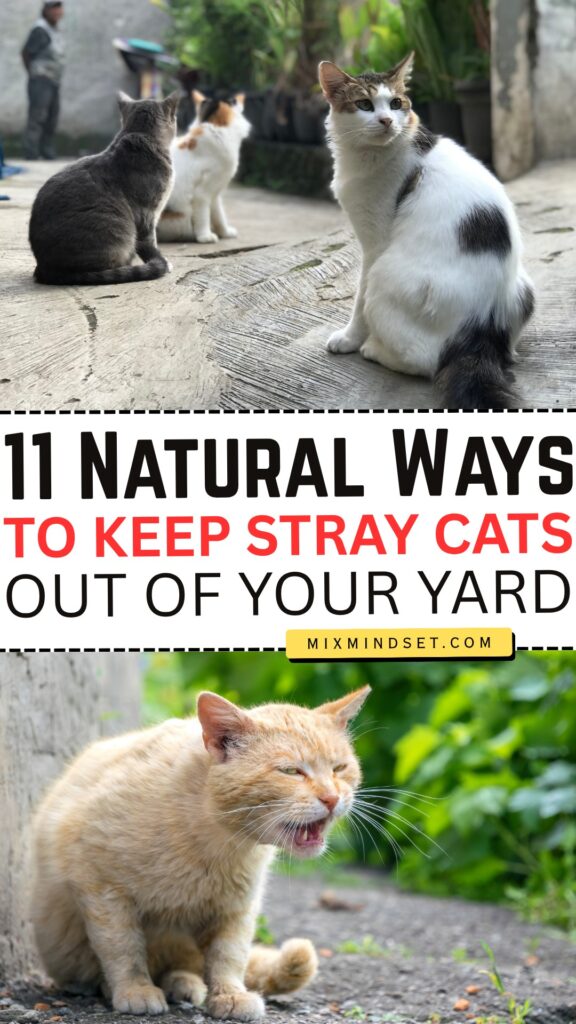
A few summers ago, I was at my wit’s end. Every morning, I’d find my carefully planted flower beds dug up, my vegetable garden trampled, and evidence that stray cats had been using my yard as their personal litter box.
I tried shooing them away, but they kept coming back. I didn’t want to hurt them—I just wanted them to go somewhere else. After a lot of trial and error, I discovered that cats are creatures of habit and sensitive to certain smells, textures, and sounds.
Once I started using the right combination of natural deterrents, the strays finally got the message. Here are 11 humane ways to keep stray cats out of your yard.
Why Stray Cats Are a Problem
Stray cats can be more than just a nuisance. They can cause real damage to your garden and pose health risks. Cats dig up seeds and young plants while using your flower beds as a toilet.
Their feces can contain parasites like roundworms and bacteria like salmonella and E. coli, which can linger in the soil. Male cats also spray urine to mark their territory, leaving behind a strong, unpleasant smell. And while they do catch some rodents, they also kill many songbirds.
The good news is that you can deter stray cats without harming them. Here are 11 natural, humane methods that really work.
Method 1: Remove Food Sources
This is the most important step. Stray cats hang around because there’s something in it for them. If you remove the food, they’ll have less reason to stay.
What to do:
- Don’t leave pet food outside.
- Store trash cans in your garage or shed with the lids tightly closed.
- Secure garbage lids with bungee cords.
- Keep compost bins covered.
- Clean up fallen fruit from trees.
My advice: I stopped leaving my own cat’s food on the porch, and I noticed a big drop in stray visitors within just a few days.
Method 2: Use Scent Deterrents (Cats Hate These Smells)
Cats have extremely sensitive noses. Strong smells that seem pleasant to us can be overwhelming and unpleasant to them.
Citrus Peels and Sprays
Cats dislike citrus. Next time you eat an orange or lemon, save the peels and scatter them around your garden beds.
DIY citrus spray: Mix 1 cup water, ½ cup lemon juice, ¼ cup orange juice, and 1 tablespoon white vinegar in a spray bottle. Shake well and spray around the perimeter of your yard and on garden beds. Reapply after rain.
Vinegar Spray
Mix equal parts white vinegar and water in a spray bottle. Spray it on fences, along garden edges, and any areas where cats gather. The smell will deter them, but it fades quickly, so you’ll need to reapply daily or after rain.
My personal experience: I tried the vinegar spray along my fence line, and it worked well. The only downside was reapplying it so often. I found that using a mix of vinegar and citrus worked even better and lasted a bit longer.
Method 3: Homemade Cat Repellent Spray (3-Ingredient Power)
For a more potent spray, combine ingredients that cats absolutely detest.
The recipe:
- Lemon juice
- Rosemary
- White vinegar
Mix equal parts of these three ingredients in a spray bottle. Cats hate all three. Spray the mixture around your garden, near plants, and in areas where cats spend time.
Alternative blend: Combine one part white vinegar, one part lemon juice, and one part rosemary extract.
Method 4: Grow Cat-Repelling Plants
Certain plants naturally repel cats with their strong scents. Plant them around the borders of your garden or in pots near problem areas.
Where to plant them: Place these plants along the perimeter of your yard, around flower beds, and near vegetable gardens to create a natural scent barrier. You can also sprinkle dried leaves of these plants around the spots you want to protect.
Method 5: Sprinkle Coffee Grounds
Coffee grounds are a double win—they repel cats and fertilize your soil. The smell is a deterrent, and cats also don’t like the texture on their paws.
How to use:
- Ask for free used coffee grounds at your local café.
- Sprinkle them around your garden beds and plants.
- For a more potent mix, combine coffee grounds with cayenne pepper.
Important: Caffeine is toxic to cats, so make sure they can smell it but can’t eat it. Place grounds in jars with holes or mix them into the soil.
Method 6: Use Prickly Textures (Cats Hate Walking on Them)
Cats have sensitive paws. They prefer soft, dry soil and will avoid rough, prickly, or uncomfortable surfaces.
What to use:
- Pine cones: Scatter them around your garden beds.
- Eggshells: Crush them and sprinkle around plants.
- Pebbles and stones: Use them in flower beds.
- Rough mulch: Coarse wood chips or gravel are hard for cats to dig in.
- Thorny clippings: Rose, holly, or raspberry branches (wear gloves!).
- Plastic forks: Stick them in the ground with the tines facing up.
My advice: I scattered pine cones and eggshells around my vegetable beds, and the cats stopped digging there almost immediately. It’s a simple, free solution that really works.
Method 7: Lay Down Chicken Wire or Mesh
Cats dislike the texture of chicken wire on their paws. It also prevents digging.
How to use:
- Lay chicken wire flat on the soil in garden beds.
- Cut holes for your plants to grow through.
- Secure the edges so it’s not a tripping hazard.
- Cover with mulch to make it look more attractive.
Alternatives: Use plastic fencing, bird netting, or plastic carpet runners with the spike side up, covered lightly in soil.
Method 8: Discourage Digging
Cats are more likely to dig in loose, dry soil.
What to do:
- Water your garden beds more often to keep the soil moist.
- Add a layer of mulch or rough ground cover.
- Use chopsticks, bamboo skewers, or plastic forks in tight clusters.
- Cover exposed ground with large river rocks.
Method 9: Provide a Cat-Friendly Space Elsewhere
Sometimes the best solution is to give the cats a better option nearby.
What to do:
- Create a small “litter box” area in a secluded corner of your yard with sand or peat moss.
- Provide an outdoor shelter for community cats, placed far from areas you want to protect.
- If you have your own cat, make sure they have a comfortable outdoor space that meets their needs.
My advice: I placed a small sandbox in a far corner of my yard, and the stray cats started using that instead of my flower beds. It’s a compromise that worked well for everyone.
Method 10: Install Motion-Activated Deterrents
Motion-activated devices scare cats away without harming them.
Options:
- Motion-activated sprinklers: Spray a burst of water when they detect movement.
- Ultrasonic cat repellers: Emit a high-frequency sound that cats find unpleasant.
- Motion-activated lights: Flashing lights can startle cats.
- Wind chimes: Hang them over flower beds; the noise can deter cats.
Important: Switch up your deterrents occasionally so cats don’t get used to them.
Method 11: Install Proper Fencing
Cats are excellent climbers, so standard fences won’t stop them.
What works:
- Install an 8-foot wire mesh fence.
- Add a floppy top to the fence so cats can’t land on it.
- Bury the fence at the bottom to prevent them from sneaking under.
This is the most expensive option, but it’s effective and permanent.
Quick Reference Table: 11 Methods at a Glance
| Method | Best For | Effort | Cost |
|---|---|---|---|
| Remove food sources | Long-term prevention | Low | Free |
| Scent deterrents (citrus, vinegar) | Quick repellent | Low | Very low |
| Homemade cat spray | Targeted areas | Low | Very low |
| Cat-repelling plants | Natural barrier | Medium | Low |
| Coffee grounds | Garden beds, fertilizing | Low | Free/low |
| Prickly textures | Digging prevention | Low | Free/low |
| Chicken wire/mesh | Garden beds, digging | Medium | Low |
| Discourage digging | Moist soil, mulch | Low | Low |
| Cat-friendly space | Long-term solution | Medium | Low |
| Motion-activated deterrents | Active repellent | Medium | Medium |
| Proper fencing | Permanent solution | High | High |
What NOT to Use
My Personal Cat Deterrent Routine
Here is what I actually do to keep stray cats out of my yard. You can copy this.
Every week:
- I check my garden beds and reapply citrus peels or vinegar spray.
- I sprinkle fresh coffee grounds around the perimeter.
- I make sure my trash cans are sealed tight.
Every month:
- I prune my lavender and rosemary to release more scent.
- I check my chicken wire and make sure it’s still secure.
As needed:
- If I see a cat, I turn on my motion-activated sprinkler.
- I rotate my deterrents so the cats don’t get used to them.
Since I started this routine, I have had very few problems with stray cats. It takes a little effort, but it’s worth it to have a clean, cat-free yard.
The Bottom Line
Keeping stray cats out of your yard doesn’t have to mean harming them. There are plenty of humane, natural methods that really work.
Remove food sources, use scent deterrents like citrus and vinegar, plant cat-repelling herbs, scatter prickly textures like pine cones and eggshells, lay down chicken wire, and use motion-activated sprinklers.
The key is to use a combination of methods and switch them up occasionally so the cats don’t get used to them.
I went from having my garden destroyed every night to enjoying a peaceful, cat-free yard. You can do this too. Start with a few of these methods and see what works best for your yard.