How to Get Rid of Chicken Mites and Lice Naturally?
Learning how to get rid of chicken mites and lice naturally can save your flock fast. These tiny bugs make chickens scratch, lose feathers, and stop laying eggs. Natural chicken lice treatment and home remedies for poultry mites are safe, cheap, and really work. I have tried them myself and they made a huge difference. #ChickenMites #NaturalPoultrycare #BackyardChickens #ChickenHealth #HomesteadLife
What Are Chicken Mites and Lice?
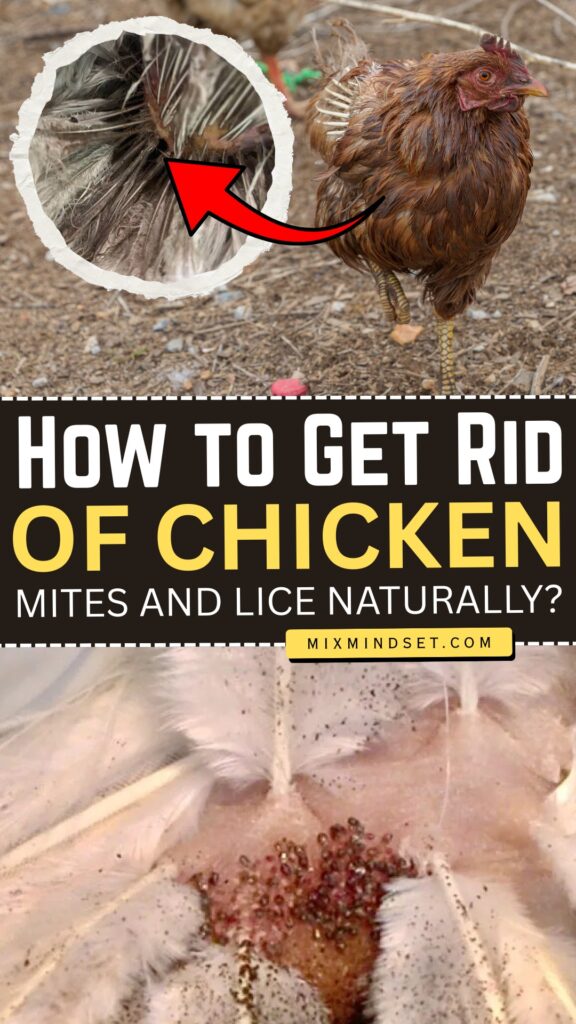
Chicken mites and lice are tiny bugs that live on your chickens. They are so small you can barely see them, but they cause big problems.
- Chicken mites are spider-like bugs. They hide in the coop during the day and crawl onto chickens at night to drink their blood.
- Chicken lice are flat, yellowish bugs. They live on the chicken all the time and eat dead skin and feather bits.
Both of them make chickens feel awful. I remember the first time I saw my hens scratching like crazy and thought they just had dry skin. It turned out to be a full mite problem. I felt so bad for missing the signs earlier.
How Do You Know Your Chickens Have Mites or Lice?
Catching the problem early makes everything easier. Here are the signs I always watch for:
- Chickens scratch and peck at themselves a lot
- Feathers look ragged, broken, or missing — especially around the vent and neck
- You find small moving dots on the skin or feathers
- Eggs drop in number or stop completely
- Chickens look pale, tired, or weak
- You see dark, dusty patches near the vent area (this is usually lice eggs)
- The coop smells worse than usual and has tiny dark specks on the roost bars
My tip: Check your chickens at night with a flashlight. Hold one gently, part the feathers near the vent, and look closely at the skin. If you see tiny bugs running around, that is your answer.
Why Natural Methods Are Better
I tried a chemical spray once because I was desperate. My chickens got stressed, the eggs tasted off for a few days, and I had to worry about chemical residue. That was enough for me.
Natural methods are better because:
- They are safe for your chickens and your eggs
- They do not harm the good bugs in your garden
- They are cheaper than store-bought pesticides
- You can use them over and over without building up resistance
- Kids and pets can still be around the coop safely
Natural Remedies That Actually Work
1. Diatomaceous Earth (DE)
This is my number one go-to. Diatomaceous earth is a white powder made from tiny fossilized sea creatures. It works by scratching the outer shell of mites and lice until they dry out and die. It does not hurt your chickens or you.
How to use it:
- Dust it directly on your chickens — lift the feathers and rub it into the skin
- Spread it all over the coop floor, in nest boxes, and along the roost bars
- Add it to the dust bath area so chickens can treat themselves
I keep a big bucket of DE near my coop and use it every two weeks as a routine. Since I started doing that, I have not had a bad mite outbreak in over a year.
Important: Use food-grade DE only. Pool-grade DE can hurt chicken lungs. Always wear a mask when dusting to protect yourself too.
2. Wood Ash Dust Bath
Chickens love to roll in dirt. When you add wood ash to their dust bath, it helps kill mites and lice the natural way. The ash suffocates the bugs.
How to set it up:
- Mix equal parts dry dirt, sand, and wood ash in a big container or low box
- Place it somewhere dry and sunny
- Let chickens use it whenever they want
My chickens figured out the dust bath on their own once I set it up. They spend a good 20 minutes in it every afternoon. It is fun to watch and really does help keep the bugs away.
3. Neem Oil Spray
Neem oil comes from the neem tree and has been used for hundreds of years to fight insects. It messes up the life cycle of mites and lice so they stop reproducing.
How to make a simple spray:
| Ingredient | Amount |
|---|---|
| Water | 1 liter |
| Neem oil | 2 tablespoons |
| Dish soap (plain) | 1 teaspoon |
Mix these in a spray bottle and shake well. Spray it on your chickens — especially under the wings and around the vent. Also spray the coop walls, roost bars, and nest boxes.
Use this spray once a week during a bad outbreak and every two weeks to prevent problems. I learned the hard way that skipping the second week treatment lets the eggs hatch and the cycle starts all over again.
4. Garlic Juice Spray
Garlic is a natural insect repellent. Mites hate the smell of it. This is one of the cheapest and easiest home remedies you can make.
Simple recipe:
- Crush 10 garlic cloves
- Soak them in 1 liter of water overnight
- Strain out the garlic pieces
- Add a few drops of lavender oil if you have it
- Pour into a spray bottle
Spray this around the coop and on the chickens lightly every few days. I started using this after reading about it in an old homesteading book and was surprised by how well it worked.
5. Apple Cider Vinegar in Water
This one works from the inside out. When chickens drink water with a little apple cider vinegar in it, their skin becomes less appealing to bugs.
How to use it:
- Add 1 tablespoon of apple cider vinegar per liter of water
- Use raw, unfiltered ACV for best results
- Offer it 3–4 times a week, not every day
Do not use metal water containers with ACV because the acid can react with metal. Plastic or ceramic works best. I use an old ceramic crock that my chickens love.
6. Herbs in the Nesting Boxes
Certain herbs naturally repel mites and lice. I started stuffing my nesting boxes with fresh or dried herbs after a friend on a farming forum suggested it. My hens also seem calmer and more relaxed since I started doing this.
Best herbs to use:
- Lavender — repels insects and calms chickens
- Mint — strong smell bugs hate
- Rosemary — great pest deterrent
- Wormwood — one of the strongest natural bug repellents
- Thyme — helps keep the air in the coop fresh
Just tuck a big handful into each nesting box and replace it every week or two. Grow these herbs near your coop for an easy supply.
Cleaning the Coop the Right Way
Here is something most beginners miss: treating your chickens is only half the job. If you do not clean the coop at the same time, the bugs just come right back.
Step-by-Step Coop Cleaning
- Remove all old bedding — bag it and throw it away or compost it far from the coop
- Scrub every surface — use hot water and a stiff brush on walls, floors, roost bars, and nest boxes
- Make a cleaning spray — mix water with white vinegar in equal parts and add 20 drops of tea tree oil
- Spray everything — coat all surfaces and let it soak for 15 minutes
- Let it dry completely — leave the coop open to air out for several hours
- Dust with diatomaceous earth — cover the floor and all the cracks and corners before adding new bedding
- Put in fresh bedding — pine shavings work great and smell nice
Do a deep clean like this at least once a month. During a mite outbreak, do it twice in one week.
Treatment Schedule: What to Do When
This table helped me stay organized when I was dealing with a bad outbreak last spring:
| Day | What To Do |
|---|---|
| Day 1 | Deep clean the coop. Dust all chickens with DE. Spray with neem oil. |
| Day 3 | Spray coop with garlic spray. Check chickens for bug activity. |
| Day 7 | Repeat DE dusting on all chickens. Add herbs to nest boxes. |
| Day 10 | Do another neem oil spray on chickens and coop. |
| Day 14 | Full coop clean again. Check chickens carefully. Dust bath should have wood ash. |
| Weekly after | Routine DE dusting and ACV water twice a week. |
Staying on a schedule is the biggest difference between beating the problem and watching it keep coming back.
Common Mistakes People Make
I have made most of these myself, so I am not judging:
- Treating chickens but not the coop — the bugs just move back from the walls at night
- Doing one treatment and stopping — mite eggs take 7–10 days to hatch, so one round never finishes the job
- Using too little DE — you need to really get it under the feathers, not just sprinkle a little on top
- Forgetting to check new chickens — always quarantine new birds for at least two weeks before adding them to your flock
- Ignoring the problem in winter — mites slow down in cold weather but they do not die, and they bounce back fast in spring
Natural vs. Chemical: A Quick Comparison
| Factor | Natural Methods | Chemical Treatments |
|---|---|---|
| Safety for eggs | Yes, fully safe | May need egg withdrawal period |
| Cost | Very low | Can be expensive |
| Repeat use | Safe to use often | Can build bug resistance |
| Ease of use | Simple and DIY | Need to follow strict instructions |
| Effect on chickens | Gentle | Can cause stress or irritation |
| Long-term results | Great if done consistently | Works fast but bugs often return |
Recommended Products (Natural and Trusted)
These are things I actually use or have tested with good results:
- Harris Food Grade Diatomaceous Earth — fine powder, easy to use, very affordable
- Organic Neem Oil — look for cold-pressed, 100% pure versions
- Bragg Organic Apple Cider Vinegar — the one with “the mother” works best
- Dried lavender and wormwood bundles — you can grow your own or buy from farm supply stores
- Large plastic dust bath tub — a cement mixing tray from a hardware store works perfectly and costs very little
My Personal Recommendation
After years of keeping backyard chickens, I truly believe that diatomaceous earth plus a clean coop plus a consistent routine is the most powerful combo you can use. No single treatment works on its own.
Start by deep cleaning the coop on the same day you first treat your chickens. Then set a weekly reminder to check your flock and do a quick dust. Add the herbs, the dust bath, and the ACV water as easy ongoing habits.
You do not need expensive products or strong chemicals. You just need to stay consistent and pay attention to your birds. Chickens cannot tell you something is wrong — you have to look for the signs and act quickly when you see them.
The first flock I kept stayed healthy for three full years with nothing but natural methods. That told me everything I needed to know.
Frequently Asked Questions
How long does it take to get rid of chicken mites naturally? With consistent treatment, you should see a big improvement in 2–3 weeks. Full control usually takes about a month because you have to break the egg-hatching cycle.
Can chicken mites live on humans? Yes, they can bite people but they cannot complete their life cycle on human skin. They may cause itchy red bumps but will not stay on you permanently.
How often should I dust my chickens with DE? Every 7–10 days during an outbreak. Once a month as prevention.
Is wood ash safe for chickens? Yes, plain wood ash (not coal ash) is completely safe and actually helps with many health issues. Just make sure it is fully cooled before using it.
Can I use essential oils on chickens? Some are safe in small amounts — lavender and tea tree oil diluted in water are fine. Never apply essential oils directly without diluting them first.