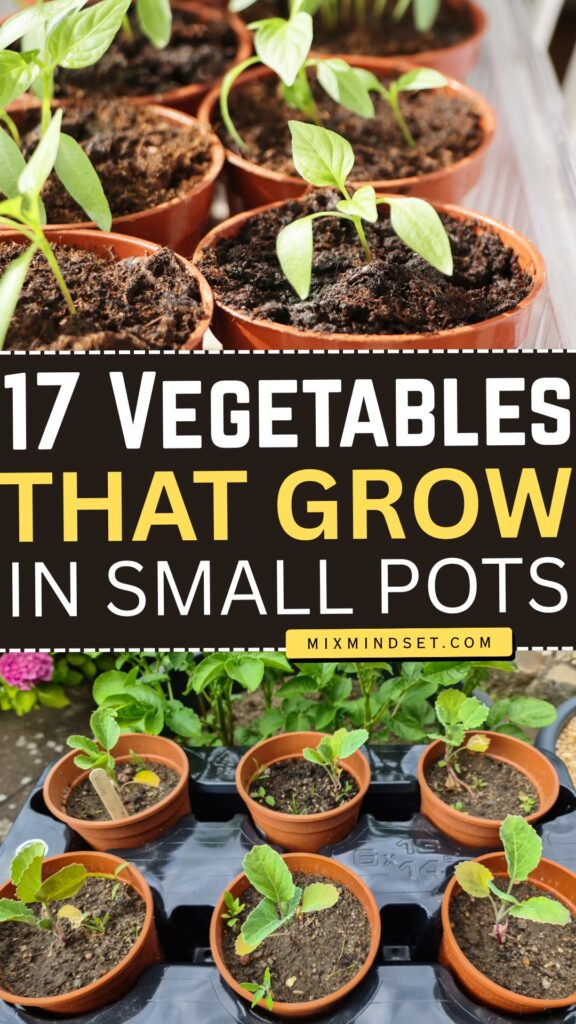
17 Vegetables That Grow Great in Small Pots
Grow fresh food even in the tiniest spaces with these 17 vegetables that thrive in small pots. This guide covers the best compact varieties, container sizes, and simple care tips for a successful balcony or windowsill garden. #ContainerGardening #SmallSpaceGarden #GrowYourOwnFood #PatioVegetables #BalconyGarden
The first time I tried growing vegetables on my tiny apartment balcony, I was sure it wouldn’t work. I had a few small pots and a dream, but I thought you needed a big backyard to grow real food. I was wrong.
I started with a single pot of cherry tomatoes and a window box of lettuce, and I was hooked. That tiny garden gave me fresh salads all summer long.
I learned that with the right vegetables, even the smallest pots can produce a surprising harvest. Here are the 17 best vegetables for small pots.
How to Choose the Right Pot
Before we get to the list, here is a simple rule for container sizes.
| Container Size | Best For |
|---|---|
| 1-2 gallons (6-9 inches deep) | Shallow-rooted plants like leafy greens, radishes, and green onions |
| 3-5 gallons (10-12 inches deep) | Medium-root plants like peppers, bush beans, and dwarf tomatoes |
| 5+ gallons (12+ inches deep) | Larger plants like full-sized tomatoes, eggplant, and cucumbers |
The most important rule: Make sure every pot has drainage holes. Without them, water pools at the bottom and causes root rot.
17 Vegetables That Grow Great in Small Pots
1. Lettuce
Lettuce is the ultimate container vegetable. It has shallow roots, grows fast, and you can harvest it leaf by leaf for weeks.
Why it works: Lettuce does not need deep soil and grows quickly. You can plant it in window boxes, shallow pots, or even hanging baskets.
Container size: 1-2 gallons (6-8 inches deep).
Care: Keep the soil moist. Harvest outer leaves as needed, and the plant will keep producing.
2. Spinach
Spinach is one of the easiest leafy greens to grow in pots. It grows fast and gives you multiple harvests.
Why it works: Spinach has shallow roots and thrives in small containers.
Container size: 1-2 gallons (6-8 inches deep).
Care: Water consistently. Spinach prefers cooler weather, so it is great for spring and fall.
3. Arugula
Arugula adds a peppery kick to salads and grows beautifully in small pots.
Why it works: Like other leafy greens, arugula has shallow roots and grows quickly. You can start harvesting in just a few weeks.
Container size: 1-2 gallons (6-8 inches deep).
Care: Keep the soil moist and harvest outer leaves as needed.
4. Kale
Kale is a hardy green that grows well in containers and can be harvested repeatedly.
Why it works: Kale has shallow roots and is very forgiving. It tolerates cooler temperatures and keeps producing for months.
Container size: 2-3 gallons (10-12 inches deep).
Care: Water regularly. Harvest outer leaves and the plant will keep growing.
5. Swiss Chard
Swiss chard is a beautiful and productive leafy green with colorful stems.
Why it works: Chard grows well in containers and produces leaves for months. You can harvest outer leaves and the plant keeps growing.
Container size: 2-3 gallons (10-12 inches deep).
Care: Keep soil moist. Chard tolerates some shade.
6. Radishes
Radishes are one of the fastest vegetables you can grow. They go from seed to harvest in as little as 3-4 weeks.
Why it works: Radishes are small and fast. You can plant them in shallow pots and harvest them quickly.
Container size: 1-2 gallons (6-8 inches deep).
Care: Keep soil consistently moist. Thin seedlings so they have room to grow.
7. Green Onions (Scallions)
Green onions are one of the easiest vegetables to grow in small pots. You can even regrow them from store-bought scraps.
Why it works: They have shallow roots and take up very little space.
Container size: 1 gallon (6 inches deep).
Care: Water regularly. They tolerate partial shade.
8. Bush Beans
Bush beans are compact and do not need a trellis. They produce a generous harvest in a small space.
Why it works: Bush beans grow as small, bushy plants that are perfect for containers.
Container size: 2-3 gallons.
Care: Give them full sun. Keep soil moist and harvest beans regularly to encourage more production.
9. Dwarf Tomatoes
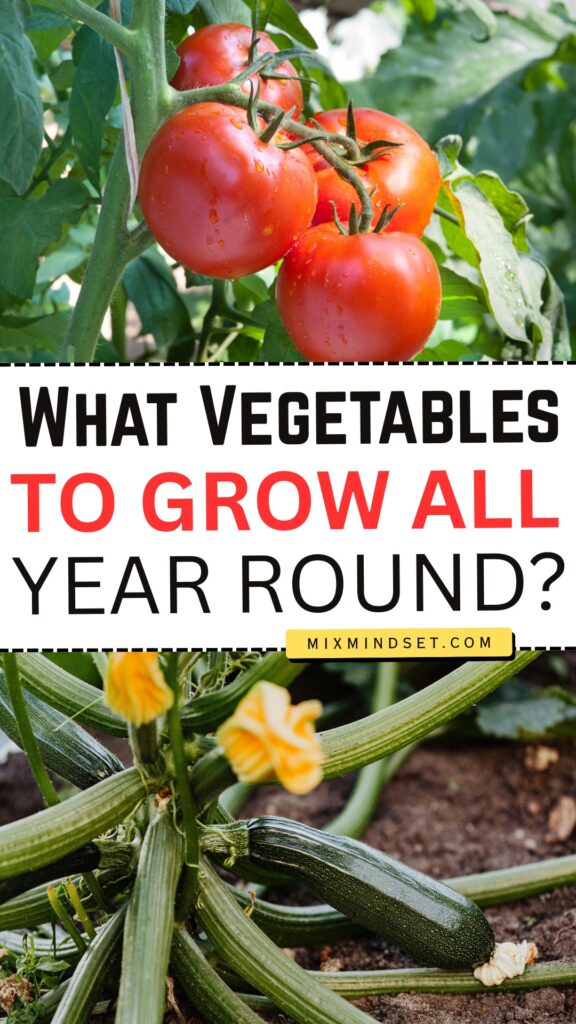
Tomatoes are one of the most popular container vegetables. Dwarf or determinate varieties are bred specifically for pots.
Why it works: Compact tomato plants stay small but still produce plenty of fruit.
Container size: 3-5 gallons.
Care: Tomatoes need 6-8 hours of sunlight daily. Use a small stake or cage for support.
10. Peppers (Sweet and Hot)
Peppers are beautiful, productive, and well-suited for containers.
Why it works: Peppers have compact growth habits and produce fruit over a long period.
Container size: 2-3 gallons for hot peppers, 5 gallons for sweet peppers.
Care: Peppers love warmth. Give them full sun and water regularly.
11. Eggplant
Eggplants are surprisingly well-suited for containers. Compact varieties are perfect for pots.
Why it works: Eggplants have deep roots but grow well in larger containers.
Container size: 5 gallons.
Care: Eggplants love warmth. Give them full sun and fertilize regularly.
12. Bush Cucumbers
Cucumbers can grow in containers if you choose bush or compact varieties.
Why it works: Bush cucumbers are bred specifically for containers and small gardens.
Container size: 5 gallons.
Care: Cucumbers need warmth and consistent moisture. Give them full sun and a small support if needed.
13. Dwarf Peas
Peas can be grown in pots if you choose dwarf or bush varieties.
Why it works: Dwarf peas stay compact and produce sweet pods in a small space.
Container size: 3-5 gallons.
Care: Peas prefer cooler weather. Give them a small trellis for support.
14. Carrots (Short Varieties)
Carrots can grow in containers if you choose short-rooted varieties.
Why it works: Short carrot varieties like Thumbelina or Paris Market are bred for shallow soil.
Container size: 10-12 inches deep.
Care: Use loose, sandy soil so carrots can grow straight. Water consistently.
15. Beets
Beets are easy to grow in containers. Both the roots and the young leaves are edible.
Why it works: Beets grow well in deeper containers.
Container size: 2-3 gallons (10-12 inches deep).
Care: Water consistently. Thin seedlings so they have room to grow.
16. Zucchini (Compact Varieties)
Zucchini is a prolific vegetable that adapts well to container growing with compact varieties.
Why it works: Bush zucchini varieties stay smaller and produce a surprising amount of fruit from a single plant.
Container size: 5 gallons.
Care: Give them full sun. Water deeply and regularly. Harvest zucchini when they are small and tender.
17. Microgreens
Microgreens are not a single vegetable but a category of tiny, nutrient-packed greens harvested when very young.
Why it works: Microgreens grow in shallow trays and are ready to harvest in just 7-10 days.
Container size: Shallow tray (2-3 inches deep).
Care: Keep the soil moist. Harvest when the first true leaves appear.
Quick Reference Table
| Vegetable | Container Size | Sunlight | Days to Harvest |
|---|---|---|---|
| Lettuce | 1-2 gallons (6-8 inches deep) | Sun to part shade | 30-45 days |
| Spinach | 1-2 gallons (6-8 inches deep) | Sun to part shade | 30-40 days |
| Arugula | 1-2 gallons (6-8 inches deep) | Sun to part shade | 20-40 days |
| Kale | 2-3 gallons (10-12 inches deep) | Sun to part shade | 40-60 days |
| Swiss Chard | 2-3 gallons (10-12 inches deep) | Sun to part shade | 50-60 days |
| Radishes | 1-2 gallons (6-8 inches deep) | Full sun | 25-35 days |
| Green Onions | 1 gallon (6 inches deep) | Sun to part shade | 60-80 days |
| Bush Beans | 2-3 gallons | Full sun | 50-60 days |
| Dwarf Tomatoes | 3-5 gallons | Full sun | 60-75 days |
| Peppers | 2-5 gallons | Full sun | 60-80 days |
| Eggplant | 5 gallons | Full sun | 65-80 days |
| Bush Cucumbers | 5 gallons | Full sun | 50-70 days |
| Dwarf Peas | 3-5 gallons | Full sun | 60-70 days |
| Carrots (short) | 10-12 inches deep | Full sun | 60-75 days |
| Beets | 2-3 gallons (10-12 inches deep) | Full sun | 50-70 days |
| Zucchini (compact) | 5 gallons | Full sun | 45-60 days |
| Microgreens | Shallow tray (2-3 inches deep) | Bright indirect light | 7-10 days |
Important Tips for Small Pot Gardening
Do Not Overwater
Small pots dry out faster, but they also hold less water. Overwatering is a common mistake. Always check the soil before watering. Stick your finger about an inch into the soil. If it feels dry, water. If it is still wet, wait.
Use Quality Potting Mix
Do not use garden soil in containers. It is too heavy and can bring pests. Use a high-quality potting mix that is lightweight and drains well.
Feed Your Plants
Container plants need regular feeding because nutrients wash out with watering. Use a balanced liquid fertilizer every 2-3 weeks during the growing season.
Choose Compact Varieties
Look for words like “dwarf,” “bush,” “patio,” or “compact” on seed packets. These varieties are bred specifically for containers.
My Personal Small Pot Garden Story
I started with one pot of cherry tomatoes on a 4-foot-wide balcony. That first summer, I harvested over 150 tomatoes from a single plant. I was hooked. The next year, I added lettuce, peppers, and herbs. Now I grow enough to make fresh salads and salsa all summer long. The best part is how easy it is. I water my plants in the morning, enjoy my coffee while looking at them, and harvest fresh vegetables for dinner. It has become one of my favorite parts of the day.
The Bottom Line
You do not need a big backyard to grow vegetables. Lettuce, spinach, radishes, green onions, dwarf tomatoes, peppers, and bush beans are all perfect for small pots. Choose compact varieties, use containers with good drainage, and water consistently. With a little effort, you can enjoy fresh, homegrown vegetables from even the smallest balcony or windowsill.
I started with one pot and now have a thriving container garden. You can do this too. Start with a few of these vegetables and see how rewarding it is to grow your own food.