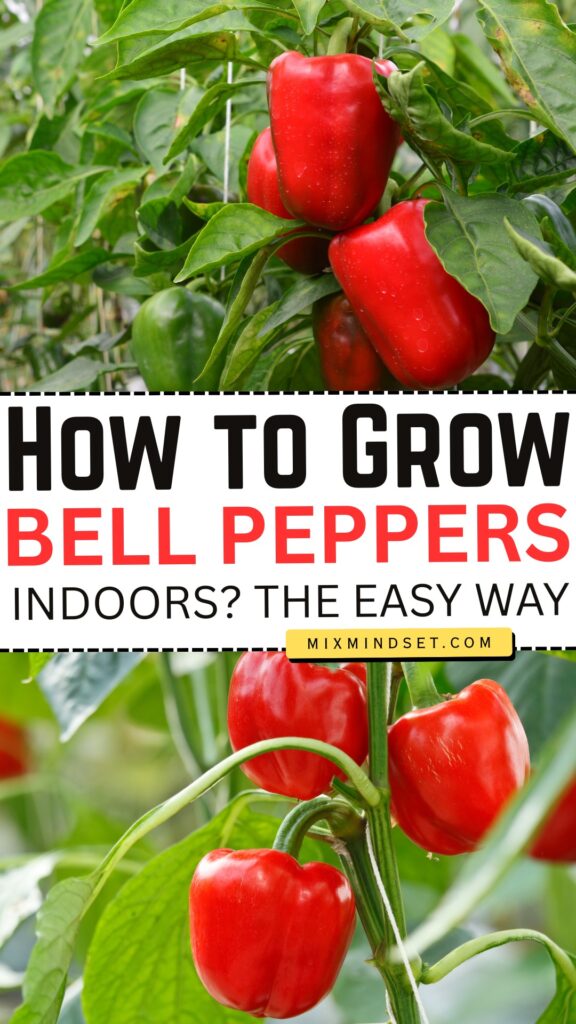
How to Grow Bell Peppers Indoors? The Easy Way
Grow fresh, crunchy bell peppers right on your windowsill with these simple indoor gardening tips. This guide covers everything from choosing the right compact varieties to providing enough light, warmth, and care for a steady harvest. #IndoorGardening #GrowBellPeppers #ContainerGardening #PepperPlant #GrowYourOwnFood
When I first tried growing bell peppers indoors, I thought a sunny windowsill would be enough. My plants grew tall and leggy, but they never produced a single pepper.
I was so disappointed. Then I learned that peppers are sun‑hungry tropical plants that need more than just a bright window.
Once I added grow lights and learned the right tricks, my plants started producing beautiful, crunchy peppers. Now I want to share what I learned so you can skip the trial and error and get straight to the harvest.
Can You Really Grow Bell Peppers Indoors?
Yes, you absolutely can. Bell peppers are self‑pollinating and adapt well to containers, making them great candidates for indoor growing. With the right setup, you can enjoy fresh, homegrown peppers year‑round, even in the middle of winter. Indoor pepper plants typically reach 1‑3 feet in height and can produce fruit for several years, though yields usually decrease after the first year or two.
The main challenges are providing enough light and warmth. Peppers are native to Central and South America and need lots of bright light and consistent temperatures to thrive. But once you get those two things right, the rest is pretty straightforward.
What You Will Need
Before you start, gather these supplies. Having everything ready makes the process much smoother.
| Item | Purpose |
|---|---|
| Bell pepper seeds | Choose compact varieties for indoor growing |
| Seed starting tray or small pots | For germinating seeds |
| Seed starting mix | Light, sterile soil for seedlings |
| Larger pots (5‑gallon or larger) | Permanent homes for mature plants |
| Well‑draining potting mix | Essential for healthy root growth |
| Grow lights | LED or fluorescent lights for 12‑16 hours daily |
| Watering can or spray bottle | For gentle watering |
| Balanced fertilizer | Vegetable‑specific fertilizer |
| Small fan | For air circulation and disease prevention |
| Plant labels | To keep track of varieties |
Choosing the Right Bell Pepper Variety
Not all bell peppers are created equal when it comes to indoor growing. You want compact, early‑fruiting varieties that do well in containers. Larger fruits take longer to grow and ripen, so choose varieties with smaller fruits for quicker harvests.
Here are some excellent choices for indoor growing:
| Variety | Why It Works Indoors |
|---|---|
| Mini Bell | Compact plants, small sweet peppers, faster maturity |
| Lunchbox Peppers | Compact and productive, come in multiple colors |
| Yolo Wonder | Classic bell that performs reliably in containers |
| Sweet Palermo | Elongated, sweet, and abundantly productive indoors |
| Redskin / Mohawk | Bell varieties bred for indoor production |
| Cajun Belle | Compact with excellent sweet flavor |
My advice: Start with Mini Bell or Lunchbox peppers. They are forgiving, produce quickly, and take up less space.
Step 1: Start Your Seeds
Peppers take a long time to grow, so starting from seed gives you the best head start.
When to start: Late winter to early spring, about 8 to 10 weeks before you want to harvest. If you are growing indoors year‑round, you can start seeds anytime.
Step‑by‑step:
- Fill a seed starting tray or small pots with a sterile seed starting mix.
- Plant seeds about ¼ inch deep and cover lightly with soil.
- Water gently with a spray bottle.
- Place the tray in a warm spot. Peppers need 70‑85°F (21‑29°C) to germinate. A heat mat speeds up the process.
- Seeds typically germinate in 7‑14 days.
- Once seedlings have one to two sets of true leaves, transplant them into larger pots.
Step 2: Provide Plenty of Light
This is the most important factor for indoor peppers. Peppers need intense light to flower and produce fruit.
The short answer: Give your peppers 12‑16 hours of bright light daily.
Natural light: A south‑facing window is your best bet for sunlight. However, most indoor growers find that window light alone is not enough, especially in winter.
Grow lights: Invest in LED or fluorescent grow lights. Position them 12‑18 inches above the plants and raise them as the plants grow. Use a timer to keep lights on for 12‑16 hours daily.
Signs of insufficient light:
My advice: Do not rely on a windowsill alone. Get grow lights. They are the difference between a houseplant and a pepper producer.
Step 3: Keep the Temperature Warm
Peppers are tropical plants. They need warmth to grow and set fruit.
Ideal temperatures:
What to avoid:
- Cold drafts from windows or doors
- Temperatures below 55°F (13°C), which slow growth
- Sudden temperature swings
If your home is cool, consider using a seedling heat mat to warm the soil.
Step 4: Water Consistently
Indoor pepper plants dry out faster than outdoor ones. Consistent moisture is key, but overwatering is a common mistake.
The simple rule: Water when the top inch of soil feels dry. Then water thoroughly until it drains from the bottom.
How often: Usually every 2‑3 days, depending on heat and humidity.
Important tips:
- Always use pots with drainage holes
- Let the soil dry out slightly between waterings
- Do not let the plant sit in standing water
- Peppers like to dry out a bit between waterings—overwatering is a hazard
Step 5: Use the Right Soil
Peppers need well‑draining, light, loamy soil rich in organic matter.
What to use:
- A high‑quality potting mix designed for vegetables
- Avoid garden soil—it compacts in containers
- The soil pH should be between 5.5 and 7.5
Pot size: Use 5‑gallon pots or larger for mature plants. Peppers need room for their roots.
Step 6: Fertilize Regularly
Peppers are heavy feeders. They need regular nutrients, especially once they start flowering.
Fertilizing schedule:
- During active growth: Use a balanced, water‑soluble fertilizer every 2 weeks
- When flowering begins: Switch to a fertilizer with higher phosphorus content to encourage fruit production
- In winter: Cut back on feeding when growth slows
My advice: Do not over‑fertilize. Too much fertilizer can kill the plant. Always follow the package instructions.
Step 7: Hand‑Pollinate Your Flowers
Indoors, there are no wind or bees to pollinate your pepper flowers. You need to do it yourself.
The good news: Bell peppers are self‑pollinating. Each flower has both male and female parts. But they still need a little help indoors.
Three easy ways to pollinate:
| Method | How to Do It |
|---|---|
| Gently shake the plant | Shake the plant daily when flowers appear to release pollen |
| Tap the flowers | Gently tap or flick each flower with your finger |
| Use a small brush | Gently brush the inside of each flower to transfer pollen |
Best time to pollinate: Morning, when flowers are fully open. Do this daily during the flowering period.
Step 8: Support Your Plants
As your peppers grow and start producing fruit, the stems can get heavy and bend or break.
What to do:
- Add small stakes or a tomato cage to support the plant
- Tie stems loosely to the support with soft plant ties
- Do this early, before the plant gets too big
Step 9: Prune and Maintain
Regular pruning keeps your plant healthy and productive.
What to do:
- Remove yellow or damaged leaves
- Pinch off the first few flowers that appear. This encourages the plant to put energy into growing stronger roots and foliage first
- Prune suckers (small shoots that grow between the main stem and branches) to keep the plant compact
Harvesting Your Peppers
Peppers will tell you when they are ready.
When to harvest:
- Peppers are ready when they look glossy and have reached their full size and deep color
- Green bell peppers can be harvested when they are full‑sized, even before they change color
- For red, yellow, or orange peppers, leave them on the plant until they fully ripen. They get sweeter as they mature
How to harvest:
Days to harvest: Most varieties take 90‑150 days from seed to harvest. From transplant, expect 70‑90 days.
Quick Reference Table
| Care Factor | What to Do | Why |
|---|---|---|
| Light | 12‑16 hours of bright light daily (grow lights recommended) | Peppers need intense light to flower and fruit |
| Temperature | 70‑85°F daytime, 70°F nighttime | Tropical plants need warmth |
| Water | Water when top inch of soil is dry | Prevents root rot, keeps moisture consistent |
| Soil | Well‑draining potting mix, pH 5.5‑7.5 | Prevents waterlogging |
| Pot size | 5‑gallon or larger with drainage holes | Gives roots room to grow |
| Fertilizer | Balanced fertilizer every 2 weeks; switch to high‑phosphorus when flowering | Supports growth and fruit production |
| Pollination | Shake or brush flowers daily | No wind or bees indoors |
| Support | Use stakes or cages | Prevents stems from breaking under fruit weight |
Common Problems and How to Fix Them
| Problem | Likely Cause | How to Fix It |
|---|---|---|
| Leggy, stretched plant | Not enough light | Add grow lights; move closer to light source |
| No flowers | Too little light or too cool | Increase light and warmth |
| Flowers dropping | Poor pollination or temperature stress | Hand‑pollinate; keep temperatures stable |
| Yellowing leaves | Overwatering or nutrient deficiency | Let soil dry out; check fertilizer schedule |
| Small or no fruit | Insufficient light or pollination | Increase light; pollinate daily |
| Pests (aphids, spider mites) | Dry conditions, poor air circulation | Use insecticidal soap or neem oil; increase humidity |
| Root rot | Overwatering, poor drainage | Repot in fresh soil; water less |
My Personal Indoor Pepper Routine
Here is what I actually do with my indoor peppers. You can copy this.
Every day:
- I check the soil moisture. If the top inch is dry, I water.
- I shake the plants gently when they have flowers.
- I check for pests.
Every week:
- I rotate the pots so all sides get even light.
- I remove any yellow or damaged leaves.
Every 2 weeks:
- I fertilize with a balanced liquid fertilizer.
- I check the grow light height and adjust as the plants grow.
At harvest:
- I cut peppers with clean shears.
- I leave some peppers on the plant to ripen further.
Since I started this routine, my indoor peppers have been productive and healthy. It takes a few minutes a day, but the payoff is fresh peppers all year round.
The Bottom Line
Growing bell peppers indoors is completely doable. The two most important things are light and warmth. Give your peppers 12‑16 hours of bright light daily with grow lights, keep them warm between 70‑85°F, and water consistently. Choose compact varieties like Mini Bell or Lunchbox for the best results. Pollinate by shaking or brushing the flowers. Harvest when the peppers are glossy and full‑sized.
I used to think indoor peppers were too difficult. Now I have fresh peppers on my windowsill all year long. You can do this too. Start with the right setup, be patient, and you will be harvesting your own crunchy, homegrown bell peppers in no time.