How to Grow Fruit Trees in Pots Indoors?
Grow juicy lemons, sweet figs, and even tiny peaches right on your windowsill. This guide covers the best dwarf varieties, lighting, watering, and care tips you need to harvest homegrown fruit from a pot indoors. #IndoorFruitTrees #ContainerGardening #GrowYourOwnFood #HouseplantTips #UrbanGardening
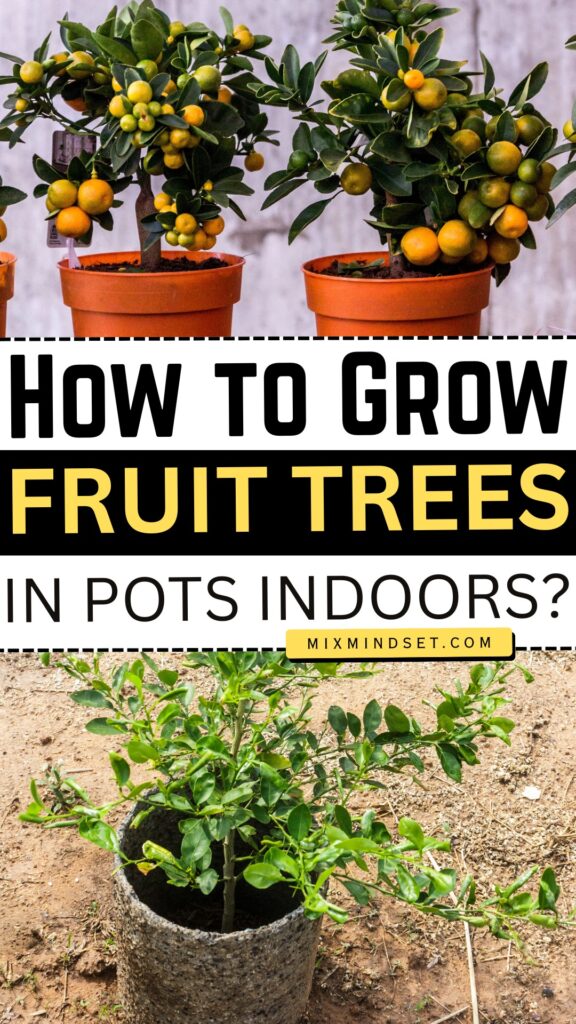
For years, I thought growing fruit trees was something you needed a big backyard for. I live in a small apartment with no garden, and I assumed I was stuck buying lemons and figs from the store.
Then, on a whim, I bought a tiny Meyer lemon tree at a garden center. I put it in a pot by my sunniest window, and to my absolute shock, it flowered and grew actual lemons. That first tiny, homegrown lemon tasted better than any I had ever bought.
Now, I have a whole collection of dwarf fruit trees on my balcony and by my windows. If you want to grow your own fruit but don’t have outdoor space, trust me, you can do this.
What You Will Need
| Item | Purpose |
|---|---|
| Dwarf or semi-dwarf fruit tree | The key to growing indoors—they stay small but still produce fruit |
| Large container with drainage holes | Gives roots room to grow; drainage prevents root rot |
| Well-draining potting mix | Prevents waterlogging; citrus/succulent mix works best |
| Liquid citrus or fruit tree fertilizer | Provides essential nutrients for fruiting |
| Grow lights (optional but recommended) | Supplements natural light in darker months |
| Small paintbrush | For hand-pollinating flowers indoors |
| Humidity tray or spray bottle | Boosts moisture for trees that love humidity |
| Patience | The most important ingredient! |
Step 1: Choose the Right Tree
The most important rule for growing fruit trees indoors is simple: choose a dwarf or semi-dwarf variety bred for containers. Standard fruit trees get too big, but dwarf trees are naturally smaller. They can be kept at 2 to 5 feet tall with regular pruning, making them perfect for a windowsill or balcony.
Best Indoor Fruit Trees for Beginners
| Fruit Tree | Best Variety | Why It Works Indoors |
|---|---|---|
| Lemon | Meyer Lemon, Ponderosa Lemon | Most reliable indoor citrus. Adapts well to pots and can fruit year-round |
| Lime | Key Lime, Thai Semi-Dwarf Lime | Self-pollinating, compact, and produces decent fruit |
| Orange | Calamondin Orange, Valencia Orange | Small, fragrant trees that are fairly disease-resistant |
| Fig | Brown Turkey | Self-pollinating and reliably produces sweet fruit indoors |
| Pomegranate | Dwarf Red Pomegranate, ‘Nana’ | Compact with shallow roots; beautiful and easy to care for |
| Olive | Arbequina | Slow-growing, self-pollinating, and adapts well to containers |
| Peach | Bonanza, Garden Lady, Pix-Zee | Self-pollinating dwarf varieties bred for containers |
| Blueberry | Northland Semi-Dwarf Blueberry | Compact bush that produces delicious berries in a pot |
Step 2: Pick the Right Pot
The right pot is just as important as the right tree.
Size matters: Start with a pot that is at least 12 inches in diameter (about 5 gallons). As your tree grows, you will need to move it up to a larger container. Some sources recommend a 15 to 25-gallon pot for mature dwarf apple trees. A larger pot holds more soil, which means it dries out more slowly and gives the roots more room to spread.
Material matters: Terracotta pots are ideal because they are porous and wick away excess moisture, which helps prevent root rot. Avoid dark-colored pots that absorb heat and can overheat the roots.
The golden rule: Ensure your pot has drainage holes. Without them, water pools at the bottom and causes root rot, which is the number one killer of indoor fruit trees.
Step 3: Use the Right Soil
Do not use regular garden soil. It is too heavy and compacts in pots, suffocating the roots.
What to use: A high-quality well-draining potting mix. For citrus trees, a mix designed for citrus or succulents works well. You can also mix your own by combining standard potting mix with extra perlite or sand to improve drainage.
A simple soil recipe for citrus:
- 50% standard potting mix
- 20% fine sand
- 20% compost
- 10% coco coir or peat moss
Step 4: Provide Plenty of Light
This is the biggest challenge indoors. Fruit trees need a lot of light to produce fruit.
The simple rule: Place your tree where it will get at least 6 to 8 hours of direct sunlight daily. A south-facing window is ideal.
If you do not have enough natural light: Use a grow light to supplement. Many indoor growers find that even with a bright window, a grow light is necessary during the darker winter months.
Step 5: Water the Right Way
Overwatering is the most common mistake.
The simple rule: Check the soil moisture before watering. Press your finger 2 inches into the soil. Water only when it feels dry at that depth.
How to water:
- Water thoroughly until it runs out of the drainage holes.
- Never let the pot sit in a saucer of standing water.
- Reduce watering in winter when growth slows.
Step 6: Feed Your Tree
Container trees need regular feeding because nutrients wash out with watering.
Feeding schedule: Use a liquid citrus or fruit tree fertilizer every few weeks during the growing season (spring and summer). Follow the instructions on the bottle.
Step 7: Boost Humidity
Many fruit trees, especially citrus, come from humid climates and suffer in dry indoor air.
How to boost humidity:
- Place the pot on a tray of damp pebbles.
- Mist the leaves regularly with a spray bottle.
- Use a room humidifier near your tree.
Step 8: Hand-Pollinate for Fruit
Indoors, there are no bees or wind to pollinate your flowers. You need to do it yourself.
How to hand-pollinate:
- Take a small, soft paintbrush.
- Gently twirl the brush inside each flower.
- Do this every day when the tree is in bloom.
The good news: Most dwarf fruit trees recommended for indoors are self-pollinating, so you only need one tree.
Step 9: Prune and Maintain
Pruning keeps your tree healthy, maintains its shape, and encourages more fruit.
When to prune: Prune during the dormant period, right before it begins growing in spring.
What to do:
- Remove dead, damaged, or crossing branches.
- Trim back leggy growth to keep the tree compact.
- Do not prune too heavily—you might reduce next year’s fruit.
Quick Reference Table
| Task | What to Do | When |
|---|---|---|
| Repotting | Move to a larger pot | Every 2-3 years, or when roots fill the current pot |
| Light | 6-8 hours direct sun (or grow lights) | Daily |
| Water | Water when top 2 inches of soil are dry | As needed |
| Fertilize | Use liquid citrus fertilizer | Every 3-4 weeks in spring/summer |
| Humidity | Mist leaves or use pebble tray | Regularly, especially in winter |
| Pollination | Hand-pollinate flowers with a brush | Daily when in bloom |
| Pruning | Trim to maintain shape and remove dead wood | Late winter/early spring |
My Personal Indoor Fruit Tree Routine
Here is what I actually do. You can copy this.
Every day:
- I check the soil. If the top 2 inches are dry, I water.
- I check the light. If it is cloudy, I turn on my grow light for a few extra hours.
- I mist the leaves.
Every week:
- I rotate the pot so all sides get even light.
- I check for pests on the undersides of the leaves.
Every month:
- I fertilize with liquid fruit tree fertilizer.
- I wipe the leaves with a damp cloth to remove dust.
Every spring:
- I prune any dead or crossing branches.
- If the roots are filling the pot, I move it to a slightly larger container.
Since I started this routine, my indoor trees have been healthy and productive. It takes a few minutes a day, but the payoff is fresh fruit from my own windowsill.
The Bottom Line
Growing fruit trees indoors is completely doable. The key is choosing the right dwarf variety, giving it plenty of light, and watering only when the soil is dry. Citrus trees like Meyer lemon and Key lime are the easiest to start with. Figs, pomegranates, and dwarf peaches are also great options. Hand-pollinate the flowers with a paintbrush and feed regularly during the growing season.
I started with one tiny lemon tree on a windowsill. Now I have a whole collection that gives me fruit year-round. You can do this too. Start small, be patient, and enjoy the satisfaction of biting into a fruit you grew yourself.