How to Maintain Sourdough Starter?
A thriving sourdough starter is a living, bubbling testament to patience and care. But once you have created or acquired one, the real question begins: how do you keep it alive and happy without feeding it every single day? Whether you bake every morning or once a month, understanding maintenance is the key to a starter that never lets you down.
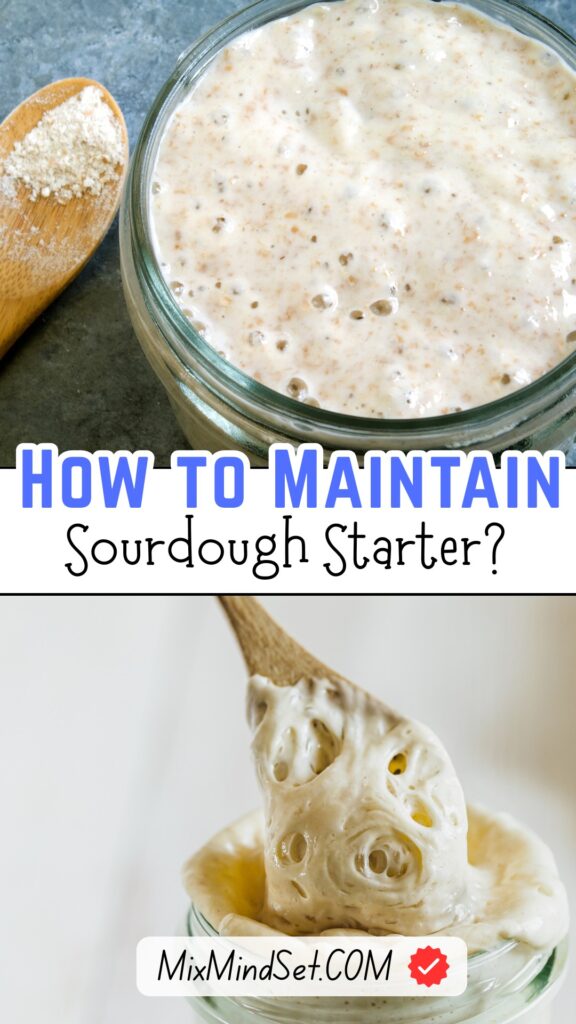
This guide on how to maintain sourdough starter covers everything: feeding ratios, storage options (fridge vs. counter), revival after neglect, troubleshooting common problems, and even how to share or dehydrate your starter. No mystery. No waste. Just a healthy, predictable starter ready whenever you are.
The Basics: What Your Starter Needs
A sourdough starter is a symbiotic culture of wild yeasts and lactic acid bacteria. To stay alive, it needs two things:
- Food – Flour (usually a mix of white and whole grain).
- Hydration – Water (non‑chlorinated is best).
- Oxygen – From stirring and exposure to air.
The maintenance rhythm depends entirely on how often you bake.
| Baking Frequency | Recommended Storage | Feeding Schedule |
|---|---|---|
| Daily or every other day | Room temperature | Feed 1–2 times per day |
| 2–3 times per week | Room temperature or fridge | Feed before each bake |
| Once a week or less | Refrigerator | Feed weekly (or before/after baking) |
| Long break (months) | Refrigerator or freezer | Feed after thawing/warming |
Understanding Feeding Ratios (The 1:1:1 Rule)
The most common maintenance ratio is 1:1:1 – equal parts starter, flour, and water (by weight). For example:
- 50g starter + 50g flour + 50g water = 150g total.
This ratio gives the yeast and bacteria enough food to become active within 4–12 hours (depending on temperature). You can adjust:
| Ratio | Result | Best For |
|---|---|---|
| 1:1:1 | Fast fermentation (4–8 hours) | Daily baking, warm kitchens |
| 1:2:2 | Slower fermentation (8–12 hours) | Cooler kitchens, overnight feeding |
| 1:5:5 | Very slow (12–24 hours) | Infrequent feeding, fridge storage |
Pro tip: Use grams (weight) not cups. Water and flour have very different densities. A kitchen scale is essential for consistent sourdough.
Maintenance Method 1: Room Temperature Starter (For Frequent Bakers)
This is ideal if you bake 2–7 times per week. The starter stays on your counter, active and ready.
Daily Feeding (1:1:1)
| Step | Action |
|---|---|
| 1 | Discard all but 50g of starter (compost or use in discard recipes) |
| 2 | Add 50g flour (e.g., 25g white + 25g whole wheat) |
| 3 | Add 50g non‑chlorinated water (room temperature) |
| 4 | Stir vigorously to incorporate air |
| 5 | Cover loosely (lid askew or cloth) |
| 6 | Let sit at room temperature until bubbly (4–8 hours) |
Pro tip: If you see a layer of liquid (hooch) on top before feeding, pour it off. Dark grey hooch means it is hungry; pink or orange means discard and restart.
Signs of a Healthy Starter
- Doubles in size within 4–8 hours.
- Bubbles on surface and throughout.
- Mild, tangy, slightly yeasty aroma (not sour like vinegar, not like acetone).
- Passes the float test – a spoonful drops in water and floats.
Maintenance Method 2: Refrigerated Starter (For Occasional Bakers)
Storing your starter in the refrigerator slows fermentation dramatically. You can feed it once a week (or even every 2 weeks) and still keep it healthy.
Weekly Maintenance (Fridge Storage)
| Step | Action |
|---|---|
| 1 | Remove starter from fridge. Let it sit at room temperature for 1 hour. |
| 2 | Discard all but 50–100g starter. |
| 3 | Feed with equal weight flour and water (1:1:1 or 1:2:2). |
| 4 | Let it sit at room temperature for 2–4 hours until it shows small bubbles. |
| 5 | Return to the refrigerator (no need to wait for full doubling). |
Pro tip: You can feed a refrigerated starter and immediately put it back in the fridge without the room‑temperature rest. It will slowly ferment over the next few days. This works well for very low‑maintenance schedules.
Feeding Right Before Baking (From Fridge)
If you plan to bake, take your refrigerated starter out the night before:
- Discard all but 50g starter.
- Feed 1:1:1 (50g flour, 50g water).
- Leave at room temperature overnight (8–12 hours).
- It should be bubbly and doubled by morning – ready to bake.
How Much Starter to Keep? (Minimizing Waste)
One of the biggest frustrations is discarding starter every feeding. You can reduce waste by keeping a smaller starter.
| Starter Amount | Flour per Feed | Weekly Waste |
|---|---|---|
| 50g | 50g flour | ~350g per week (if fed daily) |
| 25g | 25g flour | ~175g per week |
| 15g | 15g flour | ~105g per week |
A 15g starter is perfectly sufficient. When you need to bake, simply feed it a larger ratio (1:5:5 or 1:10:10) to build the volume you need.
Pro tip: Create a “scrapings method” – keep just a smear of starter in your jar (5–10g). Feed it 20g flour and 20g water when you want to bake. There is almost no discard.
How to Revive a Neglected Starter (Forgotten in the Fridge)
Has your starter been sitting untouched for 2 months? Do not despair. It can often be revived.
Revival Steps
| Step | Action |
|---|---|
| 1 | Pour off any dark liquid (hooch). If there is mould (fuzzy green, black, pink, orange), discard the entire starter. |
| 2 | Scoop out 10–15g of the thickest, least‑liquid portion from the bottom. |
| 3 | Feed it 1:1:1 (10g flour, 10g water). |
| 4 | Leave at room temperature for 24 hours. It may show very little activity – that is normal. |
| 5 | Discard all but 10g again. Feed 1:1:1. |
| 6 | Repeat every 12–24 hours. By the 3rd or 4th feeding, you should see bubbles. |
Pro tip: Add a pinch of rye or whole wheat flour to the first few feedings – it provides extra nutrients that help revive sluggish yeast.
Troubleshooting Common Problems
| Problem | Likely Cause | Solution |
|---|---|---|
| No bubbles, no rise after 12 hours | Starter too cold, underfed, or dead (if old) | Move to warmer spot (75–80°F); feed 1:1:1 every 12 hours for 2 days |
| Liquid (hooch) forms on top | Hungry (needs more frequent feeding) | Pour off hooch; feed 1:2:2 to slow fermentation |
| Acetone / nail polish smell | Starving or too warm | Feed immediately; reduce temperature; increase feeding frequency |
| Pink, orange, or fuzzy mould | Contamination | Discard immediately. Start over with fresh flour and clean jar |
| Mildew / musty smell | Too much moisture, not enough air | Use a loosely covered jar; stir daily |
| Very sour, vinegary taste | Over‑fermented (fed too long ago) | Feed more frequently or use a higher ratio (1:5:5) |
| Starter is thick and pasty | Not enough water or using high‑protein flour | Add a few extra grams of water until it’s thick but pourable |
How to Know If Your Starter Is Ready to Bake?
Before using your starter in a recipe, it must be active and mature. Use this checklist:
- ✅ It has doubled in volume within 4–8 hours of feeding (at room temperature).
- ✅ The surface is covered in bubbles of various sizes.
- ✅ It has a pleasant, tangy, slightly fruity aroma – not sharp or boozy.
- ✅ A small spoonful floats in a glass of room‑temperature water.
If your starter passes these tests, it is ready to leaven bread.
Pro tip: The float test is not 100% reliable for all flours, but it is a good indicator. If it sinks, give it another hour or two.
How to Dehydrate Sourdough Starter (Backup or Sharing)
Dehydrating your starter creates a long‑term backup that can last for years. It is also the best way to share your starter with friends.
Dehydration Steps
| Step | Action |
|---|---|
| 1 | Feed your starter as usual. When it is at its peak (doubled, bubbly), spread a thin layer (about 1/8 inch) on parchment paper or a silicone mat. |
| 2 | Let it dry at room temperature away from direct sunlight. Do not use oven heat. Drying takes 24–48 hours. |
| 3 | When completely brittle and dry, break or grind into flakes/powder. |
| 4 | Store in an airtight jar in a cool, dark place. It will keep for years. |
Reactivating Dehydrated Starter
- Combine 5g dried starter flakes with 10g water. Let sit for 1 hour to rehydrate.
- Add 10g flour and stir. Let sit for 12–24 hours.
- Feed again 1:1:1 (10g starter, 10g flour, 10g water). Repeat until bubbly.
Sourdough Discard: What to Do with the “Waste”
You do not have to throw away the starter you remove at each feeding. Sourdough discard is the unfed, often refrigerated starter that you would otherwise compost. It is still full of flavour and can be used in many recipes.
| Discard Recipe | Notes |
|---|---|
| Sourdough crackers | Mix discard with oil, salt, herbs; roll thin and bake |
| Pancakes or waffles | Add baking soda for lift |
| Sourdough banana bread | Replace some flour with discard |
| Sourdough pizza crust | Use discard for extra tang |
Store discard in a separate jar in the refrigerator for up to 2 weeks. Use it directly in recipes – no need to feed it.
Frequently Asked Questions
How often do I really need to feed my starter?
If kept at room temperature, feed once daily (or twice if very warm). If kept in the refrigerator, feed once a week (or even every 2–3 weeks if you are fine with a longer revival).
Can I use any flour to feed my starter?
Yes, but… All‑purpose flour works, but a blend of white and whole wheat or rye creates a more robust starter. Whole grains provide more nutrients for the yeast. Avoid bleached flour (it may struggle).
Why does my starter have a layer of dark liquid?
That is hooch – a sign your starter is hungry. Pour it off or stir it back in (stirring adds a more sour flavour). If hooch appears within 12 hours of feeding, increase feeding frequency or move to a cooler spot.
Can I use tap water?
Chlorinated tap water can inhibit yeast activity. Let tap water sit uncovered for 24 hours to allow chlorine to evaporate, or use filtered or bottled spring water.
How do I switch from white flour to whole wheat?
Gradually. Over 2–3 feedings, replace 25% of the white flour with whole wheat, then 50%, then 100%. The starter may become more active (good) and darker in colour.
What if my starter smells like alcohol or acetone?
It is over‑fermented (too hungry). Feed it immediately with a larger ratio (1:2:2 or 1:3:3) and keep it cooler.
Can I freeze my sourdough starter?
Yes. Freeze a portion of your starter in an airtight container. It can survive for several months. Thaw in the refrigerator, then feed 2–3 times at room temperature to revive.
Is a sourdough starter halal?
Yes. It contains only flour, water, and naturally occurring wild yeasts and bacteria. No alcohol is produced in significant amounts (the trace alcohol created during fermentation evaporates during baking).
Maintenance at a Glance (Quick Reference Table)
| Situation | Action |
|---|---|
| Baking daily | Keep on counter; feed 1:1:1 every 12–24 hours |
| Baking twice a week | Keep in fridge; feed night before baking |
| Going on vacation (1 week) | Feed 1:2:2, put in fridge – fine for 1–2 weeks |
| Returning from vacation | Take out, feed 1:1:1, let sit overnight – good to go |
| Starter sluggish (no rise) | Feed 2–3 times with whole wheat or rye flour |
| Mould appears (pink/orange/green) | Discard everything – start fresh |
| Want to share starter | Dehydrate flakes or give a small 50g fed portion |
Conclusion
Maintaining a sourdough starter is not a chore – it is a rhythm. A few minutes of attention each week keeps a living culture alive that can outlast any kitchen appliance. Feed it, watch it bubble, and bake with it. Each loaf carries the signature of your care.
Whether you are a daily baker or a once‑a‑month enthusiast, there is a maintenance routine that fits your life. Keep your starter small to reduce waste, give it a cold rest when you are busy, and revive it with patience when you return. It will reward you with bread that is deeply flavourful and entirely your own.
Now go feed that starter.
— Fatima