21 Indoor Plants That Are Safe for Pets
Fill your home with greenery without worrying about your furry friends. This guide covers 21 beautiful, non-toxic houseplants that are safe for cats and dogs, verified against the ASPCA database. #PetSafePlants #HouseplantCare #CatFriendly #DogFriendly #IndoorGardening
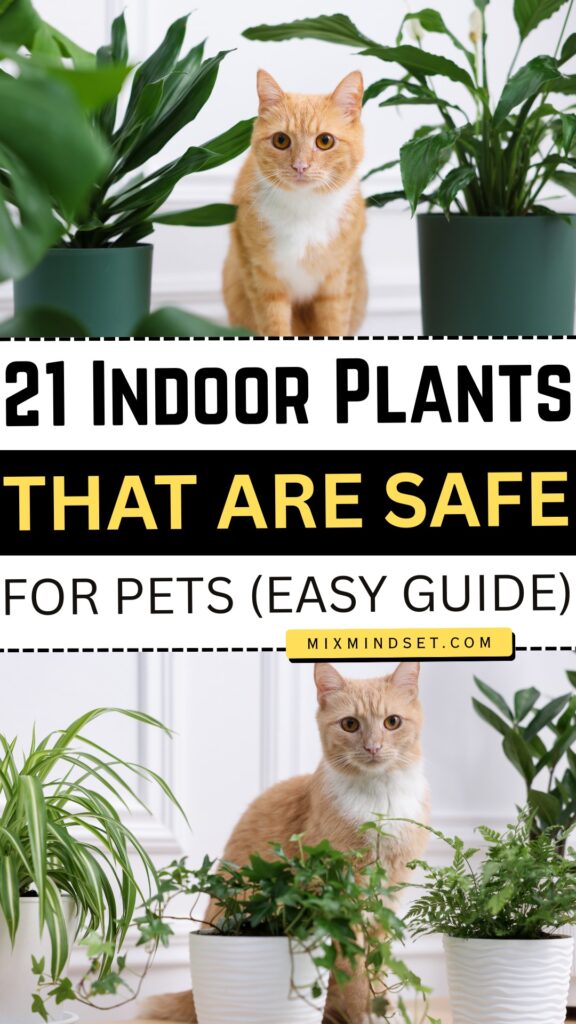
The first time my cat took a bite out of my favorite houseplant, I panicked. I had no idea if it was toxic or not.
I spent the next hour on the ASPCA website, frantically searching for the plant name.
Luckily, it was just a spider plant, and my cat was fine. But that experience made me realize I needed to be more careful. I started researching which plants were safe and which ones to avoid.
Over time, I built a collection of beautiful, pet‑friendly plants that I can enjoy without worry. Here are 21 of the best ones I found.
Why Pet‑Safe Plants Matter
Not all houseplants are safe for pets. Many popular plants, like monstera, pothos, aloe vera, and snake plants, contain compounds that can cause vomiting, drooling, or more serious health issues if ingested. Some, like sago palm and lilies, can be fatal.
According to the ASPCA, even non‑toxic plants can still cause mild stomach upset if your pet eats too many leaves. But choosing verified safe plants gives you peace of mind, knowing that an occasional nibble won’t send you rushing to the vet.
21 Indoor Plants That Are Safe for Pets
1. Spider Plant (Chlorophytum comosum)
The spider plant is one of the most popular pet‑friendly houseplants. It produces long, arching leaves and “spiderettes” (baby plants) that trail down from the mother plant. It’s safe for cats and dogs, and it’s also an excellent air purifier. The ASPCA lists it as non‑toxic.
Care: Prefers bright, indirect light but tolerates lower light. Water when the top inch of soil feels dry. Very easy to care for.
2. Boston Fern (Nephrolepis exaltata)
Boston ferns are lush, feathery plants that add a tropical feel to any room. They are non‑toxic to cats and dogs and are great for hanging baskets, keeping them out of your pet’s reach.
Care: Prefers bright, indirect light and high humidity. Keep the soil consistently moist and mist regularly.
3. Areca Palm (Dypsis lutescens)
The areca palm is a safe, tropical plant that can grow several feet tall. It’s non‑toxic to cats and dogs and is also known for its air‑purifying qualities.
Care: Prefers bright, indirect light. Keep the soil moist but not soggy.
4. Parlor Palm (Chamaedorea elegans)
The parlor palm is a compact, low‑maintenance palm that is safe for pets. It was a favorite in Victorian parlors and is still a popular choice today.
Care: Prefers bright, indirect light but tolerates lower light. Keep the soil lightly moist.
5. Ponytail Palm (Beaucarnea recurvata)
Despite its name, the ponytail palm is not a true palm but a succulent. Its unique, bulbous trunk and cascading leaves make it a striking addition to any room. It is safe for both cats and dogs.
Care: Prefers bright light but tolerates lower light. Water when the soil is dry.
6. Calathea
Calatheas are known for their stunning, patterned leaves that fold up at night like praying hands. They are completely non‑toxic to cats and dogs.
Care: Prefers low to medium, indirect light. Keep the soil consistently moist but not waterlogged. Avoid direct sunlight.
7. Prayer Plant (Maranta leuconeura)
The prayer plant is closely related to calatheas and has equally beautiful, patterned leaves. It’s safe for pets and adds a unique, decorative touch to your home.
Care: Prefers low to medium, indirect light. Keep the soil moist and provide high humidity.
8. Peperomia
Peperomias come in a wide variety of shapes, sizes, and colors. They are compact, easy to care for, and completely safe for cats and dogs.
Care: Prefers bright, indirect light. Water when the soil is dry. Let the soil dry out between waterings to prevent root rot.
9. Moth Orchid (Phalaenopsis)
Moth orchids are some of the easiest orchids to grow indoors. They are non‑toxic to cats and dogs, according to the ASPCA. Their beautiful, long‑lasting blooms add a touch of elegance.
Care: Prefers bright, indirect light. Water when the potting mix is almost dry. Avoid letting water sit in the crown.
10. African Violet (Saintpaulia ionantha)
African violets are compact, flowering plants that bloom beautifully in low to indirect light. They are completely safe for pets.
Care: Prefers bright, indirect light. Keep the soil evenly moist, but avoid getting water on the leaves.
11. Christmas Cactus (Schlumbergera)
The Christmas cactus, along with its relatives the Thanksgiving and Easter cacti, are safe for cats and dogs. They produce beautiful, colorful blooms during the holiday season.
Care: Prefers bright, indirect light. Water when the top inch of soil feels dry.
12. Money Tree (Pachira aquatica)
The money tree is a popular, low‑maintenance plant with a braided trunk. It’s non‑toxic to cats and dogs, according to the ASPCA.
Care: Prefers bright, indirect light. Water when the top inch of soil is dry.
13. Bamboo (Bambusoideae)
Certain bamboo species are safe for pets and make excellent, fast‑growing houseplants.
Care: Prefers bright, indirect light. Keep the soil moist but not waterlogged.
14. Hibiscus (Hibiscus)
Hibiscus plants produce large, tropical flowers and are non‑toxic to cats and dogs, according to the ASPCA.
Care: Prefers bright, indirect light. Keep the soil moist and provide good drainage.
15. Cast Iron Plant (Aspidistra elatior)
The cast iron plant is named for its toughness. It can survive low light, neglect, and even some abuse. It is safe for pets.
Care: Tolerates very low light. Water when the soil is dry.
16. Bromeliad
Bromeliads are tropical plants with colorful, long‑lasting flowers. They are safe for cats and dogs and add a bold, exotic look.
Care: Prefers bright, indirect light. Keep the central “cup” filled with water.
17. Hoya (Wax Plant)
Hoyas are vining plants with thick, waxy leaves and fragrant flowers. They are non‑toxic to cats and dogs.
Care: Prefers bright, indirect light. Water when the soil is dry.
18. Lemon Button Fern (Nephrolepis cordifolia ‘Duffii’)
This compact fern has small, button‑shaped leaves and is safe for pets. It’s a great choice for small spaces.
Care: Prefers moderate, indirect light. Keep the soil moist.
19. Rabbit’s Foot Fern (Davallia solida var. fejeensis)
This fern has furry, creeping rhizomes that look like a rabbit’s foot. It’s non‑toxic to cats and dogs.
Care: Prefers bright, indirect light. Keep the soil moist and provide high humidity.
20. Venus Flytrap (Dionaea muscipula)
Despite its carnivorous reputation, the Venus flytrap is non‑toxic to cats and dogs. It’s a fascinating and unique plant to grow indoors.
Care: Prefers bright, direct light. Keep the soil consistently moist with distilled water.
21. Burro’s Tail (Sedum morganianum)
Burro’s tail is a trailing succulent with plump, overlapping leaves. It is safe for pets and looks beautiful in hanging baskets.
Care: Prefers bright, indirect light. Water when the soil is dry.
Quick Reference Table: 21 Pet‑Safe Plants at a Glance
| Plant | Light Needs | Watering | Special Notes |
|---|---|---|---|
| Spider Plant | Bright, indirect | Water when top inch dry | Very easy, produces baby plants |
| Boston Fern | Bright, indirect | Keep soil moist | Loves humidity |
| Areca Palm | Bright, indirect | Keep soil moist | Tropical, air‑purifying |
| Parlor Palm | Low to bright | Keep soil lightly moist | Compact, easy |
| Ponytail Palm | Bright | Water when dry | Drought‑tolerant |
| Calathea | Low to medium | Keep soil moist | Stunning patterned leaves |
| Prayer Plant | Low to medium | Keep soil moist | Folds leaves at night |
| Peperomia | Bright, indirect | Water when dry | Many varieties available |
| Moth Orchid | Bright, indirect | Water when almost dry | Long‑lasting blooms |
| African Violet | Bright, indirect | Keep soil evenly moist | Flowering, compact |
| Christmas Cactus | Bright, indirect | Water when top inch dry | Blooms in winter |
| Money Tree | Bright, indirect | Water when top inch dry | Braided trunk |
| Bamboo | Bright, indirect | Keep soil moist | Fast‑growing |
| Hibiscus | Bright, indirect | Keep soil moist | Tropical flowers |
| Cast Iron Plant | Low to bright | Water when dry | Very tough |
| Bromeliad | Bright, indirect | Keep cup filled | Colorful, exotic |
| Hoya | Bright, indirect | Water when dry | Fragrant flowers |
| Lemon Button Fern | Moderate, indirect | Keep soil moist | Compact, small leaves |
| Rabbit’s Foot Fern | Bright, indirect | Keep soil moist | Fuzzy creeping rhizomes |
| Venus Flytrap | Bright, direct | Keep soil moist | Carnivorous, fascinating |
| Burro’s Tail | Bright, indirect | Water when dry | Trailing, succulent |
Tips for Pet‑Safe Plant Parenting
Check the ASPCA list before you buy. The ASPCA Toxic and Non‑toxic Plant List is the most reliable resource for pet‑safe plants.
Even “safe” plants can cause mild upset. Non‑toxic does not mean edible. Eating large amounts of any plant can cause vomiting or diarrhea. Keep plants out of reach if your pet is a frequent nibbler.
Use hanging baskets. For pets that love to chew, hanging plants are a great way to keep greenery out of reach.
Provide alternatives. Consider growing cat grass or wheatgrass for your cat to chew on. This gives them a safe outlet for their grazing instincts.
Know the signs of poisoning. If your pet shows vomiting, drooling, weakness, or unusual behavior after eating a plant, contact your veterinarian immediately.
My Personal Pet‑Safe Plant Journey
When I first started collecting houseplants, I had no idea which ones were safe for my cat. I learned the hard way after a few scary moments. Now I only buy plants from the ASPCA non‑toxic list. My favorites are spider plants, calatheas, and moth orchids. They’re beautiful, easy to care for, and I don’t have to worry when my cat decides to take a bite.
The Bottom Line
You don’t have to choose between plants and pets. There are plenty of beautiful, pet‑safe options that will brighten your home without putting your furry friends at risk. Spider plants, Boston ferns, calatheas, peperomias, orchids, and palms are all excellent choices. Check the ASPCA list before you buy, keep plants out of reach if your pet is a chewer, and provide safe alternatives like cat grass.
I started with a spider plant and a prayer plant. Now I have a whole collection of pet‑friendly greenery, and my cat has never been healthier. Your home can be a safe haven for both plants and pets. Start with one of these 21 plants and enjoy the peace of mind that comes with knowing your furry friends are safe.