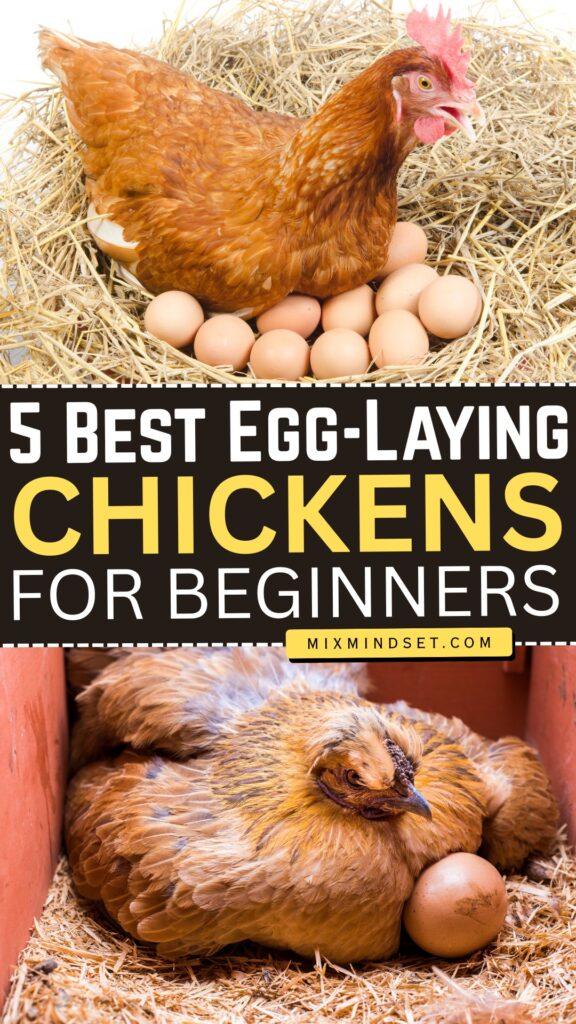
5 Best Egg-Laying Chickens for Beginners
Start your backyard flock with the five best egg‑laying chicken breeds for beginners. This guide covers friendly, hardy hens that produce lots of eggs with minimal fuss. #BackyardChickens #EggLayingHens #BeginnerChickens #FreshEggs #Homesteading
When I first decided to get chickens, I was completely overwhelmed. There were so many breeds, and every website said something different.
I wanted hens that would give me lots of eggs but also be friendly enough for my kids to handle.
After a lot of research and some trial and error, I found five breeds that are perfect for beginners. They are hardy, easy to care for, and great layers. Here they are.
What to Look for in a Beginner Chicken
Before we get to the list, here is what makes a breed good for beginners.
| Quality | Why It Matters |
|---|---|
| Docile temperament | Friendly, calm birds are easier to handle and less likely to peck you. |
| Hardy | Can handle both hot and cold weather without special care. |
| Good egg layer | Produces 200+ eggs per year. You get a steady supply. |
| Easy to find | Available at most hatcheries and feed stores. |
| Forgiving | Tolerates minor mistakes in feeding or housing. |
All five breeds on this list check every box.
The 5 Best Egg‑Laying Chickens for Beginners
1. Rhode Island Red (Best Overall)
The Rhode Island Red is the gold standard for beginners. It is hardy, productive, and forgiving. These birds thrive in almost any climate and tolerate beginner mistakes better than almost any other breed.
Egg Production: 250 to 300 large brown eggs per year. They start laying around 5 to 6 months old.
Temperament: Active, bold, curious, and friendly. They are confident birds that get along well with people.
Climate: Tolerates both cold and heat very well.
Pros:
- Exceptional egg production
- Extremely hardy
- Good foragers (saves feed costs)
- Widely available
Cons:
- Can be a bit assertive
- Hens occasionally go broody
My personal experience: My Rhode Island Reds are my most reliable layers. Even through the winter, I get at least four eggs a week from each hen. They are also the first ones to run up to me when I come outside.
2. Plymouth Rock (Barred Rock) (Best for Families)
Plymouth Rocks, especially the Barred variety, are calm, friendly, and easy to handle. They are excellent with children and make a wonderful addition to any family flock.
Egg Production: 200 to 280 large brown eggs per year.
Temperament: Docile, friendly, and curious. They enjoy interacting with their human families.
Climate: Resistant to cold and easy to manage.
Pros:
- Very friendly and calm
- Good with kids
- Often go broody (good for hatching chicks)
- Long-lived layers
Cons:
- Can be a bit aloof
- Not as high production as some other breeds
3. Sussex (Best for Cold Climates)
Sussex chickens are hardy, adaptable, and excellent layers. They are calm and friendly, making them great for beginners. Their dense feathers help them withstand cold weather very well.
Egg Production: 200 to 250 large creamy brown or tinted eggs per year.
Temperament: Docile, calm, and curious. They love to forage and explore.
Climate: Very cold-hardy. Great for northern climates.
Pros:
- Excellent cold tolerance
- Friendly and easy to handle
- Reliable layers even through winter
- Rarely suffer from health problems
Cons:
4. Leghorn (Best for Maximum Egg Production)
If you want the most eggs possible, Leghorns are the way to go. They are the breed behind most commercial egg production. They lay large white eggs at an incredible rate.
Egg Production: 280 to 320 large white eggs per year. They start laying as early as 4 to 5 months old.
Temperament: Energetic and a bit nervous. They prefer to free-range and can be flighty. They are not lap chickens.
Climate: Very adaptable to warmer climates but may be sensitive to extreme cold due to their large combs.
Pros:
- Highest egg production
- Efficient eaters (convert feed to eggs well)
- Very independent
Cons:
- Flighty and nervous
- Not cuddly or friendly
- Can be noisy
- Sensitive to extreme cold
My personal experience: My Leghorns are my top producers. I get almost an egg a day from each hen. They are not as friendly as my other breeds, but they are fascinating to watch and incredibly efficient.
5. Buff Orpington (Best Pet Chicken)
If you want chickens that are more like pets, the Buff Orpington is the breed for you. They are known as the “golden retrievers” of the chicken world. They are extremely friendly, love being held, and will follow you around.
Egg Production: 180 to 220 large brown eggs per year. Some production strains can lay up to 280.
Temperament: Extremely gentle, sweet, and people-loving. Great with kids.
Climate: Cold hardy but can struggle in hot climates.
Pros:
- Friendliest breed
- Beautiful golden feathers
- Great with children
- Excellent mothers (go broody often)
Cons:
- Lower egg production than other breeds
- Can become overweight easily
- Not heat tolerant
- Go broody often (stops laying during that time)
Quick Reference Table
Bonus: Easter Egger (For Colorful Eggs)
If you want eggs in fun colors, consider adding an Easter Egger to your flock. These hybrid hens lay blue, green, pink, or even chocolate-brown eggs. They are friendly, sociable, and great with kids.
Egg Production: 4 to 5 large eggs per week.
Temperament: Friendly, calm, and active.
Why They Are Great for Beginners: They are hardy, easy to tame, and their colorful eggs make chicken keeping extra fun.
Tips for Getting Started
How Many Chickens Should You Start With?
Start with 2 to 3 hens. This is enough for a steady supply of eggs but small enough to be manageable. You can always add more later.
What to Feed Them
Provide a high-quality layer feed (around 16-18% protein). Supplement with oyster shells for strong eggshells and grit for digestion. Always have fresh, clean water available.
Housing Basics
- Coop: At least 2-3 square feet per chicken inside the coop.
- Run: At least 8-10 square feet per chicken outside.
- Roosts: Provide roosting bars for sleeping.
- Nesting boxes: One box for every 3-4 hens.
A Quick Word on Broodiness
Some breeds (like Buff Orpingtons and Plymouth Rocks) go broody. This means they want to sit on eggs and hatch chicks. During this time, they stop laying eggs. If you want maximum egg production, choose breeds that are less broody (like Leghorns and Rhode Island Reds).
My Personal Flock
When I started, I bought three Rhode Island Reds and three Buff Orpingtons. The Reds gave me plenty of eggs, and the Orpingtons became my kids’ favorite pets. Over time, I added a few Leghorns for even more eggs and an Easter Egger just for the fun of blue eggs.
Now I have a steady supply of fresh eggs, and my chickens are a joy to have around. If I can do it, you can too.
The Bottom Line
Starting with the right breed makes all the difference. Rhode Island Reds are the best all-around choice. Plymouth Rocks are great for families. Sussex hens are perfect for cold climates. Leghorns give you the most eggs. And Buff Orpingtons are the friendliest pets you will ever have.
Pick the breed that fits your needs, start with a small flock, and enjoy the rewards of fresh eggs every day. Your backyard chickens are waiting.