Calathea Orbifolia Plant Care—An Easy Guide
If you’re looking for a striking and elegant plant for your home, the Calathea orbifolia is perfect for you. We’ll tell you everything you need to know to keep it in perfect condition: How much light does it need? Does it require high or low humidity? We answer these and other questions in this article.
Overview of Calathea orbifolia
- Common name: Calathea orbifolia, calathea
- Scientific name: Calathea orbifolia
- Origin: Undergrowth of tropical rainforests in America
- Family: Marantaceae
- Location: Indoors
- Light: indirect, intermediate
- Temperature: Ideal between 18 and 24 ºC (but it can withstand higher temperatures)
- Watering: moderate
Characteristics of the Calathea orbifolia plant
Calathea is a genus of plants belonging to the Marantaceae family and native to the understory of tropical rainforests in the Americas, primarily Brazil and Peru. It comprises about 25 species, one of the best known and most sought-after being our featured plant today.
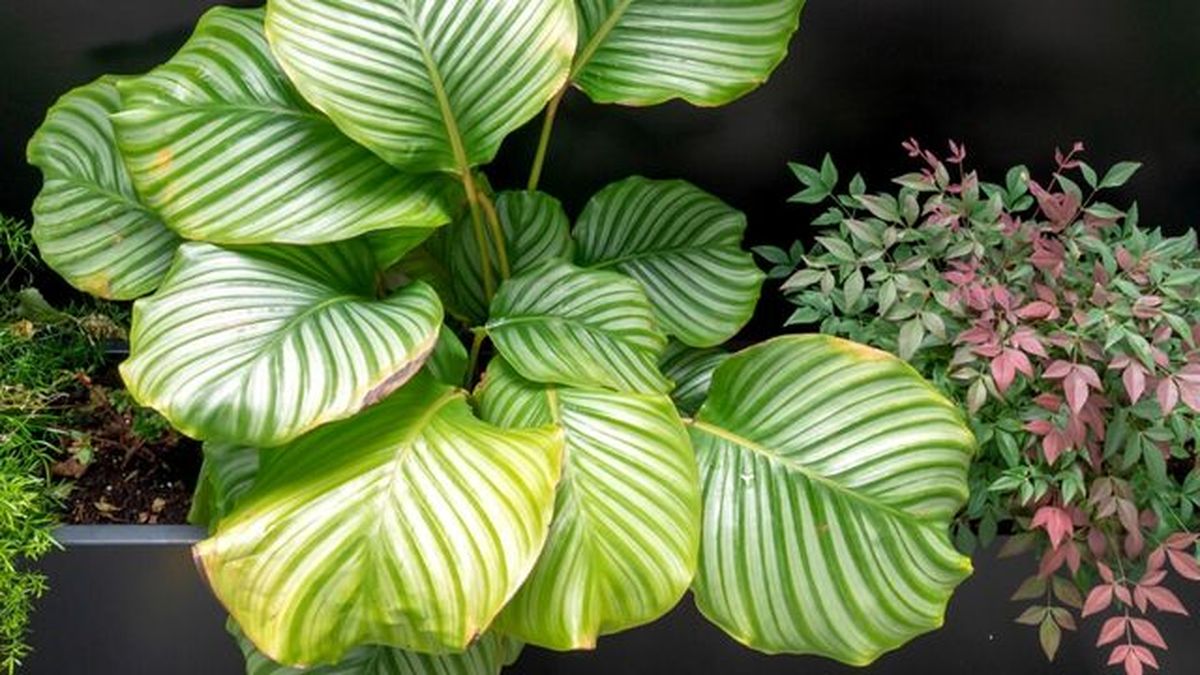
Calathea orbifolia is a moderately growing plant that, under optimal conditions, can reach up to one meter in height. It is widely used as a houseplant thanks to its striking ornamental value and its adaptability to indoor environments.
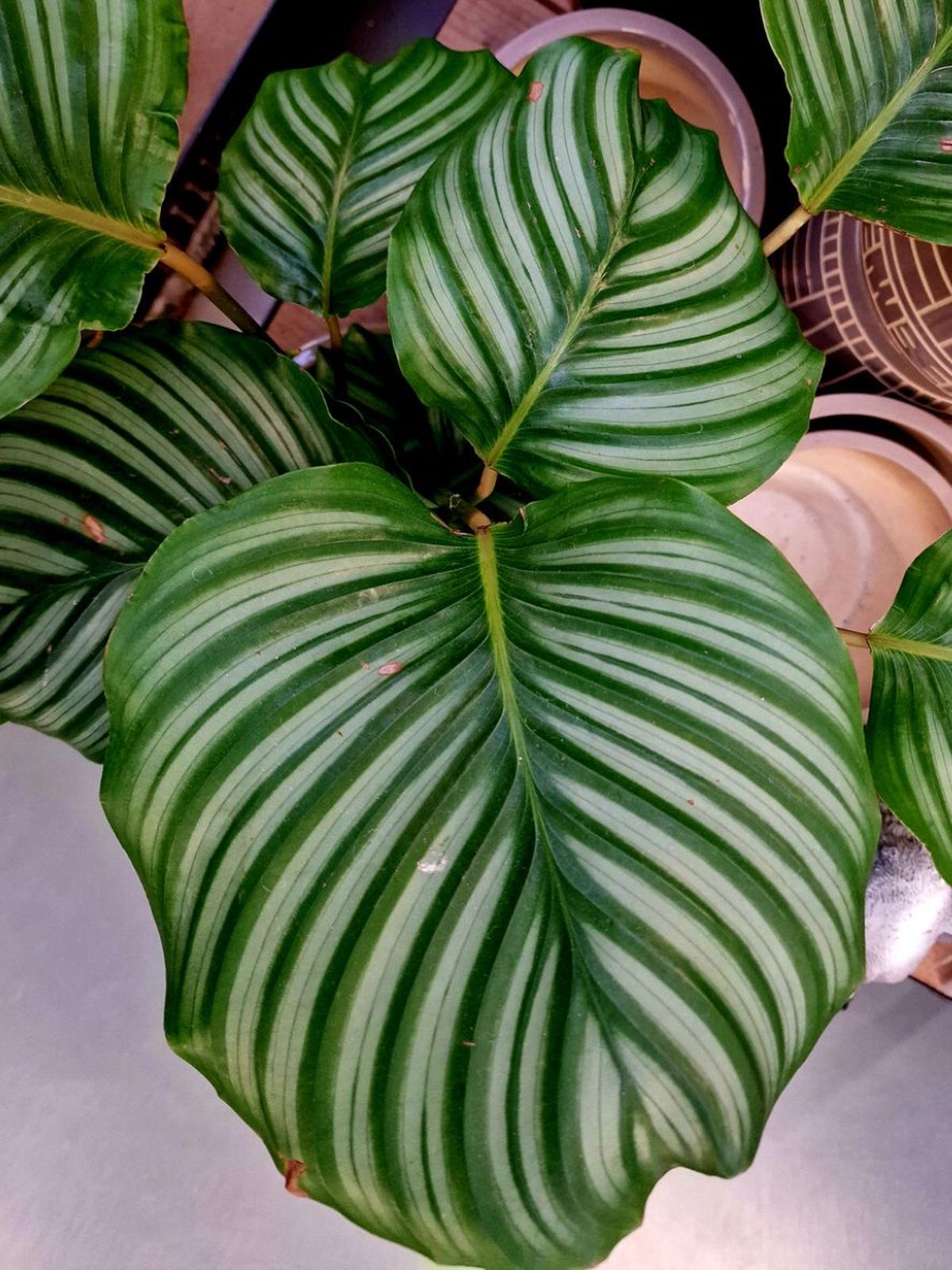
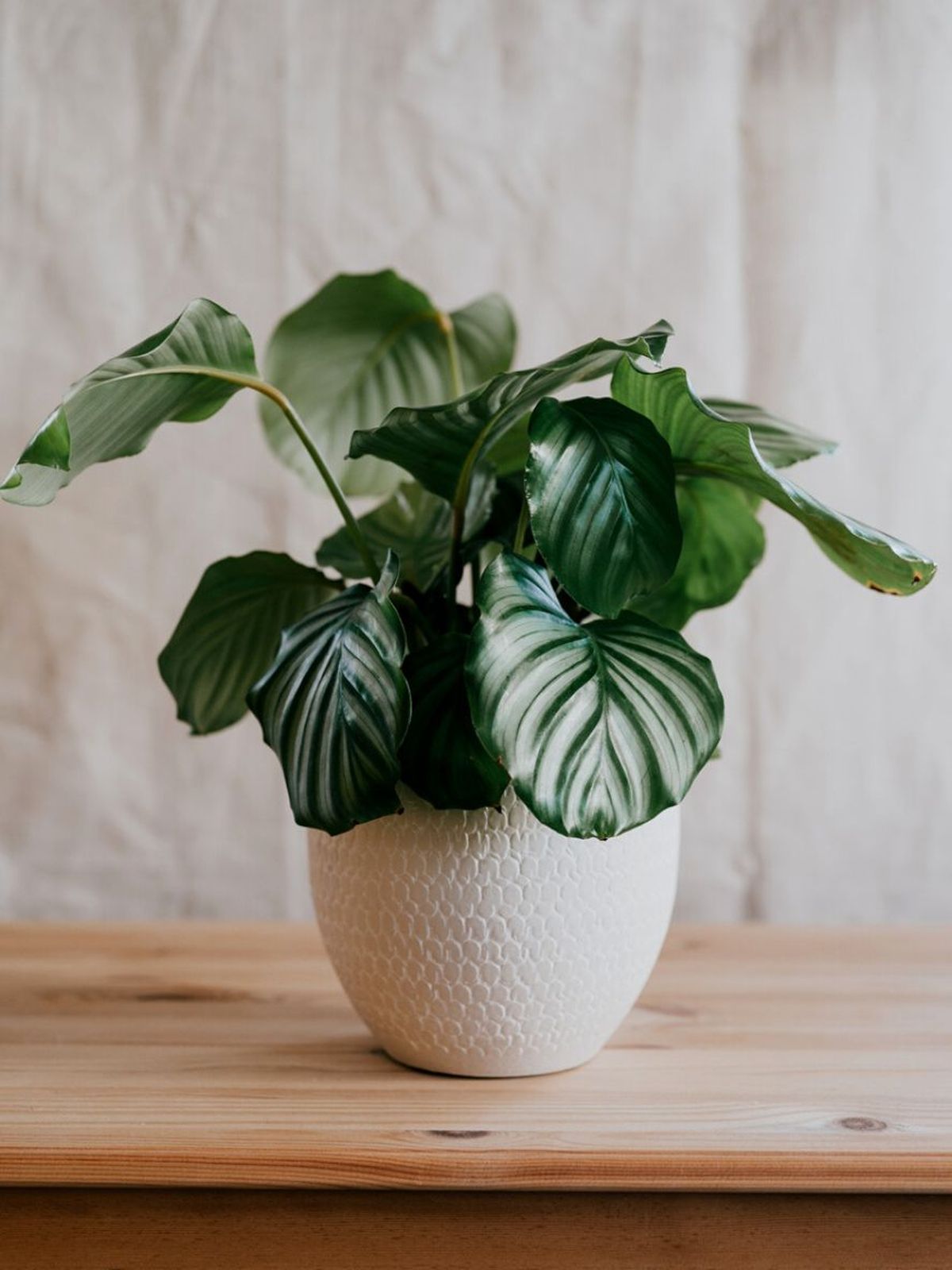
What makes this variety stand out are its leaves. They are rounded and relatively large with a long petiole. They can reach up to thirty centimeters in width!
Its design is truly interesting and decorative. It features a two-tone green pattern: a deep green background and a light, creamy green in the leaf shape, forming a series of light-colored lines.
It’s advisable to clean these leaves occasionally. You can easily do this, leaf by leaf, using a damp cotton ball.
Care of Calathea orbilofia
Growing Calathea orbilofia isn’t as complicated as it initially seems. Proper care for these types of plants depends mainly on the specific group they belong to.
The Plantadecor team explains that we can divide the plants of this genus into two groups of requirements based on the size and shape of their leaves.
For example, in group A we can find varieties with large, rounded leaves like Calathea roseopicta, and in group B, varieties with narrow or elongated leaves like Calathea makoyana and Calathea orbifolia. The care of plants in group B, and therefore of our featured plant today, is much less demanding. We’ll show you below!
Light and location
Is it an indoor or outdoor plant? Due to its tropical origin, it’s a variety that adapts perfectly to home conditions.
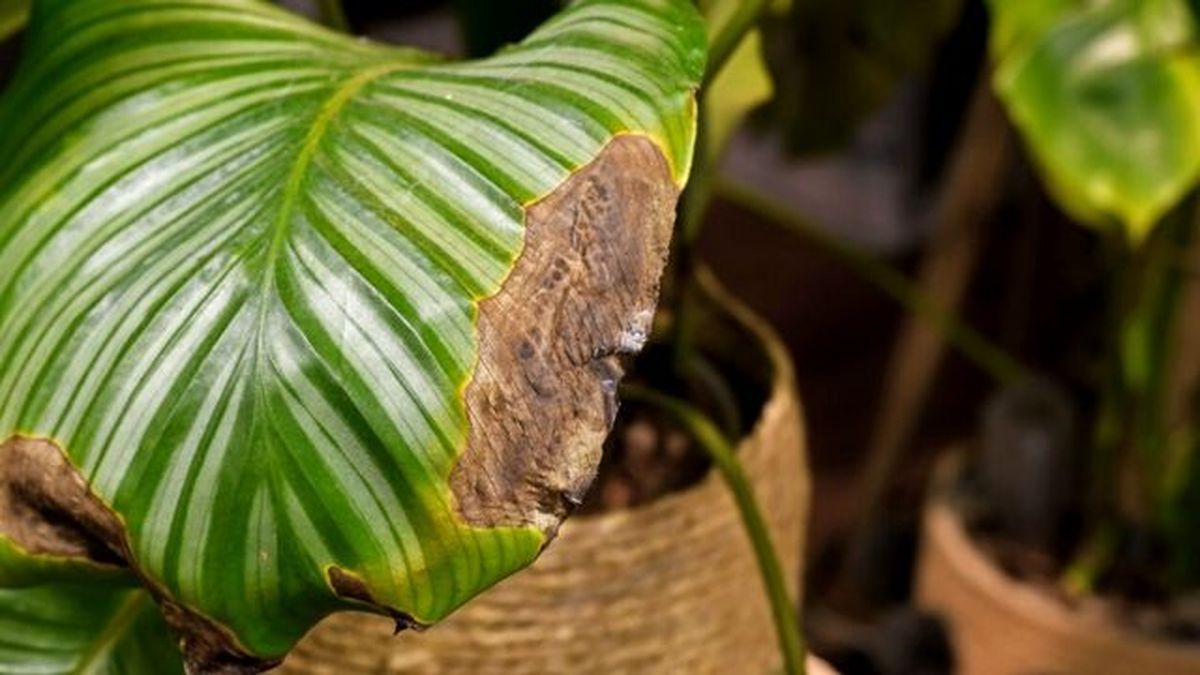
Burnt leaves of Calathea orbifolia
In their natural habitat, they live under the canopy of trees, so indoors they require moderate light levels —neither too low nor too high. Direct light should never be provided, as this could burn their leaves, their main attraction.
Its ideal temperature is between 18 and 24°C, although it can withstand higher temperatures for certain periods. However, to keep it in perfect condition in this latter case, we must provide it with greater ambient humidity.
The Calathea orbifolia plant absolutely cannot tolerate low temperatures. It begins to be affected at temperatures below 16°C. Also, do not place it near heaters or any other heat source.
Irrigation and fertilization
All calatheas are very sensitive to both excess and lack of water, but depending on the group they belong to (A or B), they will be more or less susceptible, and the same applies to moisture in the substrate.
Calathea orbifolia doesn’t need as much watering as other species, although it does require more frequent watering during the growing season. It also allows the soil to dry slightly between waterings. Filtered water is the best option for irrigation.
In summer, if the ambient temperature is very high, the plant will need increased humidity. An economical and simple way to do this is to place the calathea’s pot on a saucer filled with water and pebbles. The plant’s root ball will never be in direct contact with the water, but as it evaporates, it will absorb moisture.
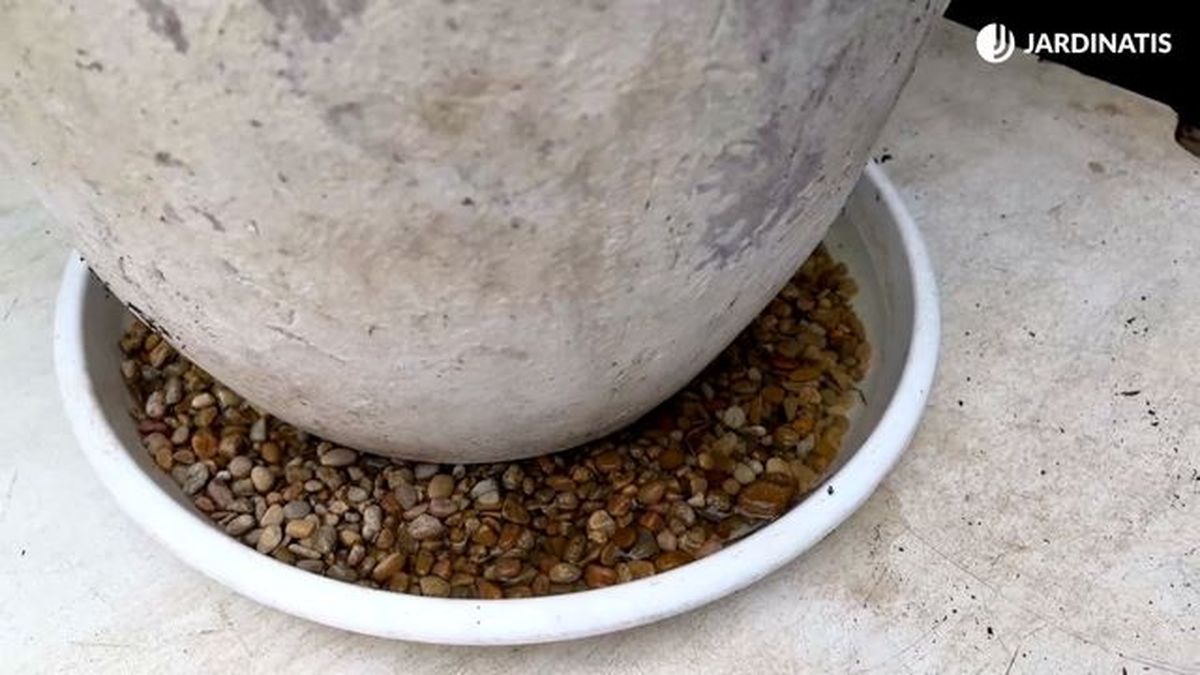
Trick to maintain proper humidity
The Plantadecor team does not recommend spraying it or using any artificial device that generates mist.
Although it’s a hardy houseplant, it appreciates fertilization during its growing season (spring and summer). You can add a fertilizer for leafy green plants to the watering can (always following the manufacturer’s recommended dosage).
Transplanting and planting Calathea orbifolia
After summer, if you notice that it’s out of room in its pot, you can repot it into a slightly larger one. You usually need to do this about every two years.
We’re going to plant this variety in a self-watering planter, but you could also use a regular pot. Inside the reservoir, which has built-in handles, is the water tank. On top of the water, we add gravel, which will allow for water absorption between the water and the substrate.

With the “indicator” in place, we add the universal substrate and make the planting hole. We place the calathea in the hole and position it in a location that does not receive direct sunlight.
Questions of interest about the Calathea orbifolia plant
Does Calathea orbifolia move?
Yes, this is a common characteristic of calatheas and marantas. At night, their leaves curl up and fold, and in the morning, they unfurl again.
Does it need to be pruned?
It’s not necessary. What is recommended for its maintenance is to remove any dry or diseased leaves.
What are the main pests and diseases of Calathea orbifolia?
It can be affected by mealybugs, aphids, and spider mites. It’s also important to remember that excessive humidity, which is so harmful to this plant, can cause fungal growth.
Why are the leaves of this calathea drooping?
This symptom is usually caused by overwatering or exposure to excessively low temperatures. As we mentioned earlier, Calathea orbifolia begins to suffer at temperatures below 16°C.
How does it reproduce?
All calatheas reproduce by root rhizomes. You can propagate them by division of the clump or rhizomes in late spring and throughout the summer.
Is this plant toxic to cats?
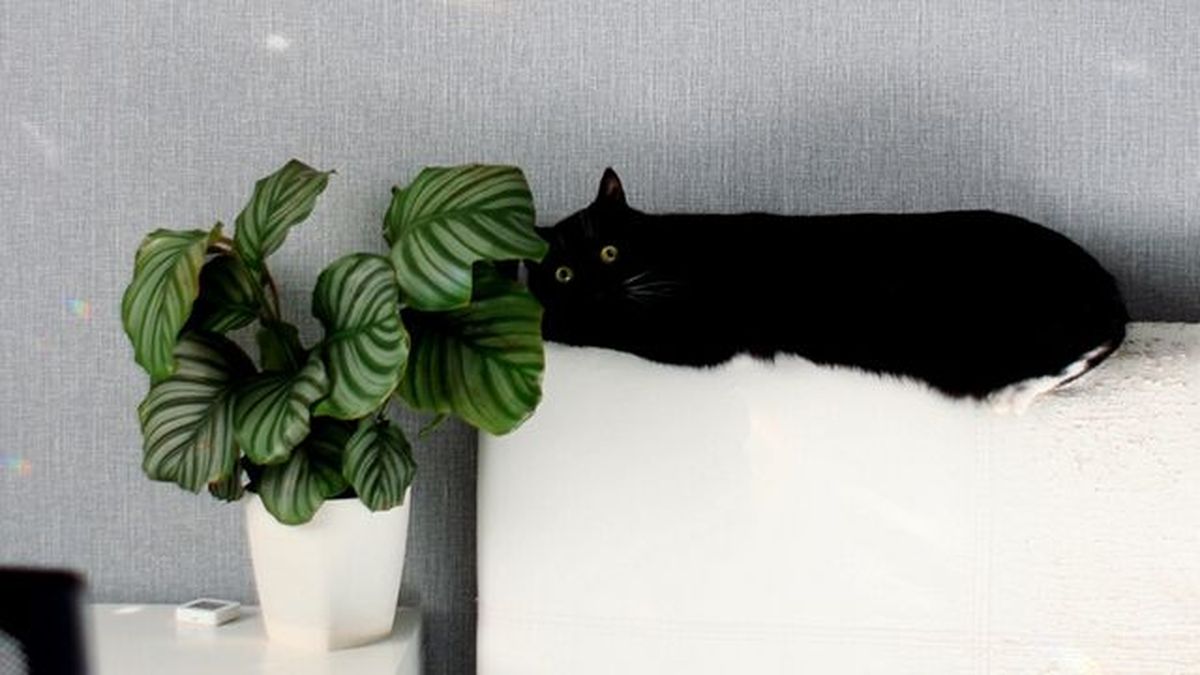
No, it’s not a toxic plant for cats, dogs, or any other pets. Besides being a very decorative plant, it’s pet-friendly. What more could we ask for?